
Last updated October 30, 2026
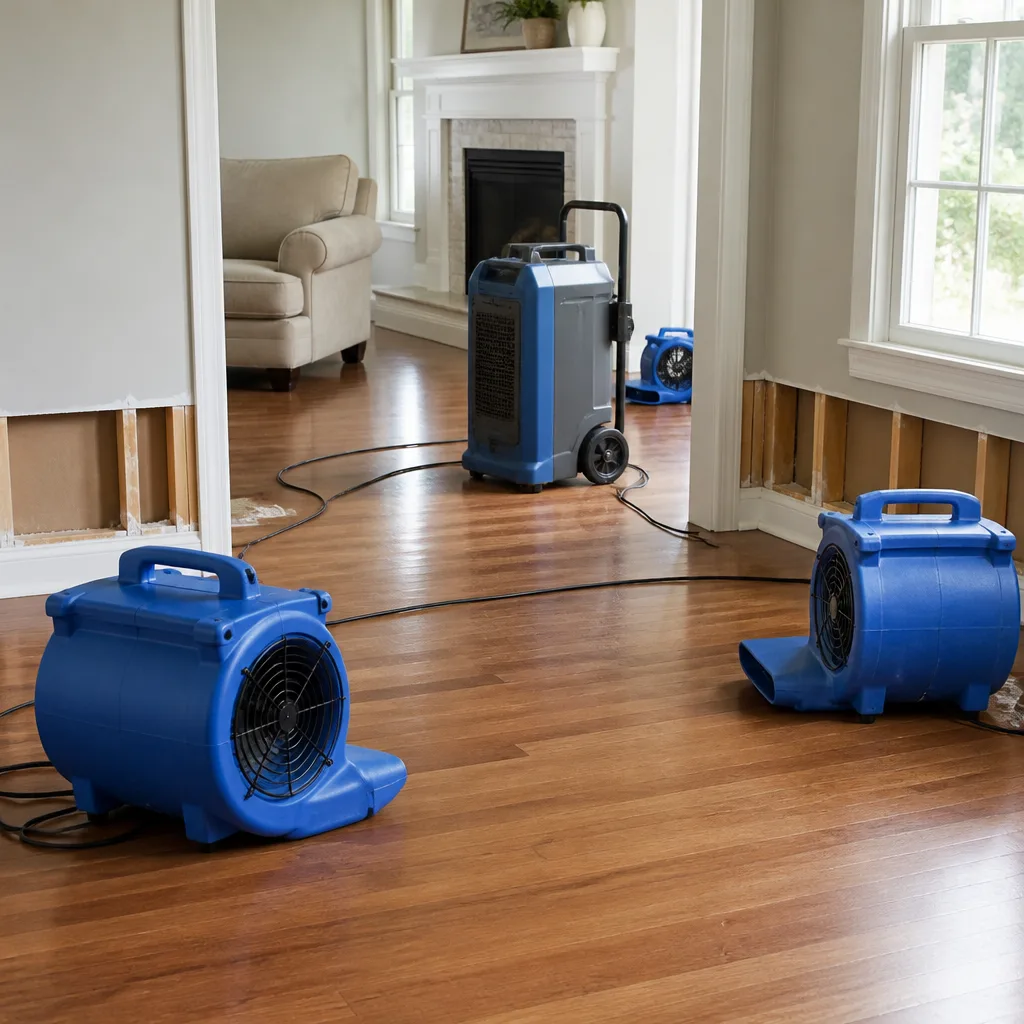 Water damage drying
 Fire & smoke cleanup
 Mold remediation
 Storm response
 Sewage cleanup
 Reconstruction
Free visual inspection and a written scope of work before any mitigation begins - photos, moisture readings, and drying logs go in your claim file
The scope we write is the scope we bill. Anything new gets shown to you, in writing, before we touch it.
Get your free estimateDamage Restoration Permits, Codes & Inspections in CA: What You Need to Know
An unpermitted drywall patch after a water leak is one of the most common defects that surfaces during a San Bernardino County home sale inspection. And it’s not just home sales that catch these things. Insurance claim auditors and mortgage underwriters have started flagging restoration work that never went through the local building department, sometimes three or four years after the contractor packed up and left. This guide walks through exactly when California code requires a permit for restoration work, who is legally responsible for pulling it, what inspectors actually check before they sign off, and how the paperwork (or lack of it) affects your insurance policy and resale value. For Damage Restoration Warning Signs: A San Bernardino Homeowner’s Reference Guide, see our related resource. If you own property anywhere in California, and especially in San Bernardino, this is the permitting knowledge that prevents a future financial headache.
Restoration work we handle
Quick Answer
In California, damage restoration work requires a building permit whenever the repair involves structural framing, electrical wiring, plumbing lines, HVAC ducting, or alteration of load-bearing assemblies. Minor cosmetic work like painting, trim, and carpet replacement generally does not require a permit. When a permit is required, the property owner is legally responsible for ensuring one is pulled before work begins, and the permit file becomes part of the permanent building record that follows the property through every future sale and insurance review.
Table of Contents
- When Does Restoration Work Require a Permit in California?
- San Bernardino County vs. City Jurisdiction: Who Rules What
- The Role of IICRC S500 Documentation in Permit Applications
- Inspection Checkpoints for Water-Damaged Assemblies
- Insurance Policy Ramifications of Unpermitted Work
- Resale Disclosure Obligations and Permit History
- Common Mistakes to Avoid
- When to Call a Professional
- Frequently Asked Questions
- The Bottom Line
When Does Restoration Work Require a Permit in California?
California Building Code (CBC) Section 105 sets the baseline, and it’s broader than most homeowners assume. A permit is required for any work that involves constructing, enlarging, altering, repairing, moving, demolishing, or changing the occupancy of a building or structure. The keyword there is “repairing.” A repair permit is not a special category reserved for additions and remodels. It applies to restoration work whenever the repair scope touches specific building systems.
Here’s the practical breakdown for restoration scenarios:
- Structural framing replacement: If water damage, fire char, or mold has compromised any stud, joist, rafter, or sill plate, and that member is being cut out and replaced, a permit is required. This includes sistering a floor joist and replacing a section of top plate. The only exception is cosmetic surface work that does not alter load paths.
- Electrical exposure: If flood water reached outlets, switches, wiring, or the panel, and the repair involves replacing conductors, breakers, or devices, the California Electrical Code requires a permit. This applies even when the damage appears minor. Water and electricity have a long memory, and corrosion inside a wall cavity is invisible until it fails.
- HVAC duct work: Flood-affected duct systems are a specific California concern because the state’s energy code (Title 24) and the mechanical code both govern duct replacement. If ducts were submerged or exposed to contaminated water, replacement requires a permit in most jurisdictions. In the Inland Empire’s older housing stock, we regularly see flex duct that was never permitted the first time, which complicates the claim before restoration even starts.
- Plumbing lines: Any repair that replaces more than a fixture or a section of supply line triggers the plumbing permit requirement. A burst pipe behind a wall that requires opening the wall and replacing pipe is a permitted repair.
- Water heater replacement: Flood-damaged water heaters are replaced under a plumbing permit in virtually every California jurisdiction. The permit also triggers a required inspection of the new unit’s strapping, venting, and thermal expansion provisions.
What does not require a permit? Paint, carpet, pad, baseboards, door and window trim, cabinet doors, and similar finish work. But here’s the distinction that catches people: replacing drywall on a wall that was opened to dry a leak is cosmetic. Replacing drywall on a fire-rated wall or a shear wall is structural. The difference matters, and it’s one reason a credentialed restoration team does more than show up with fans. Our Water Damage Restoration in San Bernardino work starts with a scope that identifies which elements are finish work and which are code-relevant assemblies.
San Bernardino’s climate adds another layer. The summer heat dries framing quickly, which can mask lingering moisture in the center of a stud. That’s why documented drying matters. A wall that feels dry on the surface can still read 20% moisture content in the middle of a 2×4, and closing that wall without proper drying is how hidden mold becomes a permit issue later. The permit process forces a pause at the inspection point where these conditions get verified.
San Bernardino County vs. City Jurisdiction: Who Rules What
San Bernardino is one of the more confusing places in California for restoration permitting because the county and city split authority depending on the property’s exact address. If you live inside the incorporated City of San Bernardino, the city’s Building and Safety Division is your permitting authority. If you live in an unincorporated area like Muscoy, Devore, or the foothills communities, you fall under San Bernardino County Land Use Services, Building and Safety.
The distinction matters for three practical reasons:
- Plan review timelines differ. The city generally processes over-the-counter permits for straightforward restoration scopes the same day. The county, with its larger geographic footprint, can take two to three business days depending on the season and staffing. During peak fire season, when inspectors are pulled into damage assessment duty in mountain communities, county review times stretch.
- Inspection scheduling works differently. City inspections in San Bernardino are typically available next business day. County inspections often require a two-day window. A homeowner coordinating their own permits should budget for this difference when planning a restoration timeline.
- Code interpretations vary on specific items. The city follows the 2022 California Building Code with local amendments adopted by the City Council. The county operates under the same state code but with its own administrative rules. For example, the city has historically required a moisture verification inspection before drywall close-in on any water loss where framing was exposed for more than 72 hours. The county’s written policy is less prescriptive, which means individual inspectors exercise more judgment. Both paths benefit from professional-grade documentation that demonstrates the assembly actually dried.
How do you know which authority governs your property? The simplest method is to look at your property tax bill. If it says “City of San Bernardino” anywhere on the document, the city governs. If it only references San Bernardino County, you’re in the county’s unincorporated territory. The address is not always decisive. Some properties have a San Bernardino mailing address but sit outside the city limit line.
For restoration work, the contractor you hire should know this split cold. A restoration company that does flood work in Del Rosa and fire work in Devore needs to know that a fire-damage structural repair under the county rules may require a different inspection order than the same repair inside city limits. When we scope a job, we identify the permitting authority before the first piece of damaged material comes out, because pulling a permit after demolition is illegal in California and creates a self-inflicted problem with the building department. Homeowners weighing their options may find our DIY vs Professional Damage Restoration: The San Bernardino Homeowner’s Decision Guide useful.
The Role of IICRC S500 Documentation in Permit Applications
This is where the gap between a professional restoration company and a handyman becomes obvious. The IICRC S500 is the international standard for professional water damage restoration. It specifies how to measure moisture, how to establish drying goals, and how to document that a structure has actually returned to a safe moisture equilibrium. Building departments in California do not require IICRC documentation by name, but here’s the thing: the data that S500-compliant work generates is exactly what an inspector needs to see before approving close-in on a water-damaged assembly.
An inspector standing in a San Bernardino living room cannot see inside a wall cavity. When drywall has been removed and the framing is exposed, they can visually inspect for mold staining, warping, and obvious saturation. But visual inspection cannot confirm that the center of a 2×4 stud has dried to below 16% moisture content. A moisture meter can. And a documented drying log, with readings taken daily at consistent locations using a penetrating moisture meter, gives the inspector the evidence needed to sign off.
This is why we run Dri-Eaz and Phoenix dehumidifiers with daily psychrometric readings on every structural drying job. It’s not theater. The data becomes part of the permit file. When a building inspector in San Bernardino asks how we know the bottom plate is dry, we can show a reading log that started at 29% moisture content and dropped below the 16% threshold over six days. That’s the difference between a permit that closes cleanly and an inspector who red-tags the job and requires destructive testing to prove dryness.
Restoration companies that don’t log moisture data cannot meaningfully support a permit application. They may be able to pull the permit, but when the inspection comes and the inspector asks for evidence that the assembly dried, the answer is a shrug. The permit stalls. The homeowner waits. Insurance gets impatient. The whole thing becomes more expensive.
Here’s the sequence we follow on a typical permitted water loss in San Bernardino:
- Initial assessment: Moisture mapping with penetrating and non-penetrating meters. Psychrometric readings of ambient temperature, relative humidity, and specific humidity. Photographs of every affected area.
- Drying plan: Equipment placement based on the S500’s calculation standards for air movement and dehumidification capacity. The plan is shared with the homeowner and, when relevant, the insurance adjuster.
- Daily monitoring: Moisture readings from the same reference points, noted in the drying log. Equipment adjusted as drying progresses.
- Drying goal verification: Final readings documented against the S500 drying goal for the materials and region. In San Bernardino’s arid climate, interior wood typically targets below 12% moisture content, but the standard specifies the target by material and condition.
- Permit close-in: The drying log, final moisture readings, and photographic documentation are submitted to the building department as part of the inspection request.
The drying documentation does more than satisfy the permit. It becomes the evidence trail that protects the homeowner if a future sale inspection questions whether the repair was done to standard. It also supports the insurance claim by demonstrating that mitigation was performed to the industry standard, not just “dried with some fans.”
Inspection Checkpoints for Water-Damaged Assemblies
When a building inspector in San Bernardino comes out to inspect water-damage restoration work, they are not just checking a box. They are verifying that the repair returns the assembly to code-compliant condition. The specific checkpoints depend on the scope, but here’s what residential inspectors in this jurisdiction typically verify:
Framing Moisture Content
This is the big one. Framing that was exposed to water must be verified dry before drywall goes back on. In San Bernardino, inspectors generally look for moisture content below 16% in framing lumber, measured with a penetrating moisture meter. Some inspectors will spot-check the reading themselves. If the contractor cannot produce readings, the inspector may require the wall to remain open until they can verify dryness on a return visit. That return visit adds time and a re-inspection fee.
Mold Assessment and Clearance
If mold remediation was part of the restoration scope, the inspector will want to see that the affected area was properly contained, removed, and cleaned before reconstruction. In California, mold assessment and mold remediation are regulated under the California Department of Public Health. A clearance from an independent, third-party mold assessor is not always required on every job, but when a permit includes mold remediation, the inspector has authority to require evidence of clearance before allowing close-in. This is where our Mold Remediation in San Bernardino process connects directly to the permit path. The containment, removal, and clearance documentation becomes part of the building record.
Electrical Verification
If the restoration scope included electrical work, the inspector will verify that the new wiring, devices, or panel components meet current California Electrical Code. In flood-affected areas, that can mean requiring AFCI or GFCI protection in locations where older unprotected circuits existed before. The inspector can require the entire affected circuit be brought up to current code, not just the damaged section. That’s a scope expansion some contractors fail to mention until the inspector is standing in the room.
Insulation Replacement
Water-damaged insulation must be removed and replaced. The inspector checks that the replacement insulation matches the R-value required by Title 24 for the climate zone. San Bernardino falls in Climate Zone 10, where wall insulation requirements are different from coastal zones. A contractor who guesses on insulation R-value will get red-tagged.
Fire-Rated Assembly Restoration
If the damaged wall or ceiling is a fire-rated assembly, which is common in attached garages and between units in multi-family buildings, the inspector verifies that the fire rating was preserved. That means the correct drywall type, proper joint treatment, and no gaps in the assembly. A garage wall in a San Bernardino home that was opened for water damage must be closed to the same fire rating it had before the loss. This is a specific failure point we see in flips and unpermitted work throughout the Inland Empire.
These checkpoints are not optional. They are what the inspector is there to verify. A restoration company that understands the checklist, and that documents its work to demonstrate compliance, keeps the permit moving. A company that treats the inspection as an inconvenience creates delays and re-inspection fees.
Insurance Policy Ramifications of Unpermitted Work
The insurance side of unpermitted restoration work is where the hidden financial risk lives. Most homeowners assume that if the insurance company paid the claim, everything was approved and legitimate. That’s not how it works. Insurance adjusters review the scope of the claim and authorize payment. They do not verify that the contractor pulled the required permits. That responsibility falls on the property owner and the contractor, and when it’s not done, the consequences can surface years later.
Here’s the scenario we’ve seen more than once in San Bernardino: A pipe bursts in 2021. The insurance company pays $18,000 for water extraction, drying, mold remediation, and reconstruction. The contractor does the work but never pulls a permit. The homeowner doesn’t know a permit was required. In 2025, the homeowner files a new claim for a separate issue in the same area, maybe a roof leak that damages the same wall. The adjuster now sees the previous repair and asks for the permit history. There’s none. The current claim is now under enhanced scrutiny. The insurance company may deny coverage for the new damage on the grounds that the prior unpermitted work contributed to or complicated the new loss. In the worst case, the insurer reviews the original claim and alleges the homeowner was overpaid for work that didn’t meet code, triggering a demand for reimbursement.
California insurance code does not automatically void a policy for unpermitted work. But it does require the insured to maintain the property in a condition that does not increase the risk of loss. Unpermitted structural or electrical work that fails can be characterized as an increase in risk. When the unpermitted work is discovered in the context of a new claim, the homeowner carries the burden of proving the old work didn’t cause or worsen the new damage. That’s a lousy position to be in.
The fix is straightforward: require a permit on every restoration job that involves code-relevant assemblies, and keep the permit file with the property records. When we handle a Fire Damage Restoration in San Bernardino project, the permit is part of the scope from day one. The homeowner gets a final permit history that goes into their permanent file, and that history is the strongest defense if an insurer ever questions the quality of the work.
Resale Disclosure Obligations and Permit History
California Civil Code Section 1102 requires sellers to disclose material facts about the property, including work performed without permits. The Transfer Disclosure Statement specifically asks whether the seller is aware of any “significant defects or malfunctions” and whether any work was done without required permits. A homeowner who had unpermitted restoration work done must answer yes, or commit misrepresentation. The choice is between disclosing an unpermitted repair on the TDS and waiting to see how it affects the buyer’s offer, or not disclosing and carrying the risk of a post-sale lawsuit.
In San Bernardino’s real estate market, where inventory moves fast and multiple-offer situations are common, unpermitted work is a specific point of negotiation. Buyers with good agents ask for the permit history on any home that shows signs of past water, fire, or mold repair. If the history is clean, the sale proceeds. If the history is missing, one of three things happens:
- Price reduction: The buyer demands a discount to cover the cost of retroactive permitting and potential repair work to bring the unpermitted work up to code. That discount is typically larger than the original permit fee.
- Escrow holdback: The buyer requires a holdback, where a portion of the sale proceeds is held in escrow until the unpermitted work is permitted, inspected, and signed off. The seller effectively pays for the fix after the sale.
- Deal termination: The buyer walks. In a market where buyers have other options, unpermitted structural or electrical work can be an immediate deal killer.
The retroactive permitting process in San Bernardino is not a simple administrative procedure. The building department will require the work to be exposed, inspected, and brought up to current code. That can mean opening walls, removing cabinets, or excavating around foundations, depending on the scope of the original work. A retrofit permit routinely costs three to five times the original permit because of the destructive testing and repair required. For a homeowner who saved $800 by skipping a permit on a $25,000 restoration, the resale cost can exceed $10,000.
The cleanest path is to make permitting a condition of every restoration contract. Ask the contractor, in writing, which permits are required for the scope and when they will be pulled. If the contractor says no permit is needed and the scope includes framing, electrical, or plumbing, get a second opinion from the building department directly. The City of San Bernardino Building and Safety Division staff will answer permit questions over the counter or by phone without requiring a formal application. For a deeper walkthrough, read our How to Hire a Damage Restoration Contractor in San Bernardino: A Step-by-Step Guide.
Common Mistakes to Avoid
- Assuming the insurance company handles permits. The insurance company handles coverage. Permits are the responsibility of the property owner and the contractor. If the contractor doesn’t pull the permit, the owner is still legally responsible. Don’t assume anyone else handled it. Ask for the permit number and verify it with the building department.
- Closing walls before the inspection. A contractor who closes the drywall before the inspector sees the framing creates a situation where the inspector can require destructive reopening. In San Bernardino, where summer heat pushes everyone to finish jobs fast, this is one of the most common permit failures.
- Treating mold cleanup as a cosmetic issue. Mold remediation is not the same as cleaning. If the scope involves more than 10 square feet of mold, or if the mold was caused by water damage that carried sewage or contaminated water, California requires specific containment and removal protocols. Skipping those protocols, and then handling the permit as though it were a simple drywall patch, can result in a failed clearance test.
- Using a general contractor who does not understand IICRC standards. A general contractor can pull a permit for restoration work in California. But if they don’t understand the drying science behind the S500 standard, they can’t support the permit with the documentation the inspector needs to approve close-in. The permit stalls, and the homeowner pays in delays.
- Assuming “over-the-counter” means “not a real permit.” Some restoration scopes can be permitted over the counter in San Bernardino without a full plan review. That’s still a permit. It still requires inspections. It still becomes part of the building record. The convenience of same-day approval doesn’t reduce the code requirements.
- Repairing fire damage without checking for structural compromise. Fire that burns framing, even if it doesn’t collapse the assembly, can char the structural members. In San Bernardino’s older housing stock, where balloon framing and knob-and-tube remnants appear, a fire that looked minor from the surface can hide structural damage in the wall cavities. The inspector’s job is to verify the structural repair. The contractor’s job is to expose enough of the assembly for that inspection to mean something.
When to Call a Professional
If your restoration scope includes structural framing, electrical, plumbing, or HVAC work, you need a contractor who understands both the restoration science and the California permitting process. If you’ve discovered water damage that has been present for more than 72 hours, or mold growth larger than 10 square feet, or fire damage that penetrated building cavities, this is not a DIY permit situation. The technical documentation required to close the permit, from moisture readings to mold clearance to electrical verification, comes from professional-grade equipment and trained interpretation.
San Bernardino Restoration Co handles the full path from emergency mitigation through permitted reconstruction. Our IICRC-certified technicians run Dri-Eaz, Phoenix, and XPOWER equipment on structural drying, and we document every reading. We pull permits in both the City of San Bernardino and unincorporated San Bernardino County. San Bernardino Restoration Co offers free estimates in San Bernardino. Call (877) 358-7678 to schedule an assessment.
Frequently Asked Questions
Replacing drywall after a water leak does not require a permit in California if the repair is cosmetic and does not affect structural, electrical, plumbing, or mechanical systems. However, if the wall being repaired is a fire-rated assembly, a shear wall, or if the repair requires any structural member replacement, a permit is required. In San Bernardino, the Building and Safety Division can confirm whether your specific scope triggers a permit.
In California, the property owner is legally responsible for ensuring a permit is pulled, even when the contractor handles the application as part of the contract. If the contractor says they will pull the permit, get the permit number and verify it with the building department before work begins. A contractor’s failure to pull the permit does not relieve the owner of responsibility.
San Bernardino building inspectors typically verify framing moisture content below 16% before allowing drywall close-in on a water-damaged assembly. The reading must be taken with a penetrating moisture meter at consistent reference points. Documented daily drying logs that show the moisture progression support a clean inspection and avoid re-inspection fees.
You can sell the house, but California law requires you to disclose the unpermitted work on the Transfer Disclosure Statement. Buyers typically negotiate a price reduction, demand an escrow holdback for retroactive permits, or walk away entirely. Unpermitted restoration work is one of the most common negotiation choke points in San Bernardino real estate transactions.
Insurance companies can scrutinize or deny a new claim if unpermitted prior work contributed to or complicated the new loss. The insurer may also review the original claim and demand reimbursement if they determine the scope included work that should have been permitted. A complete permit file is the homeowner’s best protection against these disputes.
IICRC certification means the restoration technician has been trained and tested to the S500 standard for water damage restoration, which requires documented moisture readings, drying logs, and final verification before reconstruction. While the building department does not require IICRC certification by name, the documentation that S500-compliant work generates is exactly what inspectors need to approve close-in. A permit supported by professional documentation closes faster and with fewer re-inspections.
The Bottom Line
California’s permit requirements for restoration work exist to protect the homeowner, the future buyer, and the insurance carrier. When the work is permitted, inspected, and documented, the property has a verifiable history that protects its value. When permits are skipped, the savings evaporate at resale, at claim time, or both. San Bernardino’s jurisdiction split between city and county, combined with the region’s older housing stock, makes it especially important to work with a contractor who knows which authority governs your property and what that authority expects to see at inspection. Explore more guides & resources on protecting your property.
The work itself is only half the restoration. The paper trail is the other half. A contractor who documents moisture readings, pulls the right permits, and closes the permit file cleanly is delivering a completed restoration, not just a dried-out room. For help with permitted restoration work in San Bernardino, call (877) 358-7678 or read more about our San Bernardino Restoration Co home services.
Written by the team at San Bernardino Restoration Co, serving San Bernardino since 2016.
See the difference
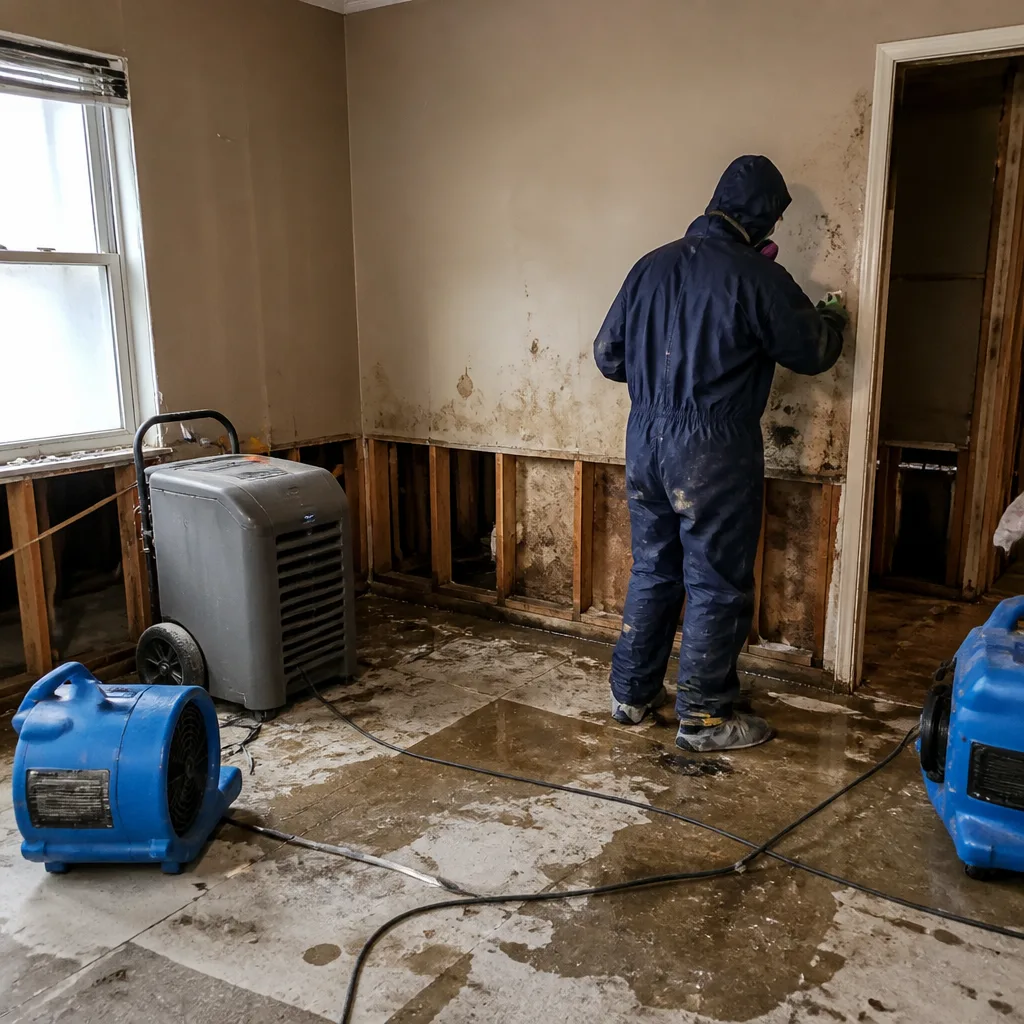 Before
 After
 Before
 After
 Before
 After