
Last updated October 30, 2026
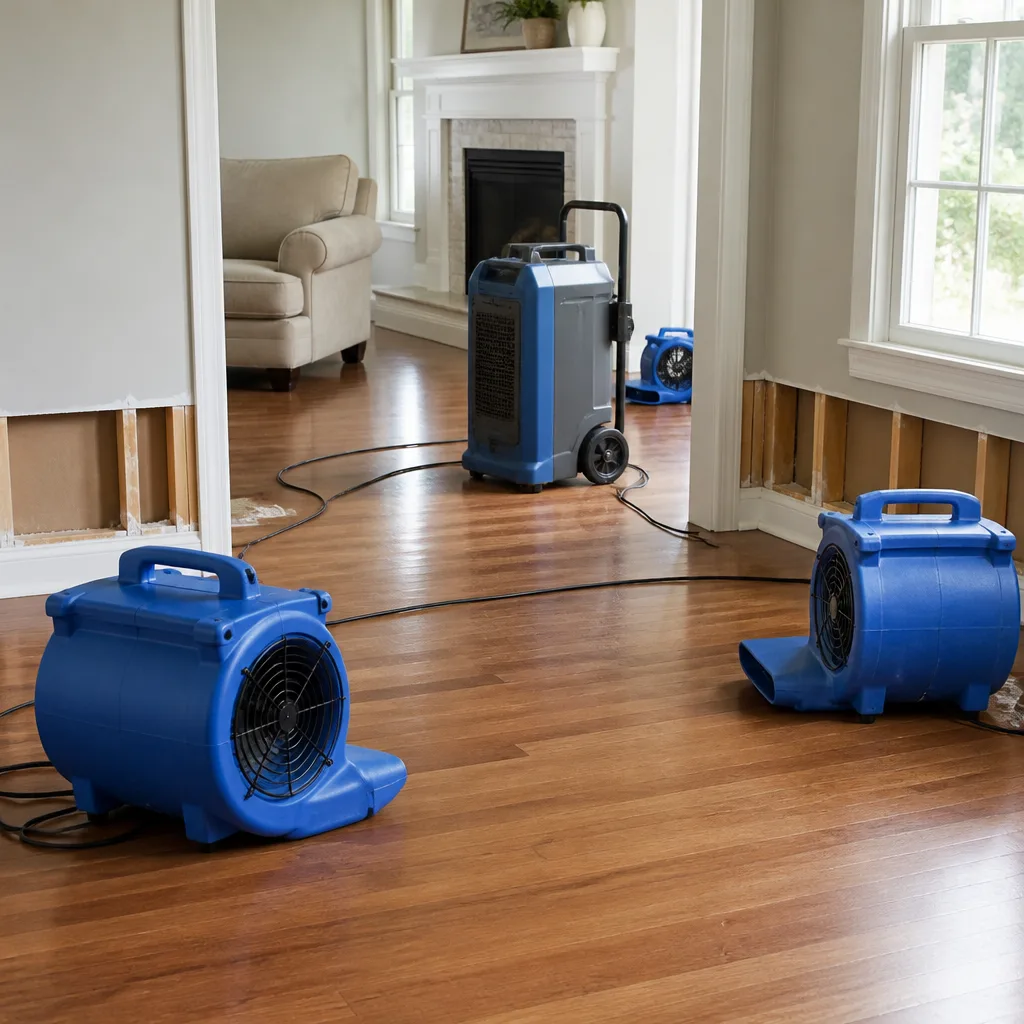 Water damage drying
 Fire & smoke cleanup
 Mold remediation
 Storm response
 Sewage cleanup
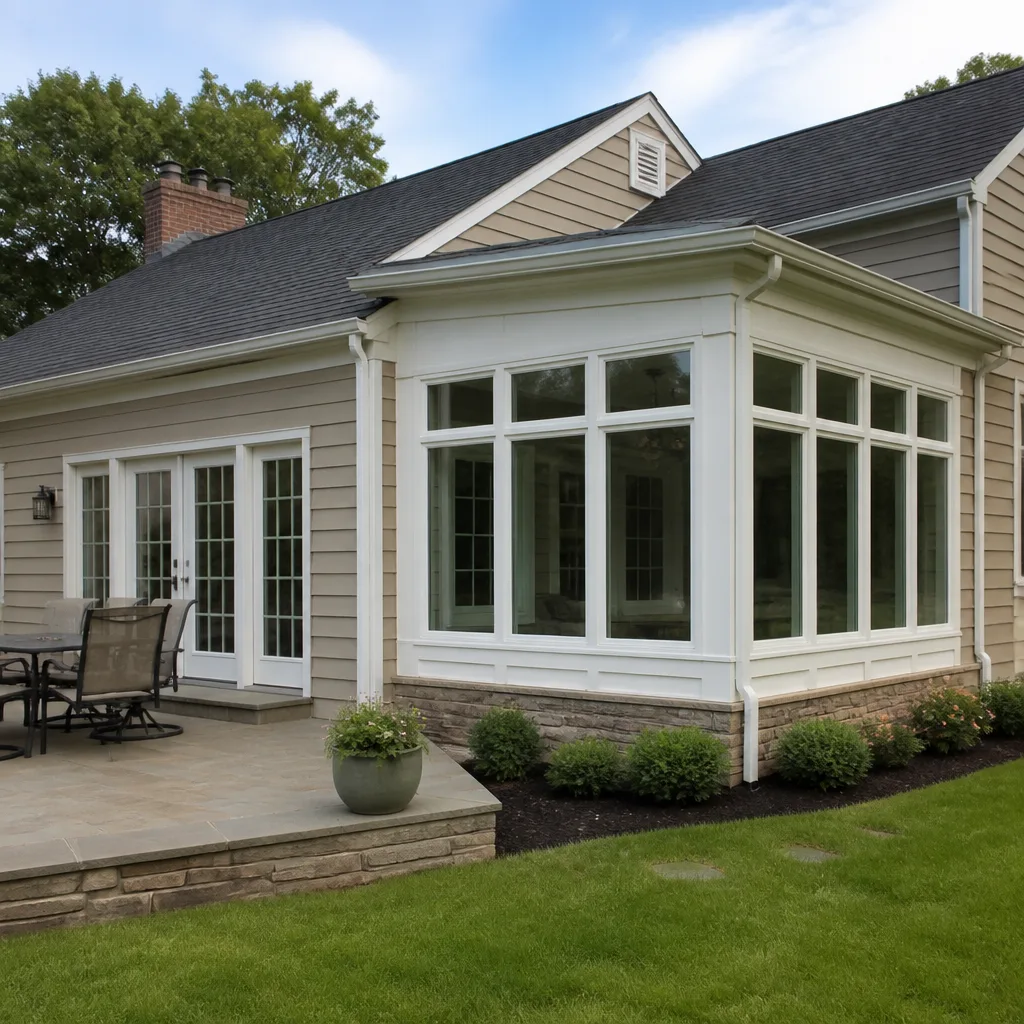 Reconstruction
Free visual inspection and a written scope of work before any mitigation begins - photos, moisture readings, and drying logs go in your claim file
The scope we write is the scope we bill. Anything new gets shown to you, in writing, before we touch it.
Get your free estimateDIY vs Professional Damage Restoration: The San Bernardino Homeowner’s Decision Guide
A box fan and a rented dehumidifier from Home Depot can handle a Category 1 clean-water spill on sealed concrete. That is a legitimate DIY scenario, and we’ll tell you exactly when it makes sense. But the same homeowner-grade approach applied to Category 2 water sitting on a wood subfloor will produce conditions that meet the IICRC definition of mold-ready substrate within 48 hours, and the homeowner won’t know anything went wrong until the smell starts. This guide gives you a concrete decision framework for San Bernardino homes, based on water category, affected materials, and what your insurance company expects to see in the documentation. For more guides & resources, see our blog.
Quick Answer
DIY restoration works only for small, clean-water spills on non-porous surfaces that you can dry completely within 24 to 48 hours. If the water is gray or black (Category 2 or 3), if porous materials like drywall, carpet pad, or OSB subfloor are wet, or if you need insurance documentation for anything beyond a minor claim, professional restoration with documented moisture readings is the safer financial decision. In San Bernardino’s dry climate, homeowners often assume evaporation will solve the problem, but hidden moisture in wall cavities and subfloors persists regardless of outdoor humidity. Our Seasonal Damage Restoration Care for San Bernardino: Year-Round Homeowner’s Guide explains how temperature swings affect drying year-round.
Restoration work we handle
Table of Contents
- Understanding the Three Water Categories: What You’re Actually Dealing With
- The Materials That Demand Professional Drying Regardless of Water Type
- The Equipment Gap: What Consumer-Grade Gear Actually Delivers
- How DIY Mitigation Affects Your Insurance Claim
- The Three Scenarios Where DIY Is Genuinely Appropriate
- A 7-Step DIY Process for Small Clean-Water Spills
- When Professional Restoration Is Non-Negotiable
- Common Mistakes to Avoid
- When to Call a Professional
- Frequently Asked Questions
Understanding the Three Water Categories: What You’re Actually Dealing With
The IICRC (Institute of Inspection, Cleaning and Restoration Certification) classifies water damage into three categories, and this classification is the single most important factor in your DIY-versus-professional decision. Most homeowners in San Bernardino never learn these categories until they’re standing in a wet room, and by then, the wrong assumption can cost thousands.
Category 1: Clean water. This comes from a sanitary source. A broken supply line under a sink, a leaky water heater inlet, a burst pipe with municipal water, or rainwater that entered through a new roof leak before touching any contaminated surface. This is the only category where DIY restoration is defensible, and even then, only with specific scope limits we’ll detail below.
Category 2: Gray water. This water contains significant contamination but not raw sewage. Think washing machine overflow, dishwasher discharge, toilet overflow with urine but no feces, or water that sat for more than 24 hours in Category 1 conditions and began growing bacteria. In San Bernardino’s warmer months, Category 1 water can degrade to Category 2 faster than in coastal climates because indoor temperatures accelerate bacterial growth. Once water is Category 2, the IICRC standard requires antimicrobial treatment and protective equipment during cleanup. This is professional territory.
Category 3: Black water. Sewage backup, flood water from outside (including San Bernardino storm drain overflow during winter rain events), or any water that has contacted fecal matter, pesticides, or heavy metals. Category 3 water carries pathogens, and every porous material it touches, including carpet, pad, drywall, and some flooring, requires removal and disposal per IICRC protocol. There is no DIY scenario for Category 3. None.
Here’s the problem: Category 1 water doesn’t stay Category 1 for long. The IICRC standard notes that clean water exposed to room temperature for 48 hours begins transitioning to Category 2 as microorganisms multiply. This is why speed matters, and why the box-fan approach works on a sealed concrete floor the same day but fails on a wood subfloor by the weekend.
The Materials That Demand Professional Drying Regardless of Water Type
Water category is only half the decision. The other half is what got wet. Certain building materials behave in ways that make visible surface drying worthless, because the moisture is trapped where you cannot see it, measure it, or dry it with consumer equipment. These materials are common in San Bernardino construction, and they change the DIY calculus immediately.
OSB (Oriented Strand Board) subfloor. This is the most deceptive material in a water damage event. OSB is manufactured from wood strands pressed with wax and resin adhesives. When it gets wet, the edges swell first, and the interior layers absorb moisture through capillary action. You can dry the surface completely, walk on it barefoot, and still have a moisture content of 20% or higher trapped inside the board. IICRC standards call for structural wood to reach a moisture content at or below 16% before it is considered dry. Without a penetrating moisture meter, you cannot measure this, and without professional air movement targeted under the floor using Injectidry systems, you cannot dry it in place. We have seen OSB subfloors in San Bernardino homes where the carpet felt dry to touch three days after a supply line leak, and the subfloor underneath was still saturated enough to support mold growth.
Spray foam insulation cavities. Closed-cell spray foam is common in San Bernardino attics and exterior walls because of our summer heat. The problem: closed-cell foam repels water, which sounds good, but it also blocks evaporation. Water trapped behind or around spray foam inside a wall cavity has no path to dry naturally. Drying these cavities requires drilling access points, inserting drying probes, and using systems like Injectidry that force air through the cavity. A dehumidifier in the room does nothing for water inside a foam-filled wall.
Historic adobe or masonry walls. San Bernardino has a meaningful stock of older adobe and masonry construction, particularly in the neighborhoods near downtown and the historic districts. Adobe is essentially sun-dried earth, and when it absorbs water, it loses structural integrity. Masonry wicks moisture upward from the base through capillary action. Both materials require professional-grade dehumidification and days of monitored drying, because the moisture content in masonry must be measured at depth, not at the surface.
HVAC duct insulation. If water enters your ductwork, the fiberglass insulation lining inside the ducts will absorb it. This is a mold-ready environment that no consumer dehumidifier can address, because the moisture is inside the duct system. Professional restoration involves either replacing the insulation or using duct-specific drying protocols that verify dryness through access points. In San Bernardino’s summer, an AC system is not optional, and running it with wet duct insulation spreads contaminated air through the house.
If any of these materials are wet, the DIY decision is already made for you. The question is not whether to hire a professional, but how quickly you can get one on site.
The Equipment Gap: What Consumer-Grade Gear Actually Delivers
The most common DIY plan we hear goes something like this: rent two dehumidifiers and three fans from a hardware store, run them for three days, and call it dry. This plan underestimates the physics of drying, and the gap between consumer rental equipment and professional restoration equipment is wider than most homeowners realize.
Consumer rental dehumidifiers are typically refrigerant-based units rated to remove between 20 and 40 pints of water per day under ideal conditions (80°F and 60% relative humidity). Professional LGR (low-grain refrigerant) dehumidifiers like Dri-Eaz and Phoenix units remove between 130 and 180 pints per day under the same conditions. That is a 4x to 7x difference in water removal rate. On a saturated carpet and pad in a San Bernardino living room that has absorbed 15 gallons of water, a consumer dehumidifier takes approximately 10 to 14 days to reach target dryness if it gets there at all. An LGR unit paired with proper air movement gets there in 3 to 4 days.
The GPP (grains per pound) removal rate matters because mold has a clock. IICRC research shows that mold colonization can begin within 24 to 48 hours under suitable conditions. Every day a DIY drying attempt runs is another 24-hour window where mold growth is biologically possible. The speed difference between consumer and professional equipment is not a convenience factor. It is the difference between restoring materials and replacing them.
Air movement is the second gap. Consumer box fans move air across a surface at roughly 1,500 to 2,500 CFM (cubic feet per minute). Professional air movers from XPOWER and B-Air move air at 3,000 to 5,000 CFM, and they are designed to be angled along the floor to create a vortex that forces evaporation at the boundary layer where water releases from the material. Properly positioned, professional air movers create turbulence that consumer fans simply cannot match at floor level where the water actually is.
The third gap is extraction. Before any drying can happen, standing water must be physically removed. A shop vac moves water, but not enough. Professional truck-mount extractors pull water with enough force to remove moisture from deep within carpet fibers, pad, and even the top layer of subfloor. A homeowner with a shop vac typically removes 60 to 70% of the water. A professional extraction removes 90 to 95%. That remaining 25 to 30% is the difference between drying in days versus weeks, or not drying fully at all.
At San Bernardino Restoration Co home page readers will find a deeper explanation of how our equipment fleet operates, including the specific role of Dri-Eaz dehumidifiers and Injectidry systems in structural drying.
How DIY Mitigation Affects Your Insurance Claim
Here is a sentence that matters more than most homeowners expect: your insurance policy requires you to take reasonable steps to prevent further damage, and it requires you to document those steps. The phrase in most policies is “reasonable steps to mitigate further loss,” and what counts as reasonable is evaluated by an adjuster who has seen thousands of claims. Your word that you dried things thoroughly carries significantly less weight than a moisture log with readings taken at 24-hour intervals.
Professional restoration companies document drying in a way that adjusters recognize and accept. This documentation includes initial moisture readings across all affected materials, a drying plan with equipment placement, daily moisture readings showing progress, and a final set of readings confirming the structure has reached the IICRC standard for dryness. This is called a drying log, and it is the document that proves you fulfilled your policy’s mitigation requirement.
When a homeowner performs DIY mitigation and then files a claim for related damage, the adjuster will ask for evidence that drying was completed. Without a drying log, the homeowner has a narrative, not documentation. If mold develops later and the homeowner cannot demonstrate that reasonable steps were taken, the insurance company may classify the mold as a failure to mitigate, which can reduce or deny coverage for the secondary damage.
This does not mean every water event requires a professional. It means that if you are filing a claim, or if there is any chance the damage will exceed your deductible, the documentation burden favors professional restoration from the start. The cost of professional drying is often offset by the claim that gets approved versus the claim that gets partially denied.
For San Bernardino homeowners dealing with documented water damage, our Water Damage Restoration in San Bernardino page explains the full documentation process, including how moisture readings are taken and what the drying log looks like.
The Three Scenarios Where DIY Is Genuinely Appropriate
This guide is not anti-DIY. We are anti-losing-your-subfloor-and-your-claim. There are three specific scenarios where DIY restoration is the right call, and we will give you the exact scope parameters so you know you are inside the safe zone. If your situation is more complex, read our How to Hire a Damage Restoration Contractor in San Bernardino: A Step-by-Step Guide.
Scenario 1: Small Category 1 spill on non-porous flooring. A glass of water knocked over. A pet bowl tipped. A supply line leak that you caught within minutes, on sealed concrete, tile, or vinyl flooring with no adjacent drywall, no baseboard contact, and no water that ran under cabinetry. If the puddle is contained, the surface is non-porous, and you can dry it completely within 24 hours using towels and a fan, this is DIY territory. The moment water touches drywall, baseboards, carpet, or any seam where it can travel underneath, you have left the DIY scenario.
Scenario 2: Single-item water exposure with no floor contact. A roof leak that dripped onto a countertop and damaged nothing else. A window left open in a rainstorm that wetted a windowsill. A water bottle that leaked inside a cabinet with a solid bottom that contained the water. If one removable, non-structural item is wet and everything around it is dry, dry the item and move on. This includes things like a throw rug on a tile floor, a single piece of furniture on a sealed surface, or a bath mat.
Scenario 3: You caught the leak immediately, and the affected area is smaller than 10 square feet of non-porous surface. This is the upper limit of DIY scope. If you were home, you saw the leak start, you shut off the water within minutes, and the water spread across a sealed concrete garage floor or a tile bathroom floor without reaching drywall, you can handle this. Your tools: towels, a mop, and a fan. Your timeline: dry within 24 hours. Your verification: the surface is dry to touch, and no odor develops within 7 days. For a deeper maintenance routine, see our Water Damage Restoration Maintenance Checklist for San Bernardino Homeowners.
Anything beyond these three scenarios, and the risk-reward calculation shifts. The cost of professional drying is measured in hundreds or low thousands of dollars in most cases. The cost of unmitigated water damage is measured in thousands or tens of thousands when mold remediation, subfloor replacement, and insurance denials enter the picture.
A 7-Step DIY Process for Small Clean-Water Spills
If your situation matches one of the three scenarios above, here is the correct process, in order.
- Stop the water source. Shut off the supply valve, turn off the appliance, or close the window. Nothing else matters until the water is stopped.
- Remove standing water immediately. Use towels, a mop, or a wet vac. The goal is to get the surface dry enough that no water pools.
- Determine the exact boundary of the wet area. Run your hand along the floor. Where does the moisture stop? Mark it mentally or with tape. If the boundary extends under cabinetry, baseboards, or appliances, you are no longer in a DIY scenario.
- Set up air movement. Position a box fan so it blows across the wet surface at a low angle. Air moving directly across the surface is what drives evaporation.
- Run a dehumidifier if you have one. A consumer dehumidifier will help, but understand its limits. It is removing moisture from the room, not from inside the floor.
- Check the area at 24 hours. Is it dry to touch? Any swelling, warping, or discoloration? Any odor? If the answer to any of those is yes, stop and call a professional.
- Monitor for 7 days. Mold smell or visible growth within a week means moisture was trapped somewhere you could not see. Professional assessment is now required.
This process works because the material that got wet is non-porous. You are drying water that sits on top of something, not water that has soaked into something. The distinction is the entire point of this guide.
When Professional Restoration Is Non-Negotiable
Some situations leave no room for a DIY debate. Here is the list.
Any Category 2 or Category 3 water. If the water came from a washing machine, dishwasher, toilet overflow, or any outside source, it contains contamination. The IICRC standard requires antimicrobial application, protective equipment, and in the case of Category 3, removal of porous materials. This is not a drying project. This is a remediation project, and it requires IICRC-certified technicians following specific protocols.
Water in wall cavities, under flooring, or inside HVAC ducts. Any hidden moisture that you cannot see, access, or measure requires professional drying equipment and moisture monitoring. The Injectidry system exists specifically for this purpose, allowing wall-cavity and subfloor drying without destructive tear-out in many cases.
Any water damage where mold is already visible or smelled. Once mold is present, the job has shifted from water restoration to Mold Remediation in San Bernardino. Mold remediation requires containment to prevent spore spread, HEPA filtration, and clearance testing after the work is complete. This is a specialized discipline with its own IICRC certification, and no homeowner should attempt it.
Sewage backups. Category 3. No exceptions. Professional remediation with full containment and proper disposal is required for health and safety reasons.
Any fire or smoke damage. Fire damage involves smoke residue, soot, and often water from firefighting efforts. The chemical composition of smoke residue varies by what burned, and improper cleaning can set stains and odors permanently. Our Fire Damage Restoration in San Bernardino page covers the full scope of why smoke damage is its own discipline.
Insurance claims over your deductible. If you plan to file a claim, professional documentation protects you. The cost of professional drying is documented, the process is documented, and the outcome is verified. An adjuster reviewing your file sees a complete mitigation record. That is what you want.
Common Mistakes to Avoid
- Assuming surface dryness means the structure is dry. San Bernardino’s low humidity evaporates surface water quickly, which makes homeowners believe drying is complete. The moisture inside a carpet pad, subfloor, or wall cavity is unaffected by surface evaporation. This is the most common and most expensive mistake we see.
- Treating gray water like clean water. Washing machine overflow is not the same as a supply line leak. The water has detergent, fabric fibers, and bacteria from the clothing wash cycle. It requires antimicrobial treatment, not just drying.
- Waiting to see what happens. Every 24-hour delay during the drying window increases the probability of mold growth. The IICRC timeline is 24 to 48 hours for potential colonization. Waiting costs more than calling.
- Using a household vacuum to extract water. Shop vacs have their place for small spills, but a standard household vacuum is an electrical hazard around water and will not survive contact with moisture. This is a safety issue, not just an effectiveness issue.
- Skipping the documentation. If you do perform DIY mitigation, photograph everything. Take pictures before you start, during the process, and after. Keep receipts for any equipment rental. If you file a claim later, these photographs are your only evidence that you took reasonable steps.
- Believing bleach solves mold. Bleach kills surface mold on non-porous materials but does not penetrate porous materials like drywall, wood, or carpet. The roots of the mold survive, and the water in the bleach can actually feed future growth. Mold remediation on porous materials requires either removal or professional treatment.
- Dismissing San Bernardino’s climate as a drying advantage. Yes, our air is dry. But the materials inside your home that got wet are not drying through evaporation into outdoor air. They are trapped inside floor assemblies, wall cavities, and under vapor barriers. The outdoor climate does not help these hidden spaces dry.
When to Call a Professional
You should call a professional restoration company when you have any Category 2 or Category 3 water, when porous materials are wet, when water has entered wall cavities or under flooring, when mold is visible or smelled, or when you are filing an insurance claim. These situations require IICRC-certified protocol, professional-grade equipment, and documentation that survives adjuster review. San Bernardino Restoration Co offers free estimates in San Bernardino, and our team can assess the situation, take moisture readings, and tell you exactly what you are dealing with before you commit to anything. Call (877) 358-7678.
Frequently Asked Questions
Yes, for small Category 1 spills on non-porous surfaces that you can dry within 24 hours. No, for any water in carpet pad, drywall, subfloor, or wall cavities, where a consumer rental dehumidifier removes roughly 20 to 40 pints per day versus 130 to 180 pints per day for professional LGR units. The equipment gap determines whether drying takes 3 days or 14 days, and 14 days means mold is likely.
Category 1 is clean water from a supply line or municipal pipe with no contamination. Category 2 is gray water from washing machines, dishwashers, or toilet overflow without feces, containing significant bacteria. Category 3 is black water from sewage or outside floodwater, containing pathogens. If you are unsure, treat it as one category worse than your best guess, because the cost of being wrong is high.
Your insurance policy requires reasonable mitigation steps, and professional documentation proves you took them. DIY mitigation without a drying log leaves you with a narrative instead of documentation, and adjusters weigh documentation heavily. For claims above your deductible, professional restoration is the safer path to approval.
Mold colonization can begin within 24 to 48 hours under suitable conditions, and San Bernardino’s warm indoor temperatures accelerate microbial growth even when outdoor humidity is low. The 48-hour window is the IICRC standard reference point, and once mold establishes, the project shifts from drying to remediation with containment and clearance testing.
No. Injectidry systems are professional equipment, not consumer rental items, and they require training to install correctly. The system forces air through wall cavities and subfloor spaces using specialized manifolds and hoses, and the operator must monitor humidity and moisture levels throughout the process. Improper use can actually blow moisture deeper into the cavity.
Cost depends on water category, affected materials, square footage, and drying time. Small Category 1 projects on non-porous flooring may run in the low hundreds, while full Category 2 or 3 remediation with material removal and structural drying can run into the thousands. The free estimate from San Bernardino Restoration Co includes moisture readings so you know the actual scope before any work begins. Call (877) 358-7678.
The Bottom Line
The DIY-versus-professional decision in damage restoration comes down to three questions. What category is the water? What materials got wet? And who needs to see the documentation? If the answer is Category 1 water on non-porous surfaces with no insurance claim, you can handle it with towels, a fan, and 24 hours of diligence. If the answer is anything else, the cost of professional restoration is almost always less than the cost of the mistakes that follow DIY attempts on the wrong side of the line. San Bernardino homeowners face a climate that hides moisture behind dry surfaces, and building materials that trap water where you cannot see it. You do not need to guess. Get a moisture reading, get a scope in writing, and decide with actual data instead of assumption.
Written by the team at San Bernardino Restoration Co, serving San Bernardino since 2016.
See the difference
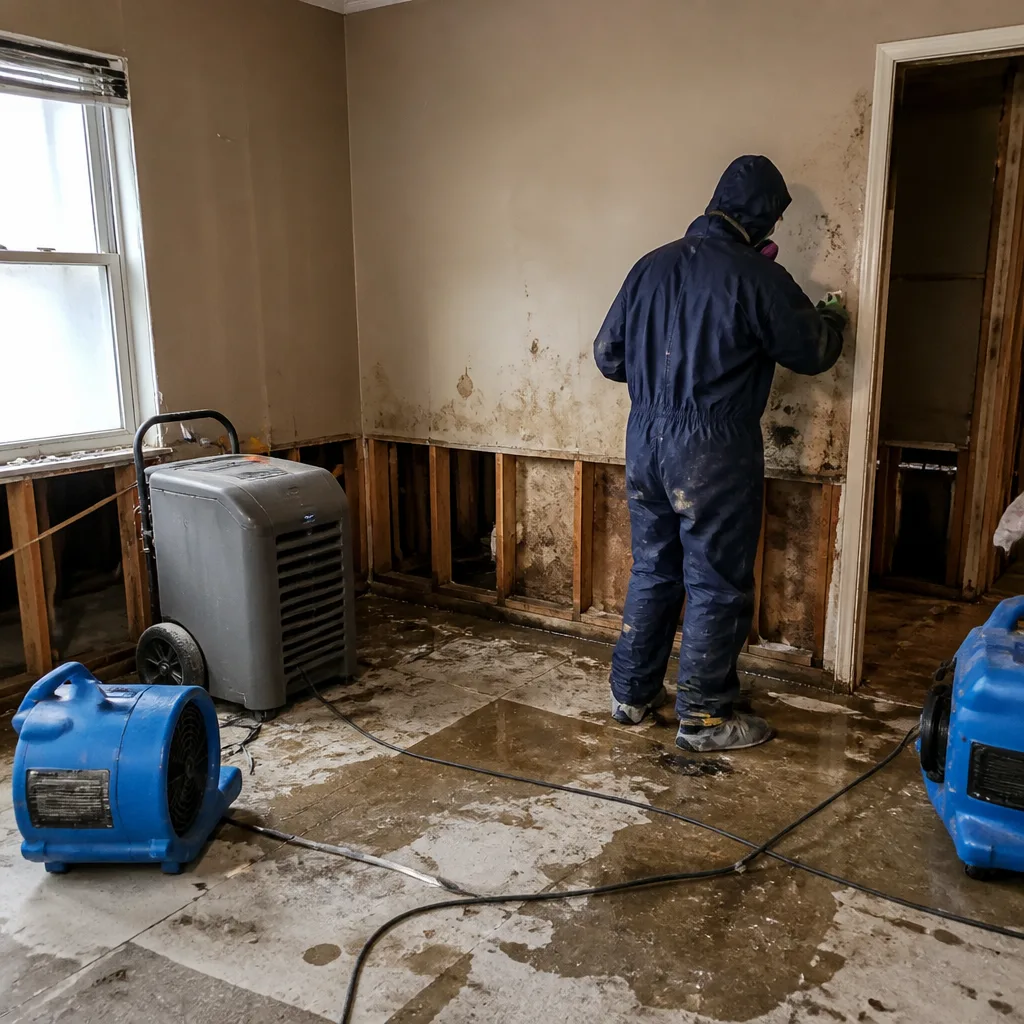 Before
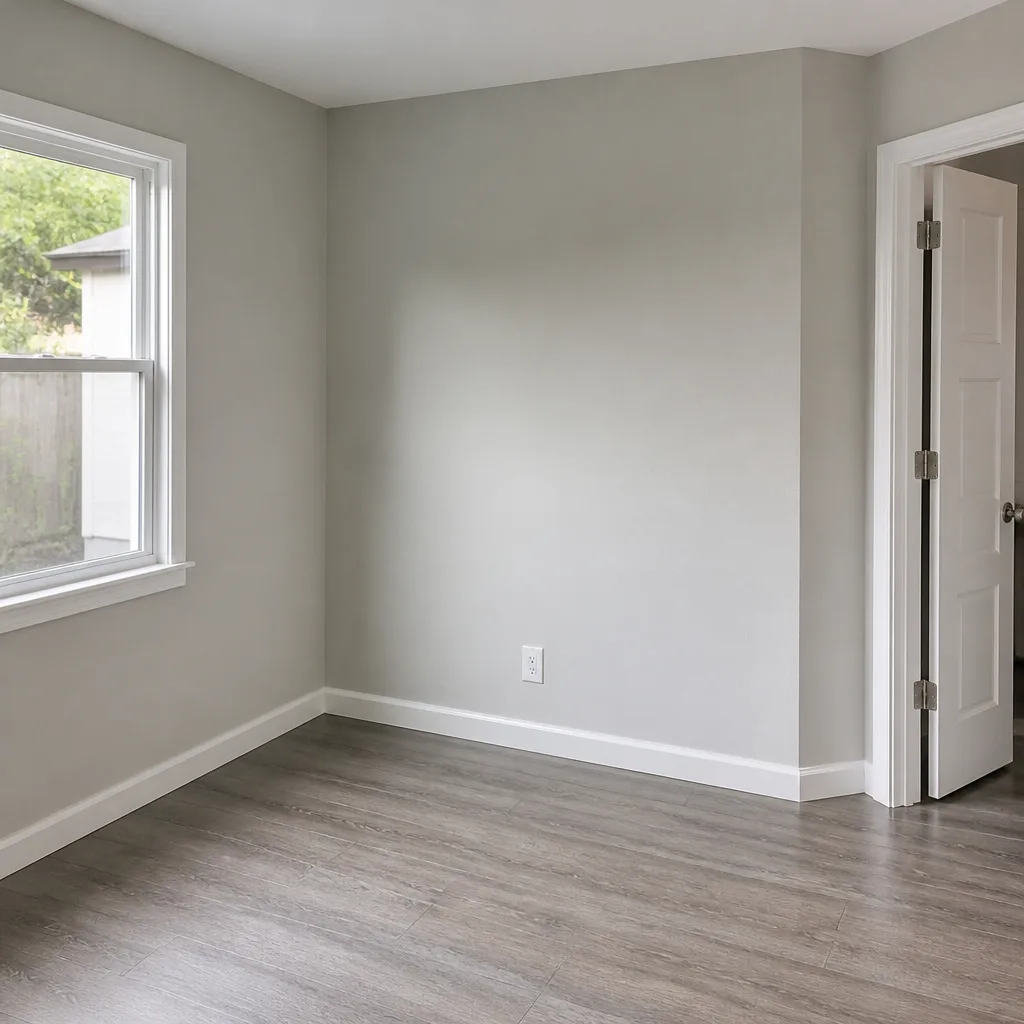 After
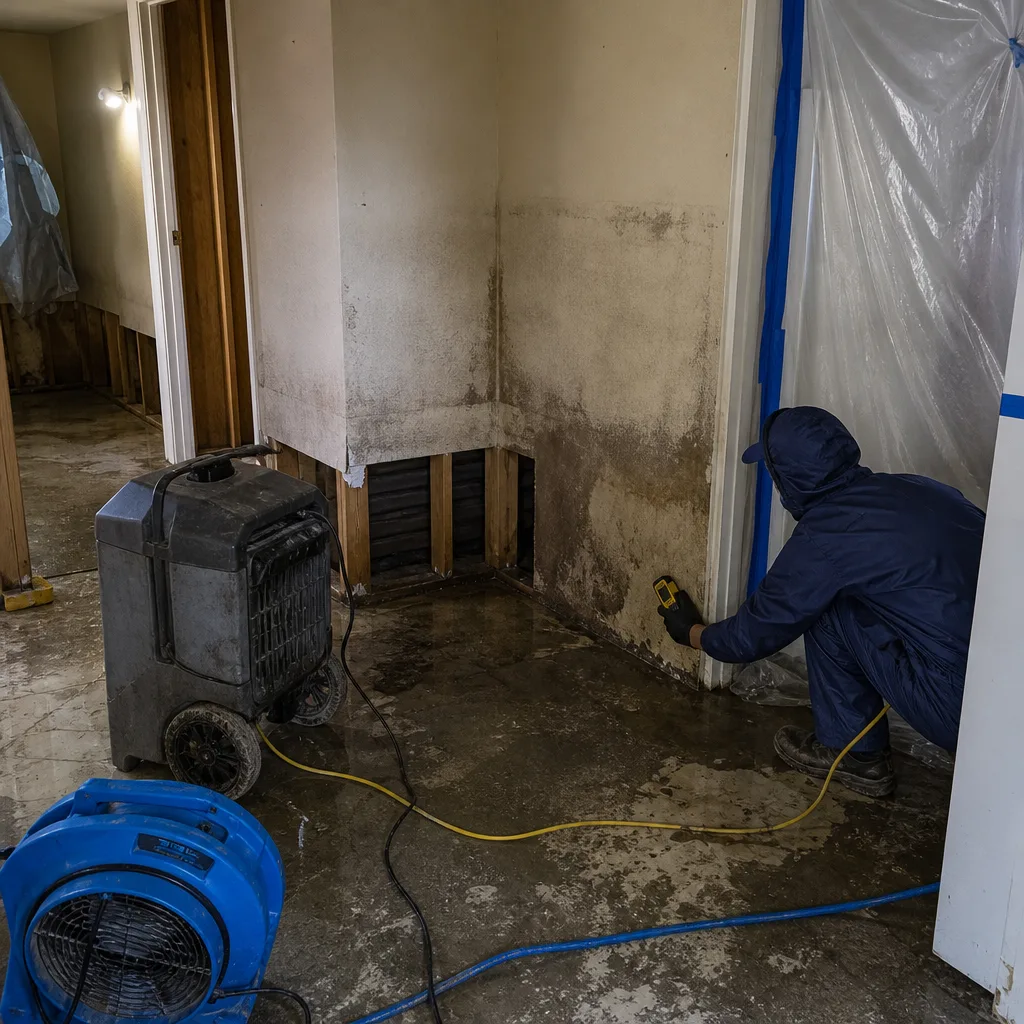 Before
 After
 Before
 After