
Last updated October 30, 2026
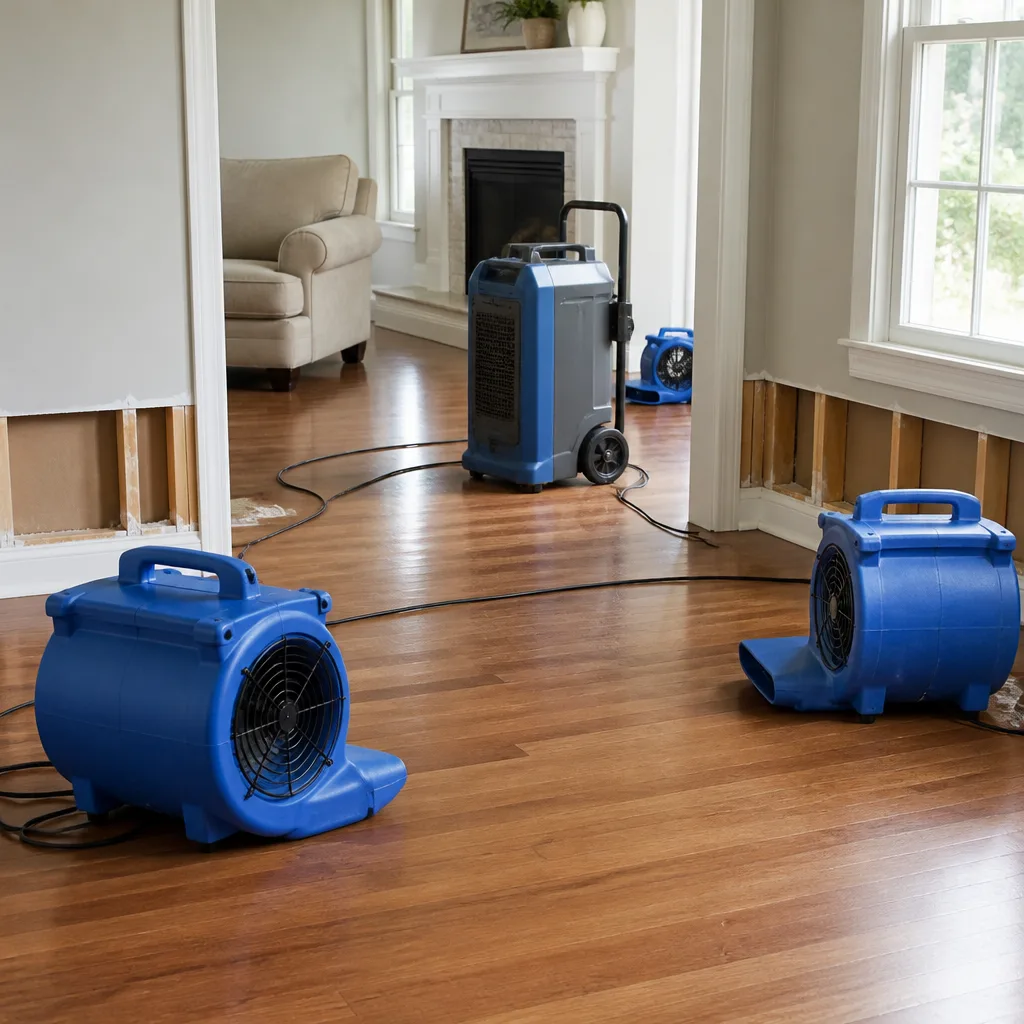 Water damage drying
 Fire & smoke cleanup
 Mold remediation
 Storm response
 Sewage cleanup
 Reconstruction
Free visual inspection and a written scope of work before any mitigation begins - photos, moisture readings, and drying logs go in your claim file
The scope we write is the scope we bill. Anything new gets shown to you, in writing, before we touch it.
Get your free estimateDamage Restoration Warning Signs: A San Bernardino Homeowner’s Reference Guide
Most homeowners in San Bernardino don’t misread damage warning signs because the signs are subtle. They misread them because they treat every symptom as the same category of problem. A musty smell in a hallway and a water stain on a ceiling both register as “moisture issues” to the average person, but to a trained eye they indicate completely different moisture pathways, different urgency levels, and different repair approaches. This guide teaches you the diagnostic logic we use in the field, so you can tell the difference between a slow-developing condition that allows for scheduled assessment and an active failure that needs same-day response. For related reading, see our DIY vs Professional Damage Restoration: The San Bernardino Homeowner’s Decision Guide. If you own a home in San Bernardino, from the older stock near downtown to the newer tracts up by Cal State, this reference will help you read your house the way a restoration technician does.
Quick Answer
The warning signs that matter most in a San Bernardino home fall into three categories: active moisture intrusion (visible water, expanding stains, buckling materials), hidden moisture indicators (persistent odors, unexplained humidity, warped surfaces with no visible source), and structural compromise (sagging drywall, separating baseboards, cracking from differential movement). Active intrusion requires emergency response. Hidden moisture requires professional assessment with moisture meters and thermal imaging within 48 to 72 hours. Structural compromise tied to moisture requires same-day professional evaluation, because the failure curve accelerates once framing materials hit their fiber saturation point.
Restoration work we handle
Table of Contents
- Active Intrusion vs. Historic Damage: Why the Distinction Changes Everything
- How to Read Stain Geometry: What Water Marks Actually Tell You
- Odor Diagnostics: Musty, Sulfur, and Acrid Smells Decoded
- San Bernardino False Positives: Efflorescence and Other Misleading Signs
- Same-Day Response vs. 72-Hour Window: A Decision Framework
- Hidden Moisture: The Warning Signs You Can’t See But Should Feel
- Common Mistakes to Avoid
- When to Call a Professional
- Frequently Asked Questions
Active Intrusion vs. Historic Damage: Why the Distinction Changes Everything
The single most important diagnostic skill for any San Bernardino homeowner is separating active water intrusion from historic damage. A stain on a ceiling from a roof leak that was repaired five years ago is a cosmetic issue. A stain that’s growing, changing color, or accompanied by texture changes is an active problem. The distinction determines whether you need emergency extraction or a scheduled repair estimate.
We see this confusion constantly. Homeowners call about a “new” water stain that’s actually been there since the previous owner, or they ignore a genuinely active leak because the visible staining looks old. The cost difference between these two misreadings is enormous. Treating historic damage as active leads to unnecessary demolition and drying equipment rental. Treating active intrusion as historic leads to structural deterioration, mold colonization, and eventually a much larger claim.
Here’s how to tell the difference in practice:
- Check the moisture content, not the appearance. A stain can look identical whether the drywall is at 8% moisture content (normal) or 28% (saturated). Only a moisture meter tells you the truth. Historic damage reads dry. Active intrusion reads wet.
- Track the stain edges. Active water has soft, slightly darker edges where the moisture front is still moving. Historic stains have hard, defined edges where the water has fully dried and left mineral deposits behind.
- Press on the material. Drywall that’s actively wet feels soft, spongy, or slightly cool to the touch. Drywall with historic damage feels firm and room-temperature, even if it’s discolored.
- Look for secondary signs. Active intrusion brings companions: peeling paint, bubbling texture, visible condensation on nearby surfaces, or a humidity spike in the room. Historic damage sits alone.
In San Bernardino’s climate, this distinction matters even more. Our hot, dry summers mean that some leaks dry out seasonally, only to reactivate during winter rains. A stain that appears “dry” in August may be a dormant leak that will return in January. If you’re looking at a stain you can’t explain, call us at San Bernardino Restoration Co home for a professional moisture assessment. We’d rather tell you it’s historic and walk away than have you find out it’s active during a storm.
How to Read Stain Geometry: What Water Marks Actually Tell You
Water leaves fingerprints. The shape, position, and pattern of a stain on a wall or ceiling tells you more about the water source than any other visual clue. This is stain geometry, and it’s a diagnostic skill that separates professional restoration technicians from guesswork.
Horizontal banding on drywall typically indicates wicking from below. When water pools on a floor or behind a baseboard, it travels upward through the drywall’s gypsum core, creating a band of staining that runs parallel to the floor. The height of the band tells you how much water was present and how long it sat. A band that rises 4 to 6 inches above the floor suggests significant standing water that sat for multiple hours. This pattern is common in San Bernardino homes after plumbing failures on slab foundations, where water has nowhere to drain except into the wall assembly.
Vertical streaking points to a leak from above. Water running down the inside of a wall cavity or along a pipe will create vertical stain lines that follow gravity. If you see streaks descending from a ceiling fixture, you’re looking at a roof leak or a plumbing failure in the floor above. If the streaks originate mid-wall, check for a leaking supply line inside the wall cavity.
Circular tide marks are the classic signature of intermittent wetting and drying cycles. Each ring represents one cycle of water intrusion followed by evaporation. Multiple rings mean the leak has been happening on and off for months or years. This pattern is common with slow roof leaks that only appear during specific rain conditions, or with condensation from HVAC ductwork that cycles with the seasons.
Stains on ceilings directly below bathrooms almost always indicate a failed wax ring on a toilet, a leaking shower pan, or a failed drain seal. These are active intrusion events in nearly every case, because the water source is ongoing use. If you see this pattern, the leak won’t stop until the fixture is repaired, and the ceiling cavity below is probably holding water against the framing.
For a deeper look at how water moves through a structure, read our guide to Water Damage Restoration in San Bernardino. The patterns above are just the starting point, but they’ll save you from wasting time on the wrong diagnosis.
Odor Diagnostics: Musty, Sulfur, and Acrid Smells Decoded
Your nose is a surprisingly reliable diagnostic instrument, but only if you know what you’re smelling. Most people lump every bad smell into “musty” and stop there. That’s a mistake, because different odors indicate different problems, and some require completely different responses.
Musty or earthy odor is the smell of microbial volatile organic compounds, chemical byproducts released by mold and bacteria as they metabolize. This smell indicates a moisture problem that has existed long enough to support microbial growth, typically 48 to 72 hours or more. Mustiness can come from actively growing mold, dormant mold that reactivates with humidity, or simply from materials that got wet and were never properly dried. In our experience, a musty smell in a San Bernardino home almost always traces back to a hidden moisture source: a slow pipe leak inside a wall cavity, compromised flashing around a window, or condensation in an attic with inadequate ventilation. The smell is the symptom; the moisture is the disease. You can scrub surfaces and spray products, but if the moisture remains, the smell returns within weeks. For a deeper understanding of how mold establishes itself, see our Mold Remediation in San Bernardino page.
Sulfur or rotten-egg odor is the smell of anaerobic bacteria thriving in standing water with no oxygen. This is the signature odor of sewage backups, failed septic systems, or water that has sat stagnant for extended periods. Unlike musty odors, sulfur smells indicate a category 3 water loss, which is the restoration industry’s term for water containing pathogenic or toxigenic agents. The presence of this smell means the water is not clean, and the affected materials usually require removal rather than drying. In San Bernardino homes, sulfur odors commonly appear in crawlspaces after a drain line failure, or in bathrooms where a wax ring has failed and allowed sewage to wick into the subfloor.
Acrid or chemical smell after a fire is not the smell of burned material. That smell fades within days. The persistent acrid odor that lingers for weeks or months comes from smoke particles, specifically the tars and resins that condensed onto surfaces as the smoke cooled. These particles off-gas continuously, releasing odor molecules into the air. The smell is strongest when the HVAC system runs, because heat and airflow accelerate the off-gassing. A persistent acrid smell months after a fire means the smoke residue was never properly cleaned from the ductwork, insulation, and framing cavities. For what that entails, see our guide to Fire Damage Restoration in San Bernardino.
Here’s a quick decision guide for odor response:
- Musty smell, no visible water: Schedule professional assessment within 72 hours. The source is hidden.
- Sulfur smell, any location: Call a professional immediately. This is contaminated water.
- Acrid smell after a fire: Schedule assessment. The odor will not resolve without professional cleaning of HVAC and structural materials.
San Bernardino False Positives: Efflorescence and Other Misleading Signs
Not every alarming sign on a San Bernardino home is actually a problem. This region’s climate, soil conditions, and common construction methods create false positives that scare homeowners into unnecessary and expensive responses. Knowing how to distinguish a false positive from a genuine warning sign is just as important as knowing the warning signs themselves.
Efflorescence on block foundations is the most common false positive we see on masonry construction in San Bernardino. Efflorescence is a white, chalky, crystalline deposit that forms on concrete and block surfaces when water moves through the masonry and evaporates, leaving dissolved minerals behind. It looks alarming, like the foundation is dissolving. In most cases, it’s a cosmetic condition from a historical moisture event: a single season of heavy rain, a past irrigation leak, or construction water from when the foundation was originally poured. Efflorescence does not indicate active moisture intrusion by itself. The way to distinguish historic efflorescence from active moisture: spray the area with water. If the crystals dissolve and disappear, then reappear within days as the wall dries, you have active moisture moving through the masonry. If the crystals remain stable, you’re looking at a historical condition that needs no action beyond cosmetic cleaning.
Condensation on windows during winter is another false positive that sends San Bernardino homeowners searching for a leak that doesn’t exist. When warm interior air meets cold glass, condensation forms. This is normal physics, not a building envelope failure. The exception: condensation on the inside of double-pane windows, between the glass panes, which means the window seal has failed and the insulated glass unit needs replacement. That’s a window issue, not a water damage restoration issue.
Slight discoloration around bathroom vents from years of steam exposure is another common false positive. This staining is usually surface-level, from dust and mineral deposits accumulating on the drywall texture. A moisture meter reading will confirm the drywall is at normal moisture content. If it reads dry, paint over it and move on.
Cracks in stucco are a San Bernardino-specific concern, because so many homes in this area use stucco exterior cladding. Small hairline cracks are normal thermal expansion and contraction. They’re cosmetic. Cracks wider than 1/8 inch, or cracks that show displacement on either side, suggest structural movement and warrant a structural engineer’s assessment. The moisture connection: wide cracks can allow water intrusion behind the stucco during rains, creating hidden moisture that never shows an interior stain.
Same-Day Response vs. 72-Hour Window: A Decision Framework
When you find a damage warning sign, the first question is not “what is this?” It’s “how fast do I need to act?” Getting this wrong in either direction costs money: responding to a non-emergency with emergency pricing, or waiting on an emergency until the damage compounds. Here’s the decision framework we use, adapted for the construction types common in San Bernardino.
Same-day response required:
- Standing water on any finished floor surface. Water on laminate, hardwood, carpet, or tile is actively migrating through the building materials. Every hour it sits, the damage radius expands.
- Water flowing from any ceiling fixture, outlet, or light. Water and electricity are a dangerous combination. Kill the power at the breaker and call immediately.
- Sulfur or sewage odor. As discussed above, this is contaminated water requiring professional handling.
- Sagging or bulging drywall on a ceiling. This indicates a water reservoir has formed above the ceiling. The drywall can fail catastrophically, dropping the water onto whatever is below.
- Visible mold growth covering more than 10 square feet. At this size, professional containment is required during remediation to prevent cross-contamination.
72-hour assessment window:
- Musty odor with no visible water source
- Historic-looking stains that you want professionally evaluated
- Buckling laminate flooring with no standing water present
- Evidence of efflorescence on foundation walls
- Elevated indoor humidity readings on your own hygrometer
- Visible mold growth of less than 10 square feet
The 72-hour window exists because these conditions are either stable or developing slowly. A musty smell might be from a leak that’s been active for months; another three days won’t change the scope meaningfully. What you don’t want is to let a 72-hour item slide for three weeks, because hidden moisture behind walls creates structural and microbial issues on an exponential curve, not a linear one.
For wood-frame construction, which dominates the older San Bernardino neighborhoods around downtown and in the historic districts, the urgency of moisture response is higher. Wood framing absorbs water and loses structural capacity as moisture content rises. At 20% moisture content, framing lumber begins to support mold growth. At 30%, it begins to lose compressive strength. At fiber saturation point, around 30% to 35% depending on species, the wood is structurally compromised. Masonry construction, more common in some commercial buildings and mid-century homes in San Bernardino, tolerates moisture exposure better structurally but creates conditions where water can sit invisibly behind finished surfaces for long periods. The warning signs are the same; the tolerance for delay is different.
Hidden Moisture: The Warning Signs You Can’t See But Should Feel
The most damaging moisture problems in San Bernardino homes are the ones you can’t see. Water inside wall cavities, under flooring, or in attic insulation can cause structural deterioration and mold colonization for months before any visible evidence appears. By the time you see a stain, the problem has often been active for weeks. The trick is to recognize the indirect signs of hidden moisture.
Unexplained humidity. If one room in your home feels consistently more humid than the others, and you can’t attribute it to a bathroom, kitchen, or aquarium, you’re likely feeling the evaporative effect of water trapped in building materials. A quality hygrometer, available for under $30, will give you objective numbers. An indoor relative humidity reading above 60% in a room with no obvious moisture source is a red flag.
Warped or cupped flooring that wasn’t wet recently. The opening hook mentioned buckling laminate flooring on slab foundations. When a San Bernardino home sits on concrete slab, moisture vapor from the soil below can migrate upward through the slab if the original vapor barrier was compromised or never installed. This vapor condenses under flooring, and the resulting moisture causes laminate and hardwood to buckle, cup, or warp. The homeowner attributes the damage to a past spill or leak, but the real driver is vapor drive from below. This condition often gets worse after visible water is removed, because the dehumidifiers that dry the surface layer do nothing to address the vapor source below the slab.
Baseboards separating from the wall. When drywall behind baseboards absorbs moisture, it expands. The expansion pushes the baseboard outward, creating a visible gap. This is often the first physical sign of water intrusion inside a wall cavity. If you see baseboards pulling away from the wall with no corresponding temperature change or seasonal movement, check for moisture behind them.
Doors or windows that suddenly stick. Framing that has absorbed moisture swells. A door that fit fine for years and now sticks in its frame, or a window that won’t open smoothly, can indicate moisture expansion in the rough opening. This is especially common in San Bernardino homes after roof leaks or flashing failures around window penetrations.
Cold spots on walls detected by hand or thermal imaging. Wet insulation conducts heat differently than dry insulation. A wall section that feels noticeably colder than surrounding areas in winter, or warmer in summer after the AC runs, may have wet insulation behind it. Professional thermal imaging makes this diagnostic definitive. We use thermal cameras during our assessments precisely because they reveal moisture patterns invisible to the naked eye.
When we assess hidden moisture, we’re not guessing. The IICRC standard for water damage restoration requires documented moisture readings at regular intervals throughout the affected area, and we follow that protocol on every job. It’s the difference between drying a room and proving it’s dry.
Common Mistakes to Avoid
- Treating every warning sign as an emergency. Calling for emergency response when you have a historic stain or false-positive efflorescence wastes money. Use the decision framework above to triage the situation before you make the call.
- Ignoring musty odors because you can’t see mold. Mold doesn’t need visible surface growth to affect indoor air quality. Hidden colonies inside wall cavities release the same VOCs regardless of whether you can see the growth.
- Painting over water stains without addressing the source. Stain-blocking primer will hide the discoloration temporarily, but the moisture that caused the stain is still there. The stain will return, and meanwhile the structural damage continues behind the paint film.
- Running consumer dehumidifiers for a week and calling it dry. A homeowner-grade dehumidifier from a big box store in San Bernardino can reduce surface humidity, but it lacks the airflow and moisture removal capacity to dry structural materials inside wall cavities and under flooring. Professional drying requires calculated air movement, proper equipment sizing, and documented moisture readings, not a machine running in a closed room.
- Assuming a slab foundation means no water damage from below. As discussed, vapor drive through concrete slabs is a genuine concern for San Bernardino homes. If you’re seeing flooring distortion with no visible water source, the source is likely below the slab, not above it.
- Dismissing small stains because they’re small. A stain is the visible portion of a moisture event. The water that caused it has been present in much larger quantity than the stain suggests, and it has traveled beyond the visible edge. Small stains can indicate large hidden reservoirs.
- Delaying a professional assessment to “see if it gets better.” Moisture damage does not self-correct. It gets worse. The cost curve for water damage is steeply upward the longer you wait, because the damage compounds: first structural saturation, then mold colonization, then secondary damage to unaffected materials from elevated humidity.
When to Call a Professional
Call a professional restoration company when you have standing water, active intrusion, sulfur odors, sagging ceilings, visible mold over 10 square feet, or any hidden moisture indicator you can’t explain. Call when the stain geometry suggests a source you can’t see. Call when your own moisture meter reads elevated levels in building materials. Call when you’ve been running fans and dehumidifiers for three days and the humidity hasn’t dropped. In each of these cases, the cost of professional assessment is lower than the cost of getting it wrong. San Bernardino Restoration Co offers free estimates in San Bernardino, call (877) 358-7678 and we’ll tell you honestly whether the condition warrants emergency response or scheduled assessment. We’ve built our reputation on giving homeowners straight answers, not on selling equipment rentals.
Frequently Asked Questions
The most common warning signs are visible staining on ceilings or walls, buckling or cupping flooring, musty odors, peeling paint or bubbling drywall texture, and baseboards separating from walls. In San Bernardino specifically, flooring distortion on slab foundations often indicates vapor drive from below rather than a leak from above, which changes the correct response.
Active leaks show soft edges on the stain, feel cool or damp to the touch, and are accompanied by secondary signs like peeling paint or elevated humidity. Old damage shows hard, defined stain edges, feels dry and room-temperature, and sits alone without secondary signs. A professional moisture meter reading provides definitive confirmation.
A musty smell indicates microbial activity somewhere in the home, usually in a hidden location like a wall cavity, under flooring, or in attic insulation. The moisture source driving the growth may be a slow leak, a condensation issue, or a past water event that was never properly dried. Professional assessment with moisture meters and thermal imaging can locate the source.
Not necessarily. Efflorescence indicates water moved through masonry at some point, but it may be from a historical event that has since resolved. Spray the area with water: if the crystals reform within days, you have active moisture movement. If they stay dissolved, the condition is historical and cosmetic only.
If you suspect a hidden leak but see no standing water or structural compromise, professional assessment within 72 hours is appropriate. If you confirm active water flow, see sagging drywall, or detect sewage odor, same-day response is warranted. The 72-hour window applies to stable conditions, not active failures.
Coverage depends on the source of the water and the specific terms of your policy. Sudden and accidental events like a burst pipe are typically covered. Gradual damage from long-term leaks or poor maintenance is often excluded. The best approach is to photograph everything, document all visible damage, and call your insurer promptly. A professional restoration company can provide the moisture readings and photographic documentation your adjuster will request. For assistance, call San Bernardino Restoration Co at (877) 358-7678.
The Bottom Line
Damage warning signs are a language, and learning to read that language saves San Bernardino homeowners real money. The distinction between active and historic damage determines whether you need emergency response or scheduled assessment. Stain geometry points to the source before you ever open a wall. Odor tells you what’s growing and what kind of water is involved. False positives like efflorescence keep you from wasting money on problems you don’t have. Hidden moisture indicators catch problems before they become visible. And when the signs point to a real issue, a certified professional with documented moisture readings and proper equipment is worth the call. The goal is not to turn every homeowner into a restoration technician. It’s to give you enough diagnostic literacy to know when the situation calls for one.
Written by the team at San Bernardino Restoration Co, serving San Bernardino since 2016.
See the difference
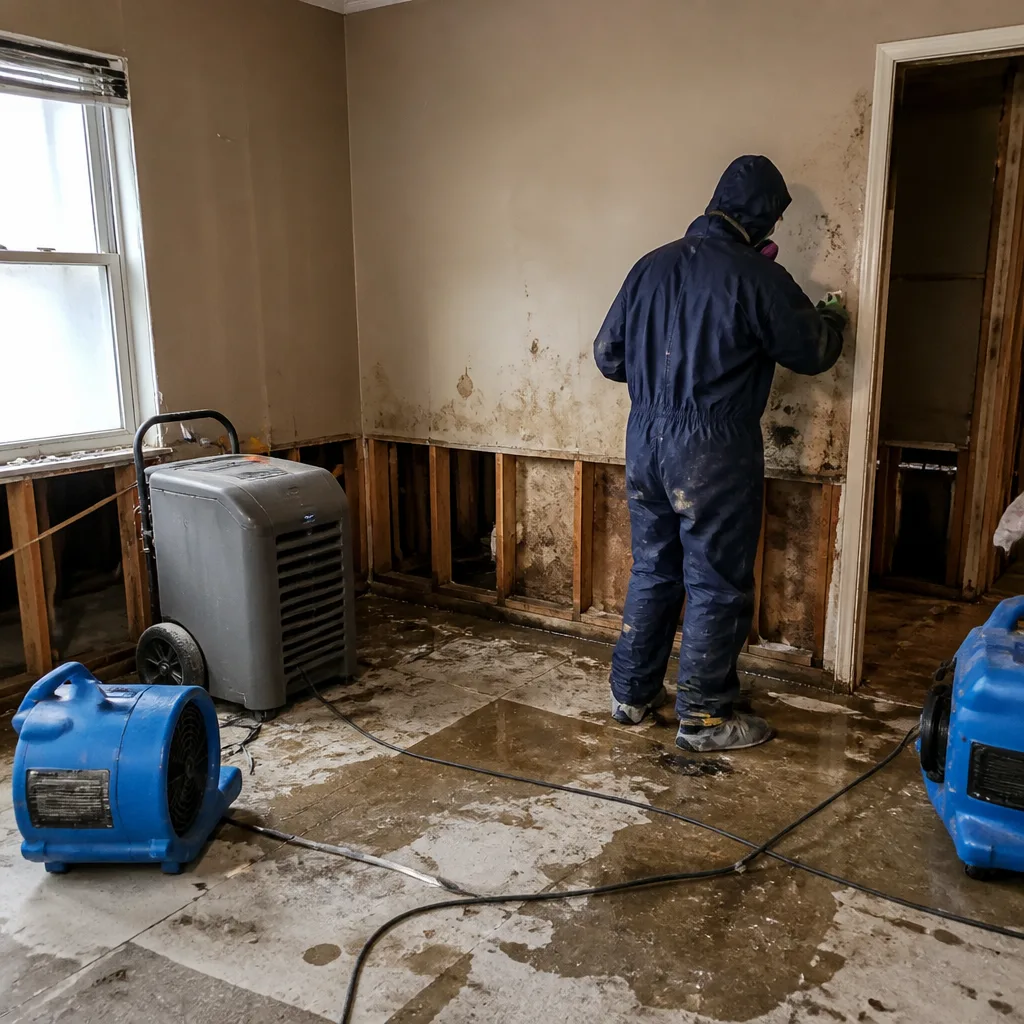 Before
 After
 Before
 After
 Before
 After