
 Water damage drying
 Fire & smoke cleanup
 Mold remediation
 Storm response
 Sewage cleanup
 Reconstruction
Free visual inspection and a written scope of work before any mitigation begins - photos, moisture readings, and drying logs go in your claim file
The scope we write is the scope we bill. Anything new gets shown to you, in writing, before we touch it.
Get your free estimateFast, Reliable Water Damage Restoration Across Rancho Cucamonga
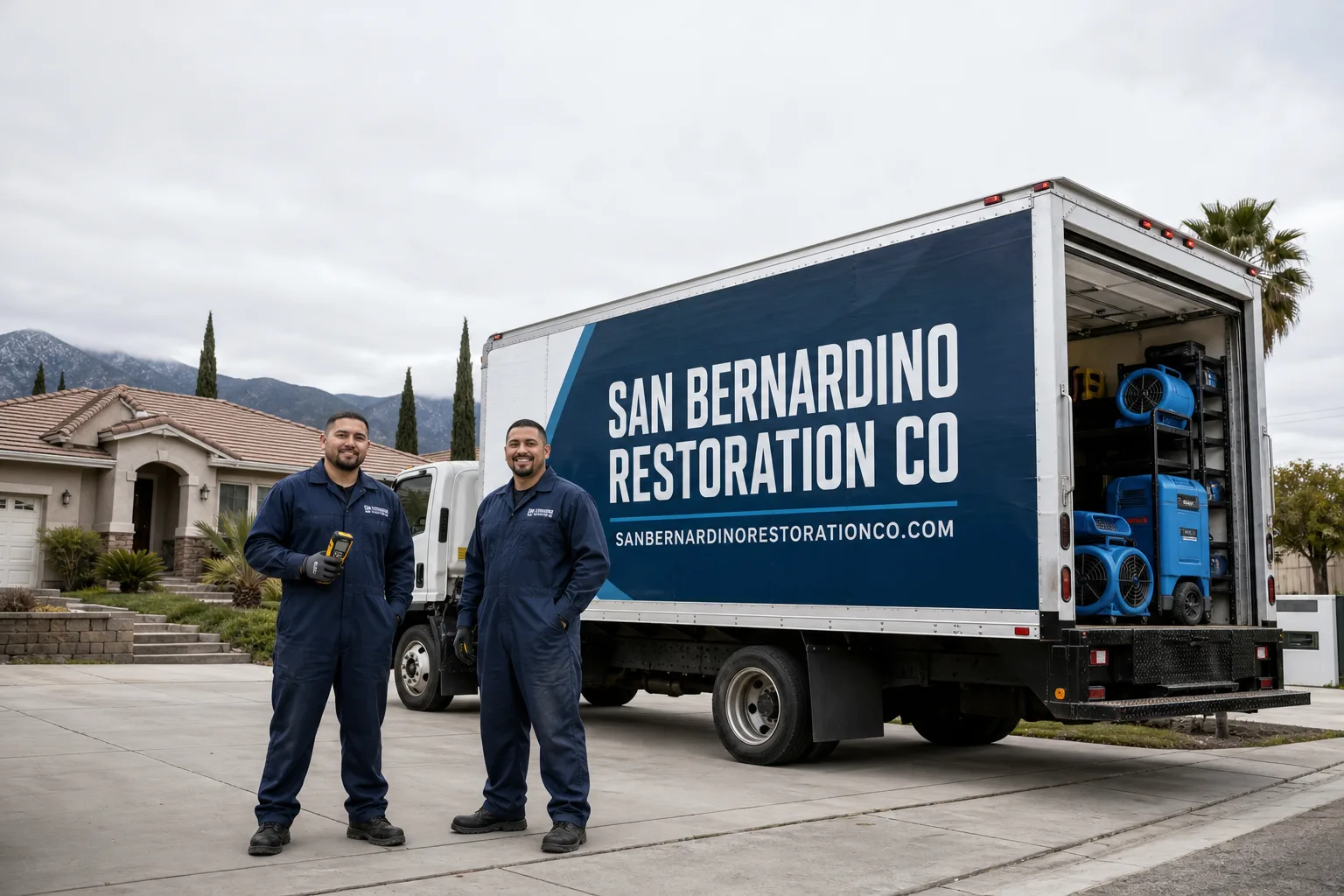
Water damage in Rancho Cucamonga moves fast, and the first hours determine whether you’re dealing with a cleanup or a rebuild. Most water losses in this city fall into two camps: hidden slab and supply-line leaks in the 1970s-80s tract homes of the 91730 and 91701 flats, or sudden multi-story failures in the newer PEX-plumbed foothills subdivisions of 91737 and 91739. Either way, our IICRC-certified technicians arrive with commercial-grade extraction and drying equipment, not rental-store fans. Call (877) 358-7678 the moment you see water where it shouldn’t be.
Why San Bernardino Restoration Co Is Rancho Cucamonga’s Preferred Water Damage Restoration Company
Rancho Cucamonga homeowners call us because we treat water damage as a science, not a mop-up job. Every project starts with moisture mapping and thermal imaging, so we find water that’s wicked into stucco, slab, and wall cavities before it becomes a mold problem. Our team works under the protocols of the Water Damage Restoration industry’s IICRC standard, and we document every reading, every equipment placement, and every drying log entry for your insurance adjuster.
We’ve worked homes from the ranch-style tracts off Haven Avenue to the two-story builds climbing toward the San Gabriels. That local knowledge matters. A 1978 home with original galvanized lines fails differently than a 2015 foothills house with PEX, and our drying strategy changes accordingly. We’re also active in the Restoration Industry Association (RIA) and IFA, which means we answer to a professional peer community, not just a marketing budget.
Restoration work we handle
Emergency Water Removal in Rancho Cucamonga
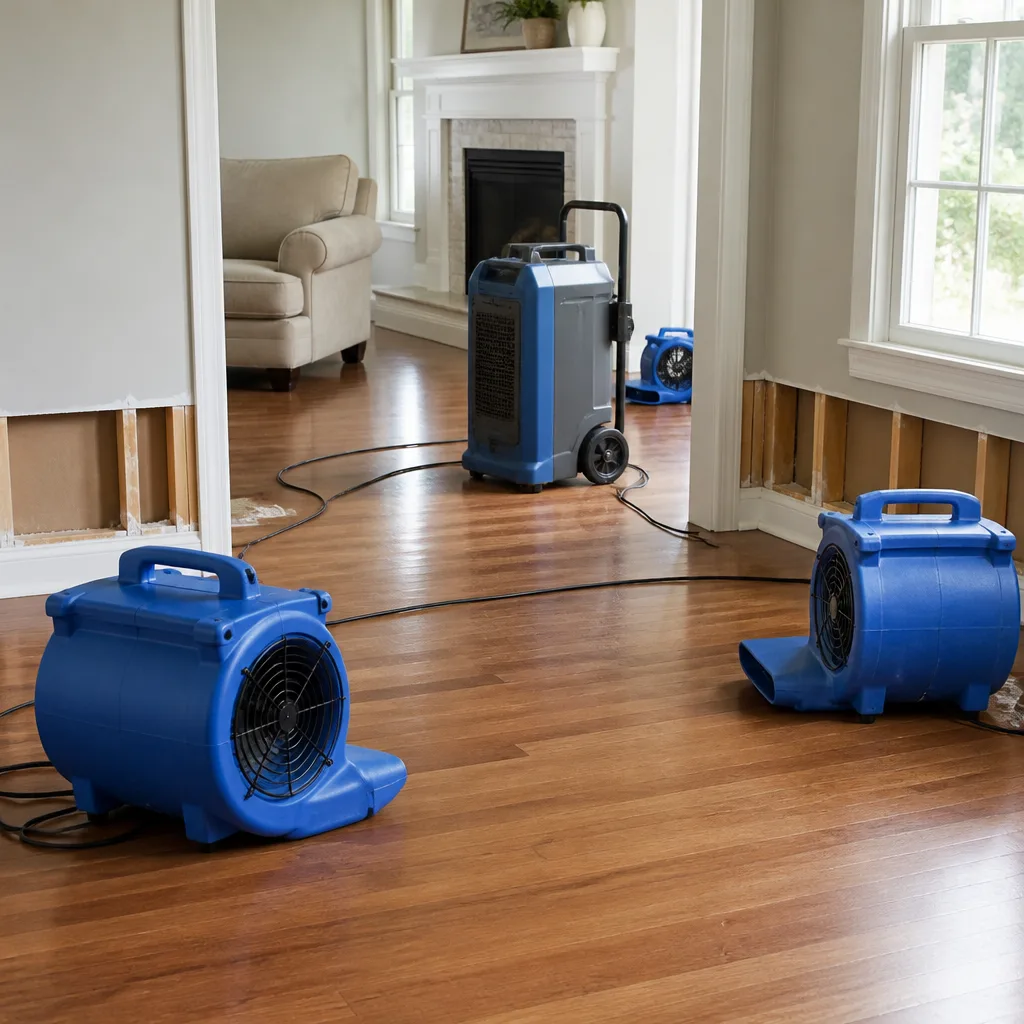
Emergency Water Removal in Rancho Cucamonga typically runs $3,500 to $7,000 for a full-scale response involving extraction, containment, and the first 72 hours of structural drying. When a supply line bursts in a second-floor bathroom in the 91739 foothills, water cascades through ceilings and walls in minutes, saturating drywall, insulation, and subfloor. The clock starts immediately. Our crews show up with truck-mounted and portable extraction units capable of pulling hundreds of gallons per hour, then set up a drying chamber with Dri-Eaz and Phoenix dehumidifiers paired with XPOWER air movers.
Slab Leak Response and Hidden Moisture
In the 91730 flats, slab leaks from original galvanized supply lines often go unnoticed for weeks. Water wicks upward through the concrete slab into stucco, baseboards, and cabinetry. By the time flooring buckles, the moisture has already migrated into adjacent rooms. We trace that migration with thermal imaging before we ever cut drywall.
HVAC Contamination From Fire-Driven Smoke and Soot
Rancho Cucamonga’s Santa Ana winds carry ash and smoke from San Gabriel Mountains fires into foothills attics and HVAC returns. Homes that never saw flame can still have smoke odor and char residue in duct systems. When we handle water damage in those homes, we inspect returns and plenums for pre-existing smoke contamination that would compromise the drying environment.
Flood Damage Restoration in Rancho Cucamonga
Flood Damage Restoration in Rancho Cucamonga ranges from $4,000 to $12,000 depending on how much of the home took on water and whether the source was clean, gray, or black water. Winter atmospheric-river storms overwhelm older roofs and drainage across the 91701 corridor, sending surface water into slab-on-grade foundations. The water that enters during those events is rarely clean. It picks up soil, fertilizers, and whatever else the storm washed through, which changes the restoration protocol from simple drying to antimicrobial treatment and full containment.
Clay Lateral Backups in the Flats
Older homes in the 91730 and 91701 areas still run on original clay sewer laterals. Heavy rain saturates the soil, roots intrude through clay joints, and the result is a sewage backup that floods a bathroom or laundry room. We treat that as Category 3 water, which means full PPE, containment barriers, and disposal of affected porous materials.
Storm-Driven Roof and Skylight Intrusion
Santa Ana wind events tear shingles and skylight seals on the windward slopes of the 91737 foothills. Water enters attics and runs down wall cavities, soaking insulation and drywall before anyone notices a ceiling stain. Our Injectidry systems dry those wall cavities without tearing out drywall, which protects both the structure and your budget.
Trusted Brands We Service in Rancho Cucamonga
We maintain familiarity with the equipment and failure patterns common to Rancho Cucamonga’s housing stock. That includes water heaters, washing machine supply lines, and under-sink plumbing found in homes across the 91737, 91739, 91701, and 91729 ZIP codes. Because we carry professional-grade moisture meters, thermal cameras, and drying equipment sized for real losses, we start work immediately rather than waiting for equipment rentals. For homeowners in Rancho Cucamonga, that means faster extraction, faster drying, and a documented drying log your adjuster can review without pushback.
See the difference
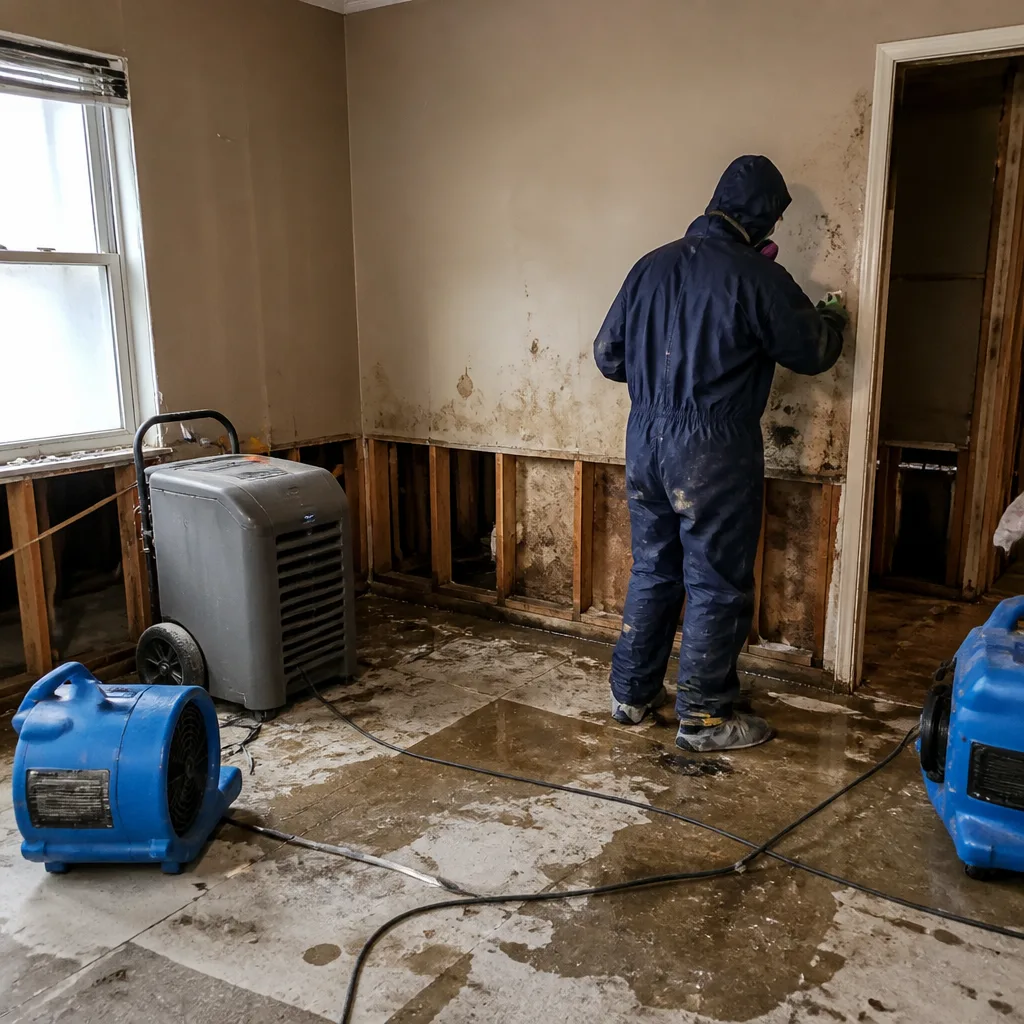 Before
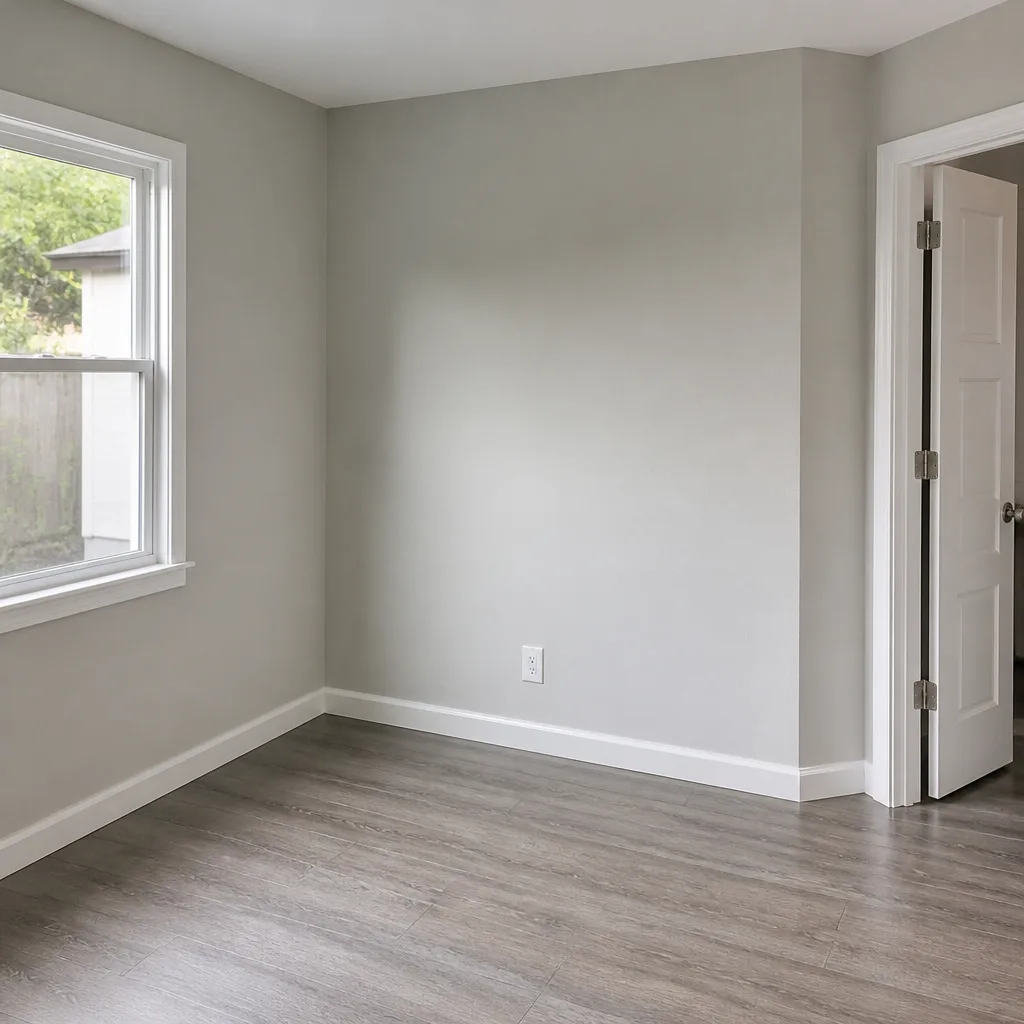 After
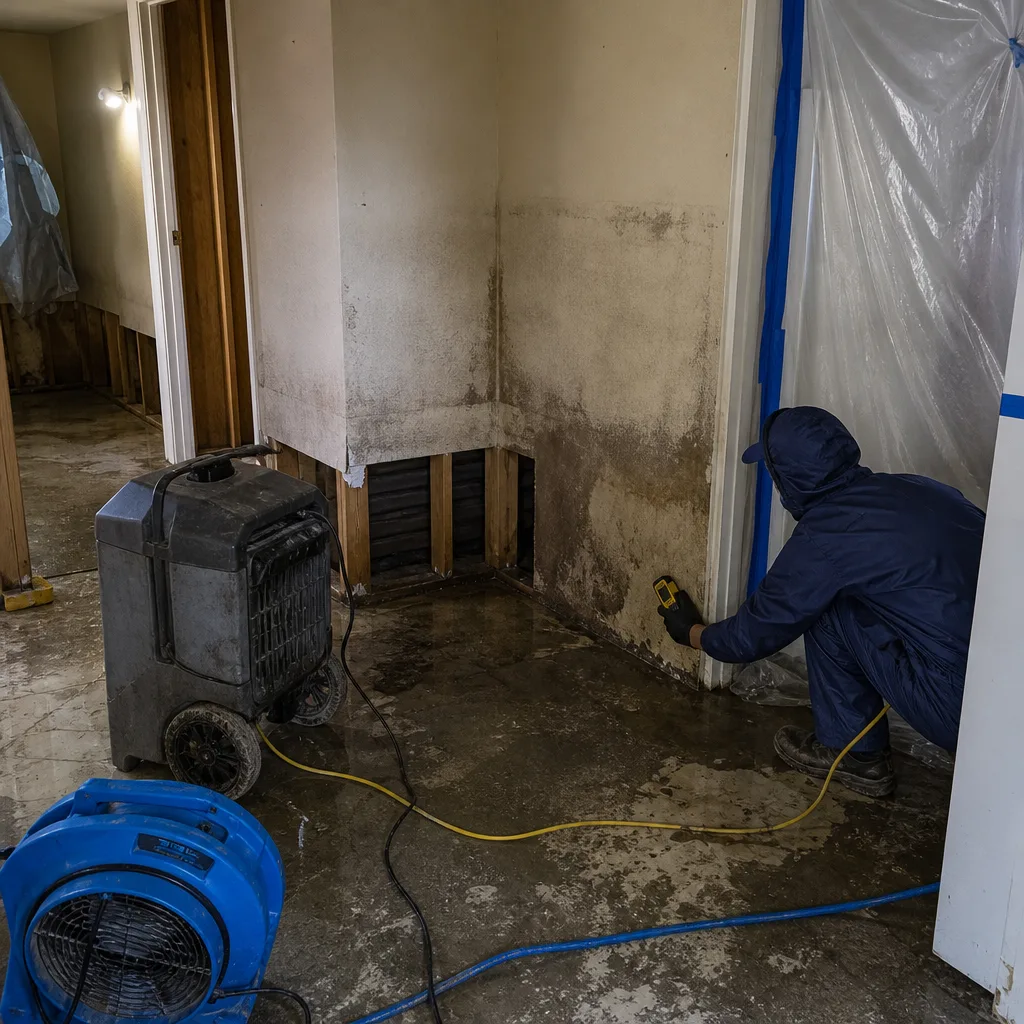 Before
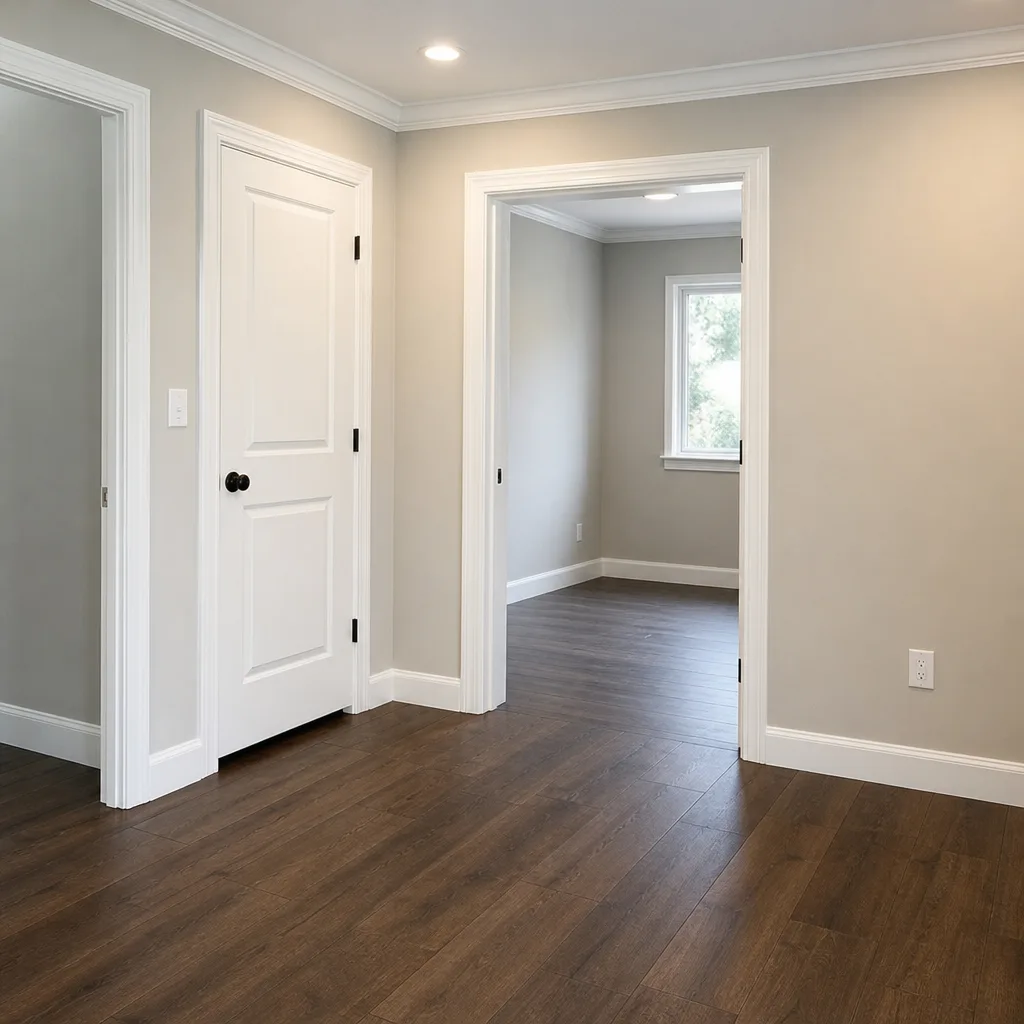 After
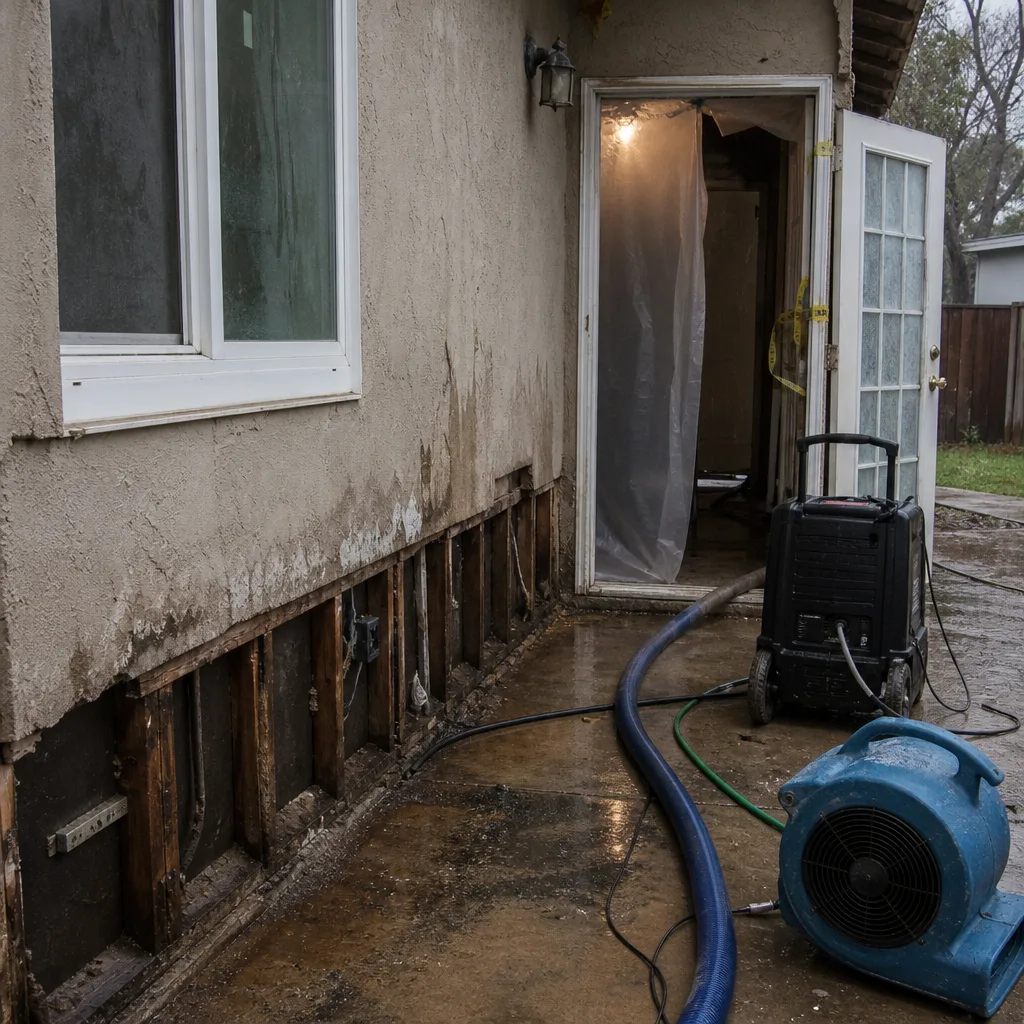 Before
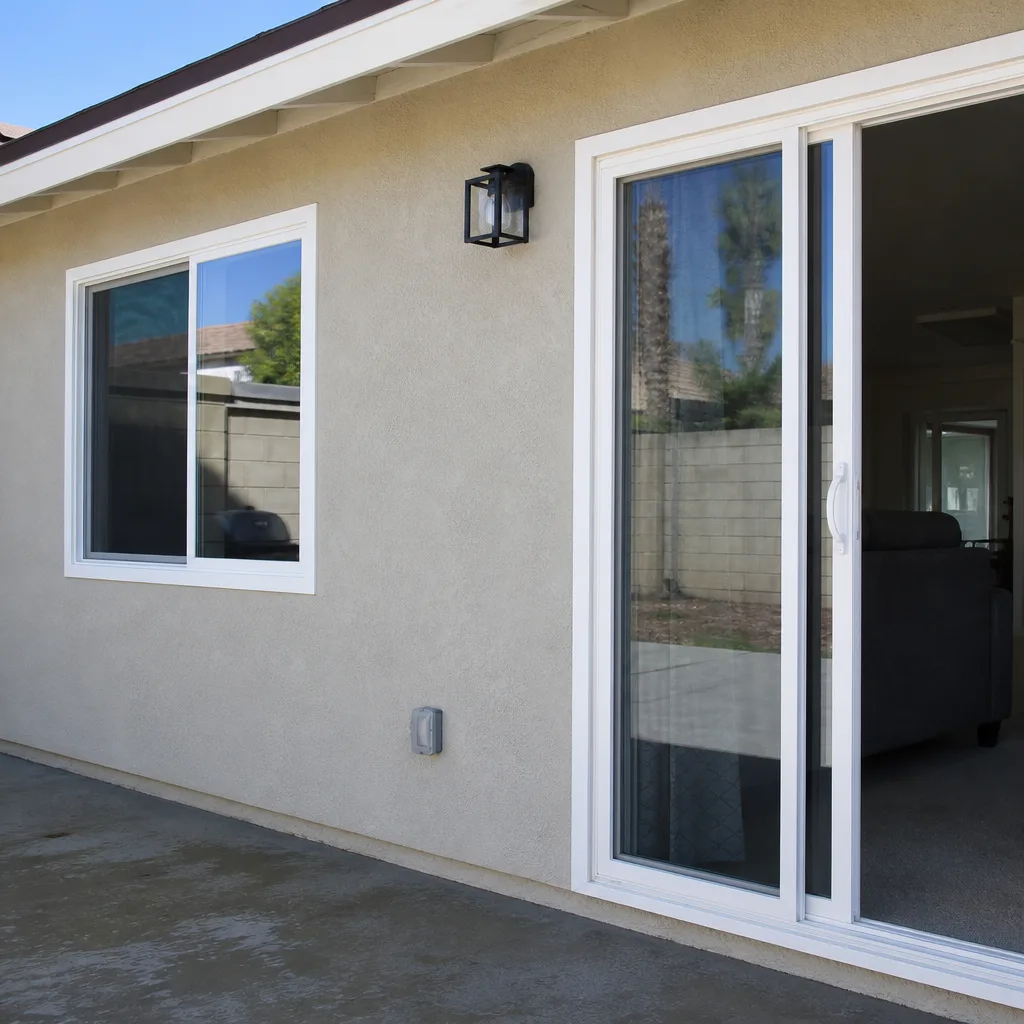 After
Common Water Damage Restoration Problems We See in Rancho Cucamonga Homes
- Pinhole leaks in original galvanized supply lines. Homes built in the 1970s and 80s across the 91730 flats routinely show internal corrosion in supply pipes. The leaks start behind walls or under slabs, so moisture hides until flooring distorts or musty odors appear.
- Upper-floor PEX failures in foothills homes. The newer two-story builds in 91737 and 91739 run multi-story PEX systems. A single fitting failure on an upper floor can dump clean water through ceilings and into lower wall cavities, and that water picks up construction dust and debris as it travels.
- Foundation and stucco cracking from Santa Ana-driven soil drying. Prolonged hot, dry winds bake moisture out of the soil around slab foundations, causing movement and cracks. Those cracks become pathways for water intrusion during the next storm cycle.
- Smoke and ash contamination complicating water losses. Fires in the San Gabriels deposit ash residue in attic spaces and duct systems. When water damage occurs in those same homes, we have to address both the water and the air-quality contamination to prevent a worsening indoor environment.
Pricing for Water Damage Restoration in Rancho Cucamonga, CA
Emergency water extraction in Rancho Cucamonga typically runs $1,800 to $3,500 as a standalone service. Structural drying with professional dehumidifiers and air movers adds $2,000 to $5,000 depending on the affected square footage. Flood damage restoration involving Category 2 or 3 water runs $4,000 to $12,000 because it requires containment, antimicrobial application, and often material removal. Slab leaks that require drying under flooring and inside wall cavities can push toward $8,000 or more, especially when the moisture has spread across multiple rooms. We provide a written scope of work before any equipment goes in. Call (877) 358-7678 for a free estimate.
We Also Serve Cities Near Rancho Cucamonga
Our teams work throughout Rancho Cucamonga and the surrounding communities, including San Antonio Heights, Upland, Ontario, and Fontana. If you’re just outside the city line in one of those areas and dealing with water damage, the same IICRC-certified crew and professional equipment fleet is available. Response times are comparable, and our moisture mapping and documentation standards don’t change based on ZIP code.
Serving Rancho Cucamonga, CA — Our Local Coverage Area
We’re based in the Rancho Cucamonga area and know this community well. Use the map below to see our service coverage — if you’re nearby, we can almost certainly help.
FAQs About Water Damage Restoration in Rancho Cucamonga
Older homes in the 91730 and 91701 flats often have original galvanized supply lines that fail from the inside out, creating hidden leaks behind walls and under slabs. These leaks require thermal imaging and moisture mapping to locate, because the water rarely pools where the pipe failed. Newer foothills homes in 91737 and 91739 have PEX systems that fail suddenly and dramatically, flooding multiple rooms in minutes. The restoration approach for each is different: slow, widespread saturation versus fast, high-volume flooding. Call (877) 358-7678 and we’ll tell you which one you’re dealing with.
Category 1 is clean water from a supply line or faucet, Category 2 is gray water with some contamination like washing machine discharge, and Category 3 is black water from sewage or storm runoff carrying soil and biological material. In Rancho Cucamonga, winter storm flooding that enters through foundations is almost always Category 3, which means porous materials like carpet and drywall must be removed rather than dried. Getting the category wrong is the most common mistake we see from generalist contractors. Our IICRC-certified team classifies the water before starting any work.
Mold colonization can begin within 48 to 72 hours even in Rancho Cucamonga’s arid heat, especially inside wall cavities where evaporating water creates a humid microclimate while the outer surface stays dry. The Santa Ana winds dry the visible surface quickly, which can trick homeowners into thinking the problem is resolved. Moisture trapped in stucco, slab, and behind baseboards keeps feeding mold growth for weeks. We use penetrating moisture meters to find the water that isn’t visible, then run drying equipment until every reading returns to pre-loss levels.
Yes, in two ways. The winds tear roofing materials, skylight seals, and flashing on windward slopes, creating entry points for winter storms. They also bake moisture out of the soil around foundations, causing slab movement and cracks that become water pathways. Homes in the 91737 foothills face the most roof damage exposure, while slab homes in the 91730 flats see more foundation cracking. Both failure modes peak during or immediately after Santa Ana events. If you notice a ceiling stain after a heavy wind event, call (877) 358-7678 before the next rain arrives.
Yes, and we handle them as two phases of the same job rather than two separate services. Emergency water removal stabilizes the situation, and flood damage restoration addresses the contamination, structural drying, and material decisions that follow. One crew, one documented scope of work, one point of contact for your insurance adjuster. That continuity matters, especially in Rancho Cucamonga’s split housing stock where a slab home in the flats demands a different protocol than a PEX-plumbed foothills property.
Written by Noel Armenta, Owner at San Bernardino Restoration Co, serving Rancho Cucamonga and the Inland Empire.