 Water damage drying
 Fire & smoke cleanup
 Mold remediation
 Storm response
 Sewage cleanup
 Reconstruction
Free visual inspection and a written scope of work before any mitigation begins - photos, moisture readings, and drying logs go in your claim file
The scope we write is the scope we bill. Anything new gets shown to you, in writing, before we touch it.
Get your free estimateFast, Reliable Water Damage Restoration Across Santa Ana
Water damage in Santa Ana rarely announces itself with standing water. It seeps, wicks, and hides. A pinhole in a galvanized supply line under a 1920s bungalow on Willits Street can weep for weeks before a homeowner notices buckling hardwood or that faint musty smell near the baseboards. That’s the reality of Santa Ana’s housing stock, and it’s why our Water Damage Restoration team approaches every call here with deep-probe moisture mapping and thermal imaging, not just a quick visual check. We’re San Bernardino Restoration Co, and we’ve spent years working inside Santa Ana’s pre-war bungalows, Spanish Colonials, and post-war ranch tracts. When you call (877) 358-7678, you get IICRC-certified technicians who know exactly what a 92701 pier-and-beam foundation hides that a 92704 slab doesn’t.
Why San Bernardino Restoration Co Is Santa Ana’s Preferred Water Damage Restoration Company
Santa Ana homeowners call us because we treat slow, hidden water intrusion as the primary threat it is here. The central neighborhoods around 92701, 92703, and 92707 are dense with 1910s through 1950s wood-frame and stucco-over-wood construction. These homes sit on raised foundations or shallow slabs with original cast-iron, galvanized, and early copper lines. When those lines fail, the water doesn’t pool. It travels. Our technicians run moisture mapping across wall cavities and under floorboards, and we’ve pulled back enough baseboards in Santa Ana to know exactly where that water goes. We also work the south and east sides, 92704 through 92706, where 1950s and 1970s ranch tracts bring their own failure profile: pinholes in aging copper and slab leaks that surface as musty odors or warped flooring long before any visible water appears.
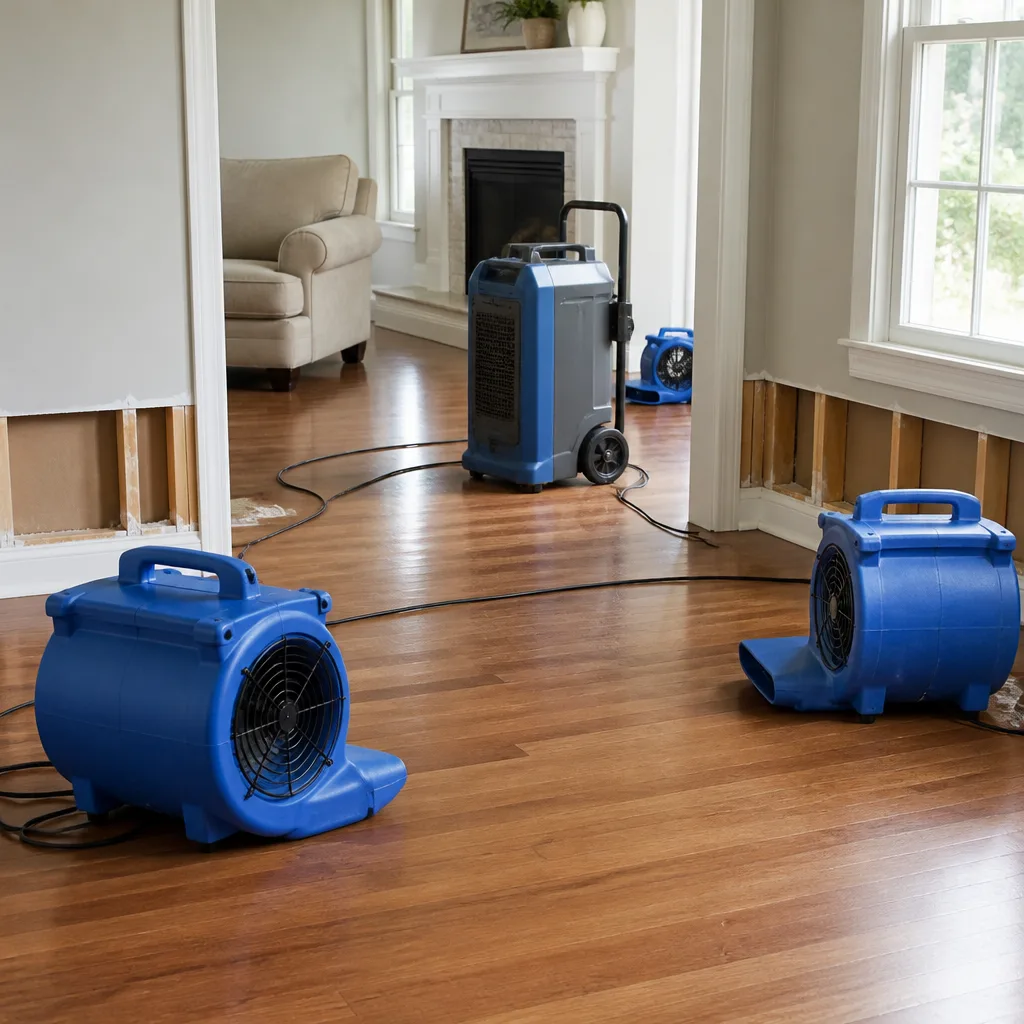
We’re not a generalist handyman operation. Our crews run Dri-Eaz and Phoenix dehumidifiers, XPOWER and B-Air air movers, and Injectidry wall-cavity drying systems, the same professional-grade equipment used on large commercial losses. Every job follows IICRC-certified protocol from extraction to clearance. That matters in Santa Ana, where homes built before modern moisture barriers hold water differently than newer construction. Our owner, Noel Armenta, built this company around documented drying and measurable results. We log daily moisture readings and produce a clear scope of work for your insurance file. No guesswork, no vague reassurances.
Restoration work we handle
Flooded Basement in Santa Ana
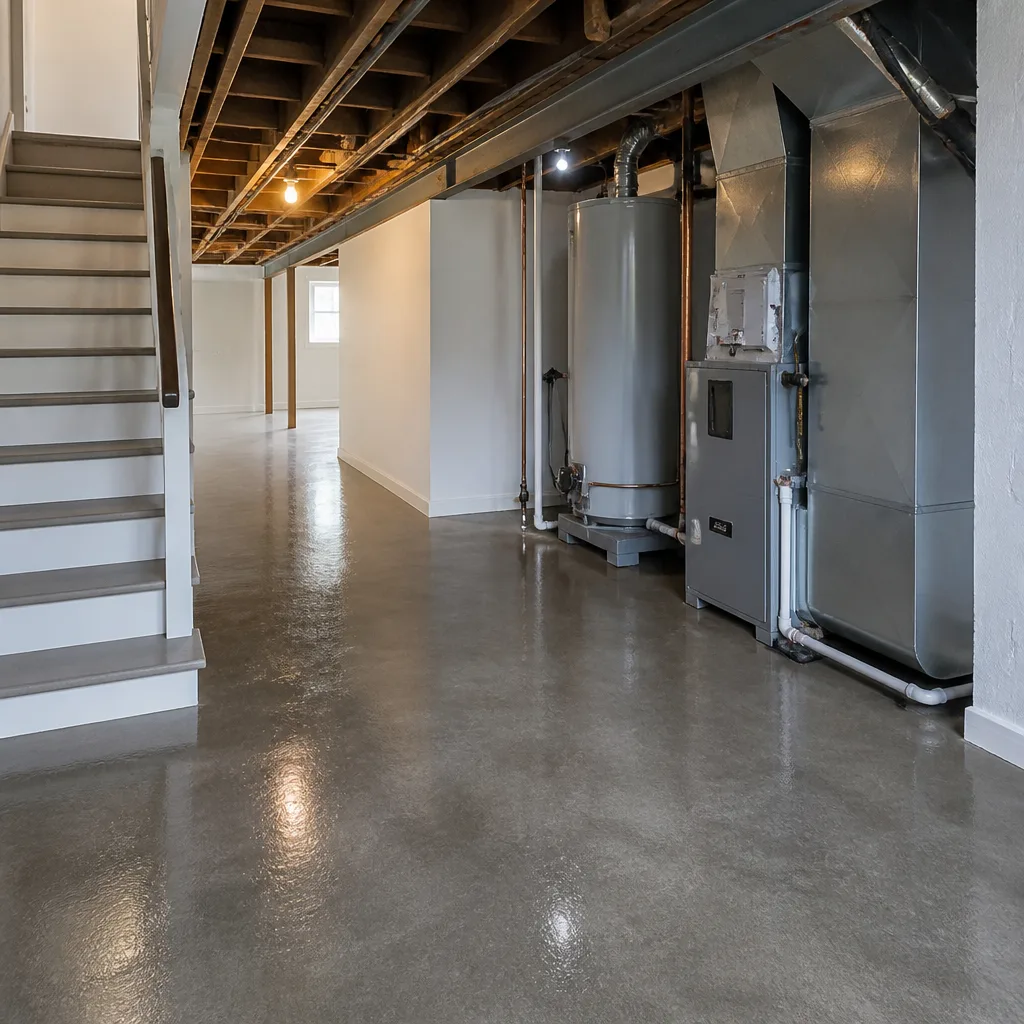
A flooded basement in Santa Ana typically means one of two things: a broken supply line in a home with a rare below-grade space, or, far more commonly, a failed water heater, laundry line, or drain backup in a multi-family conversion or older bungalow with a partial cellar. The job here costs anywhere from $1,200 to $4,800 depending on how long the water has been sitting and what it saturated. We’re familiar with the older subdivisions and downtown conversions near the 92701 and 92702 ZIP codes, where tight lot lines and shared walls complicate access and drying. That’s where our Injectidry system earns its keep: we can dry wall cavities without tearing out original lath and plaster.
Extraction and Containment First
We start every flooded basement in Santa Ana with controlled extraction and containment. If the water ran through a finished space, we set up containment barriers immediately to stop mold spores from moving into adjacent rooms. Then we pull standing water with truck-mounted or portable extraction units, depending on access. After extraction, we map the moisture profile and place air movers and dehumidifiers to dry the structure to a documented standard.
When Basement Water Threatened the Framing
In one Santa Ana basement conversion near downtown, a laundry supply line failed overnight and soaked the subfloor and wall cavities. We extracted within hours, opened the affected wall cavities from the interior, and ran Injectidry systems inside the walls while Phoenix dehumidifiers pulled the ambient moisture down. Four days of documented drying. The homeowner’s insurance adjuster accepted our daily logs without pushback.
Water Extraction in Santa Ana
Water extraction in Santa Ana is the difference between a contained loss and a demolition project. Big-box rentals and small wet vacs leave water behind, and in our climate that residual moisture feeds mold and delaminates plywood. We arrive with professional extraction units that pull water from carpet, pad, wood flooring, and subfloor simultaneously. A typical standalone extraction here runs $600 to $1,800 depending on the square footage and the water category. When the source is clean, like a supply line, costs stay on the lower end. When it’s gray or black water, from a washing machine failure or a sewage backup, the protocol changes and the price reflects the additional containment and antimicrobial work.
Why Category Matters in Santa Ana Homes
Water extraction is not a one-size-fits-all service. Category 1 water from a clean supply line gets extracted and dried. Category 2 water, from a sump pump failure or dishwasher leak, carries contaminants that affect the entire drying scope. We test, classify, and proceed accordingly. In Santa Ana’s older multi-family buildings, a unit above leaking gray water into a unit below is a recurring scenario we handle with full containment and structural drying.
Documented Drying, Not Just Vacuuming
After extraction, we don’t guess. Our crews place moisture probes deep into drywall, subfloor, and framing to track where the water migrated. Thermal imaging helps us see what surface meters miss, especially behind stucco and plaster in pre-1950s Santa Ana homes. We log every reading, every day, until the structure meets a documented dry standard. You get the logs. So does your adjuster.
Trusted Brands We Service in Santa Ana
We service and deploy a narrow set of professional-grade brands because consistency matters when a Santa Ana home is on the line. On our trucks you’ll find Phoenix dehumidifiers, XPOWER and B-Air air movers, and Injectidry drying systems. We don’t carry consumer-grade rental equipment. We also maintain local parts inventory and supplier relationships across Orange County, which means faster equipment swaps and repairs when a job in Santa Ana runs long. If a Phoenix unit faults at 9 p.m. on a Friday, we’re not waiting on a shipped part. That’s the operational difference a specialized restoration company brings to Santa Ana.
See the difference
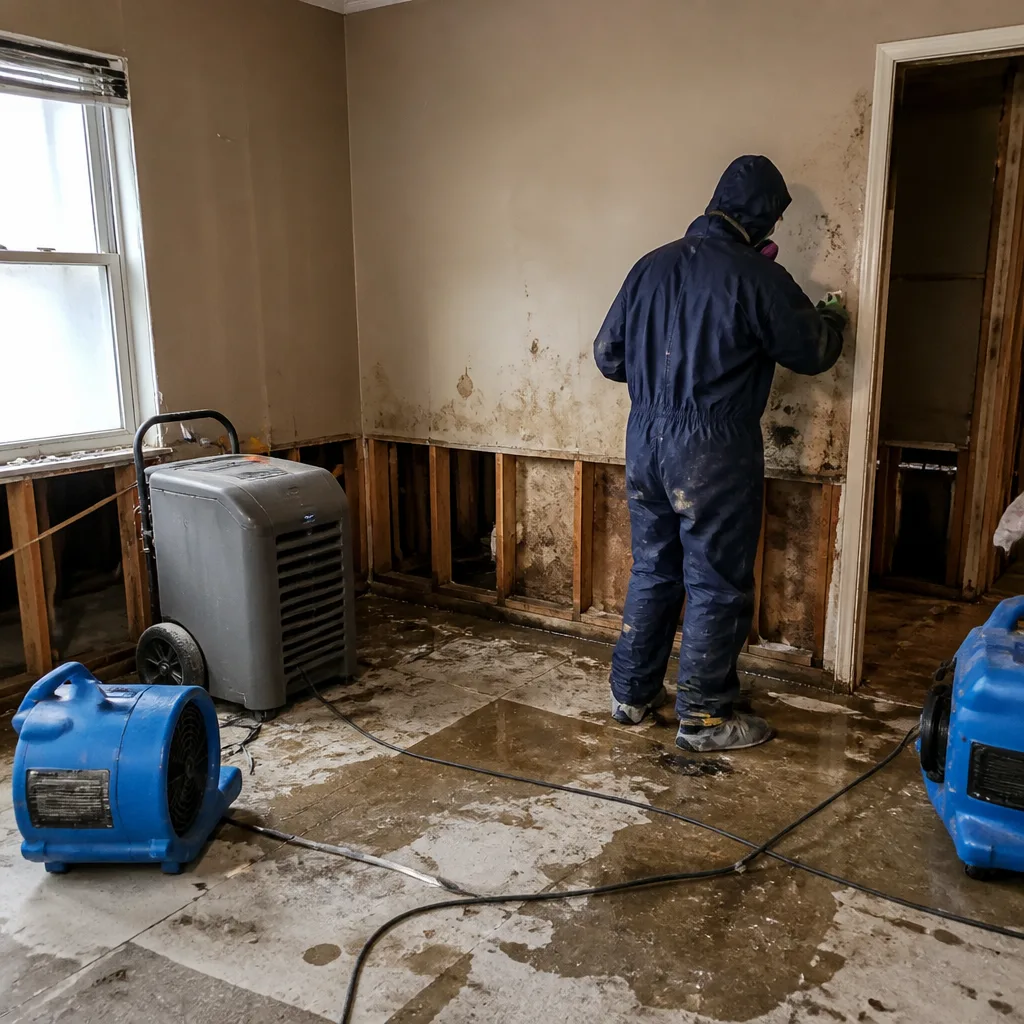 Before
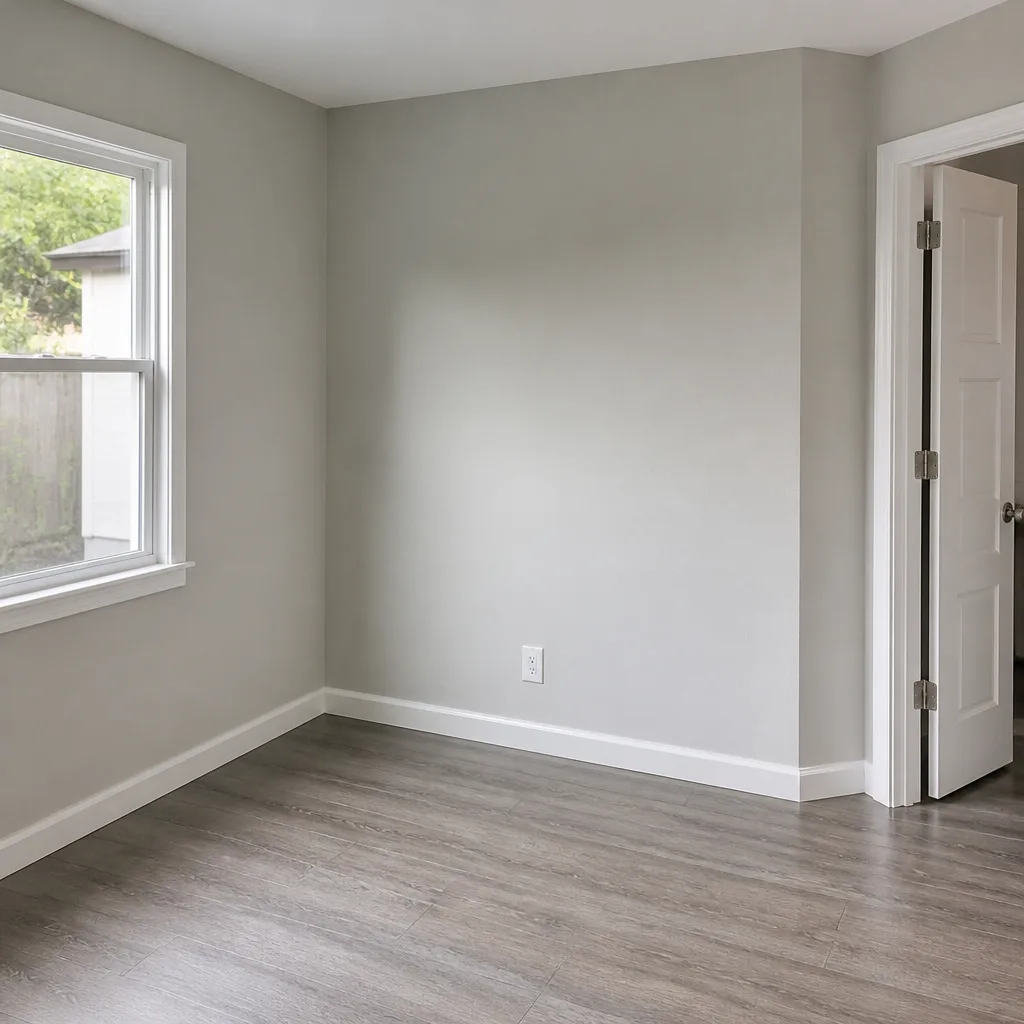 After
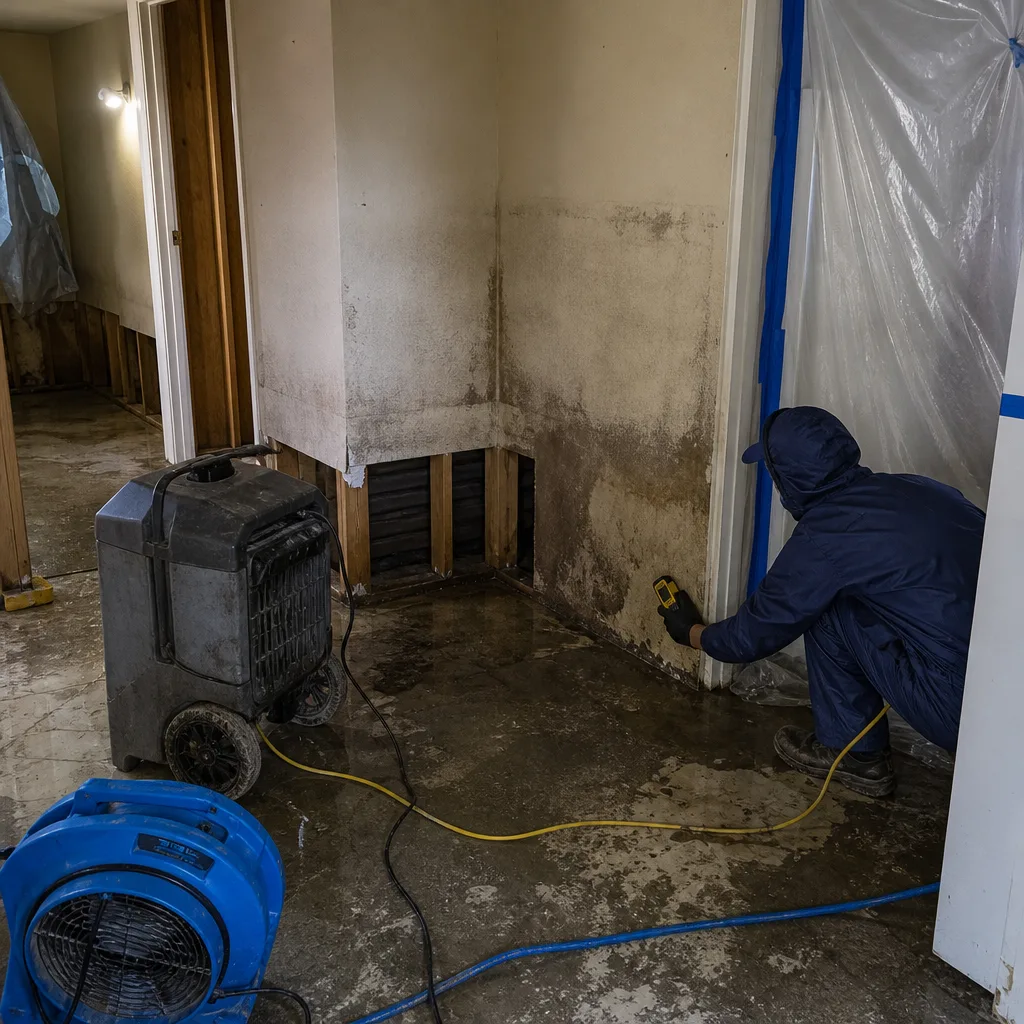 Before
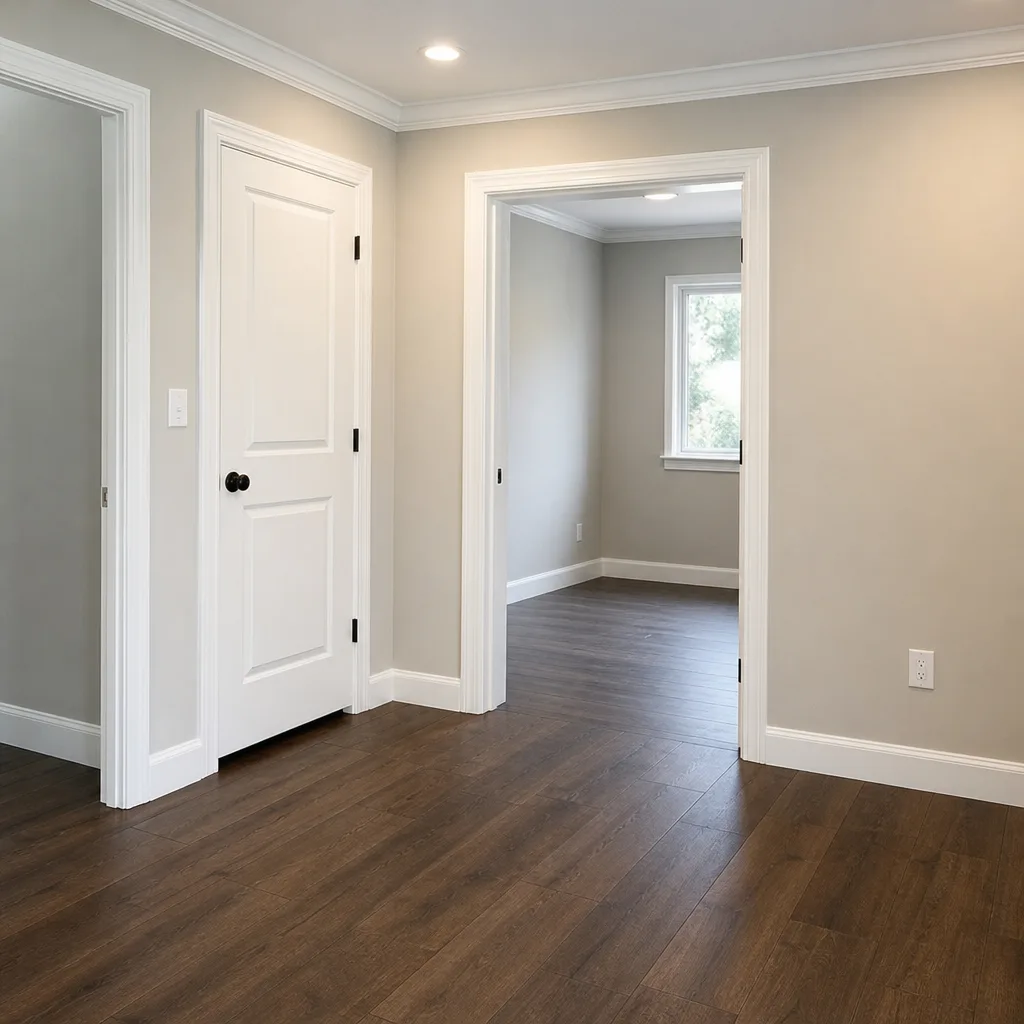 After
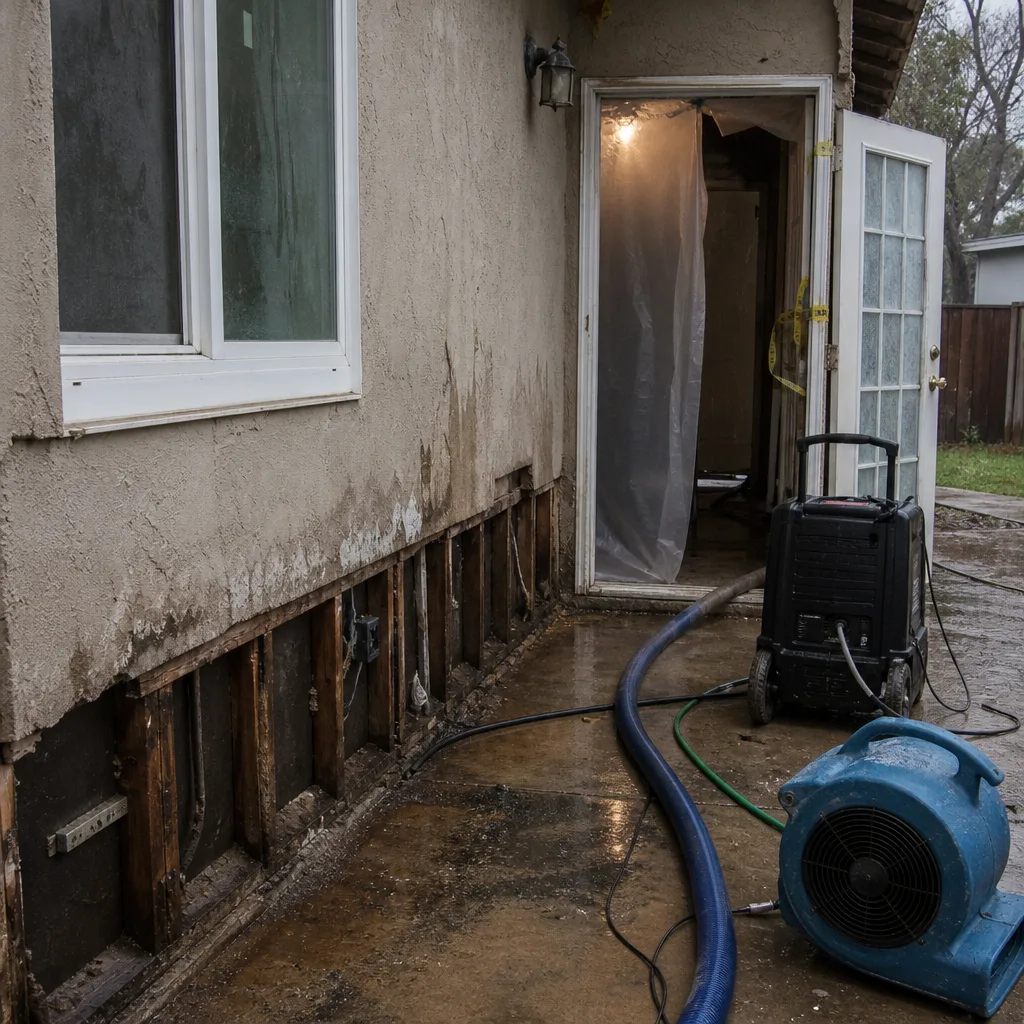 Before
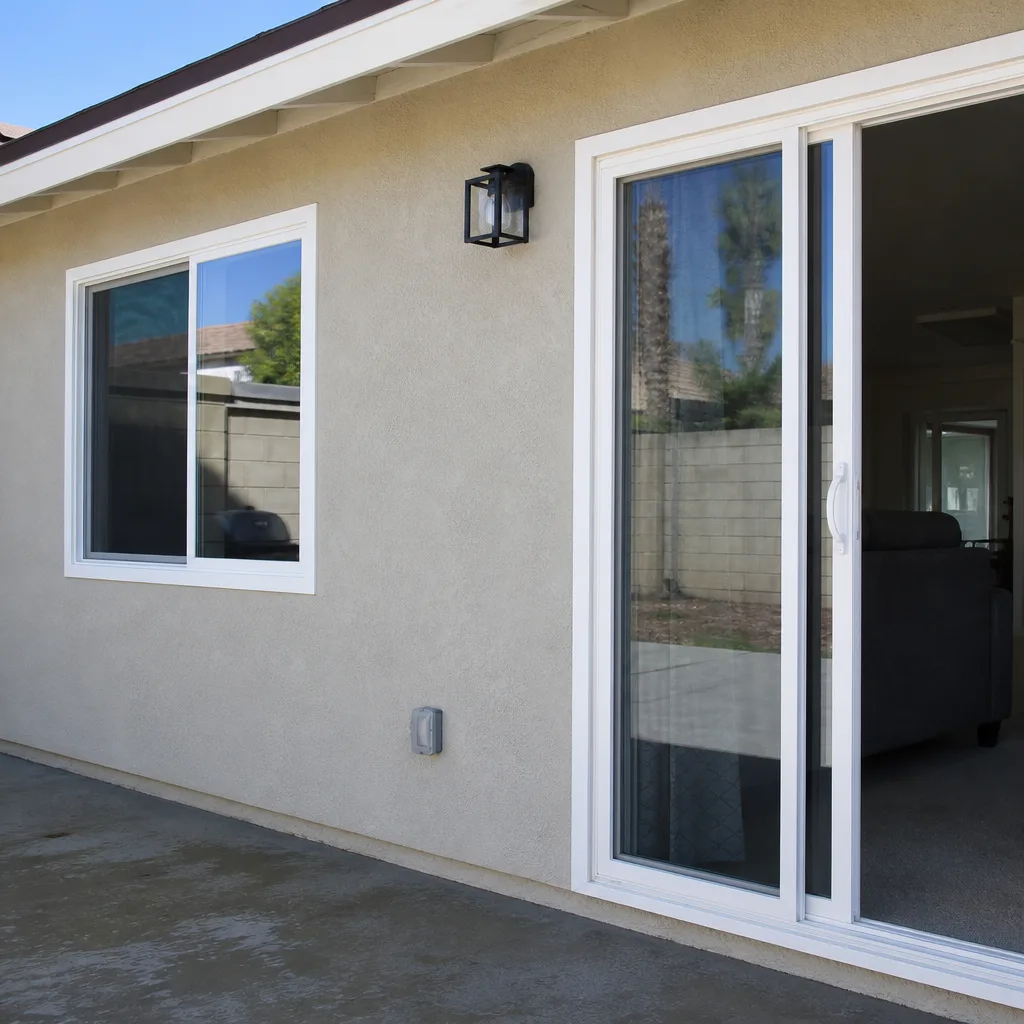 After
Common Water Damage Restoration Problems We See in Santa Ana Homes
- Pinhole failures in original galvanized and early copper lines. Santa Ana’s pre-1950s bungalows and post-war tracts share a common enemy: aging metal supply lines that develop slow pinhole leaks. These leaks run inside walls and under floors for weeks or months, and by the time we’re called, category 2 or 3 water has saturated the structure.
- Wind-cracked stucco and lifted composition shingles from Santa Ana wind events. The dry, gusty offshore winds that give this city its name can crack aging stucco and lift shingles. Those penetrations go unnoticed until a rare winter storm pushes water in. Most crews only check plumbing. We check the building envelope, too.
- Slow slab leaks under 1950s and 1960s ranch homes. In the 92704, 92705, and 92706 tracts, original copper lines run under slabs and fail slowly. The first sign is usually musty air or buckled flooring, not visible water. We use moisture mapping and thermal imaging to trace the leak path before any demolition begins.
- Mold behind stucco and under floorboards in central bungalow neighborhoods. In dense areas like 92701 and 92703, raised foundations and stucco-over-wood construction create cavity spaces where water lingers. Surface moisture meters read dry while mold is already active underneath. Our deep-probe protocol catches what visual inspections miss.
Pricing for Water Damage Restoration in Santa Ana, CA
Water damage restoration in Santa Ana is priced by scope, water category, and drying time, not by a flat rate. Here’s what we see in this market: standalone water extraction runs $600 to $1,800. A flooded basement with extraction, containment, and structural drying typically lands between $1,200 and $4,800. Full mitigation for a hidden slab leak that has saturated subfloor and wall cavities can reach $6,000 to $12,000 depending on the extent of the damage and whether mold remediation is required. What affects cost most is time: water that sits for days grows the scope exponentially. Call us early. We provide a free estimate and a written scope of work before we start, so you know exactly what you’re approving. And insurance is almost always in the room. We photograph everything, document every moisture reading, and coordinate directly with your adjuster.
We Also Serve Cities Near Santa Ana
Our Santa Ana crews regularly run across the city line into Water Damage Restoration in Santa Ana and the surrounding communities. The same team that handles hidden slab leaks in 92701 also serves Tustin, North Tustin, Fountain Valley, and Orange. Same equipment, same IICRC-certified protocols, same documented drying standards. When a property manager calls us from Tustin about a multi-unit damage event, we move fast.
Serving Santa Ana, CA — Our Local Coverage Area
We’re based in the Santa Ana area and know this community well. Use the map below to see our service coverage — if you’re nearby, we can almost certainly help.
FAQs About Water Damage Restoration in Santa Ana
The dry Santa Ana winds create a specific failure pattern in this city: they drive dust, debris, and occasional embers into aging roof and stucco surfaces, cracking and lifting materials that then let water in during the rare winter storm systems. Most restoration crews in Santa Ana only check for plumbing leaks during a water damage call. That’s a mistake. Our technicians inspect the building envelope for wind-created penetrations because we know that’s how water gets into so many Santa Ana homes between storms. If your water damage follows a wind event, call (877) 358-7678 and ask us to inspect the exterior while we’re on site.
Central Santa Ana’s pre-1950s bungalows, especially in the 92701, 92703, and 92707 ZIP codes, are built on raised foundations with stucco-over-wood construction and original plumbing that fails slowly. That combination means water runs inside wall cavities and under floorboards for weeks or months without visible signs, creating ideal mold conditions. Coastal cities see more standing water from flooding, which is obvious and gets immediate attention. Here, the damage is invisible until mold is already active. That’s why we use deep-probe moisture mapping and thermal imaging on every Santa Ana water damage call, not just surface meters.
The first thing we do is stop the water at its source and run a full moisture assessment, not just look at the visible puddle. In Santa Ana’s post-war ranch tracts in 92704, 92705, and 92706, original copper lines under slabs fail slowly, so the visible water is often just a symptom of a much larger hidden saturation. We shut off the supply, extract standing water, map the moisture profile with probes and thermal imaging, and then set up containment and drying. Our goal is to protect the structure, not just dry the carpet. We also document everything for insurance from the first hour.
We handle both. San Bernardino Restoration Co runs IICRC-certified crews across water damage restoration, mold remediation, and fire damage restoration under one roof. That means the team that extracts the water in your Santa Ana home is the same team that applies antimicrobial treatment and runs mold clearance testing if needed. No coordination gaps, no finger-pointing between contractors, no second markup. Your insurance claim moves faster when one company owns the entire scope from extraction to clearance. Our owner, Noel Armenta, structured the company this way specifically because Santa Ana’s older homes often need both water and mold work on the same loss.
Older Santa Ana homes take longer to dry and require more invasive moisture mapping than modern construction. Pre-1950s bungalows with lath and plaster walls, raised foundations, and no vapor barriers hold moisture in cavity spaces that a standard dehumidifier can’t reach. We use Injectidry systems to dry inside wall cavities without destroying original plaster. Post-war ranch homes with slab foundations and early copper lines need subfloor drying that can add one to three days to the timeline. Figure four to seven days for full structural drying in an older Santa Ana home, versus two to four in a newer build. We’ll give you a realistic timeline in writing before we start.
Written by Noel Armenta, Owner at San Bernardino Restoration Co, serving Santa Ana and Orange County with IICRC-certified water damage restoration.