
 Water damage drying
 Fire & smoke cleanup
 Mold remediation
 Storm response
 Sewage cleanup
 Reconstruction
Free visual inspection and a written scope of work before any mitigation begins - photos, moisture readings, and drying logs go in your claim file
The scope we write is the scope we bill. Anything new gets shown to you, in writing, before we touch it.
Get your free estimateFast, Reliable Water Damage Restoration Across Fountain Valley
Water damage restoration in Fountain Valley typically costs $1,800 – $4,500 for a standard category 1 or 2 loss, and we can usually have a crew at your door within 60 – 90 minutes for emergencies. The bigger variable in this city is how far the water has traveled under your slab-on-grade flooring. Fountain Valley’s 1950s-60s tract homes hide water damage in ways that newer construction doesn’t, which is why our technicians start every job with moisture mapping, not just eyes and rags. If you’ve got water spreading through a home in the 92708 or 92728 ZIP, call (877) 358-7678 right now. We’re IICRC-certified and we bring commercial-grade drying equipment to every residential job in Fountain Valley, whether you’re off Magnolia or tucked back near Mile Square Park.
Why San Bernardino Restoration Co Is Fountain Valley’s Preferred Water Damage Restoration Company
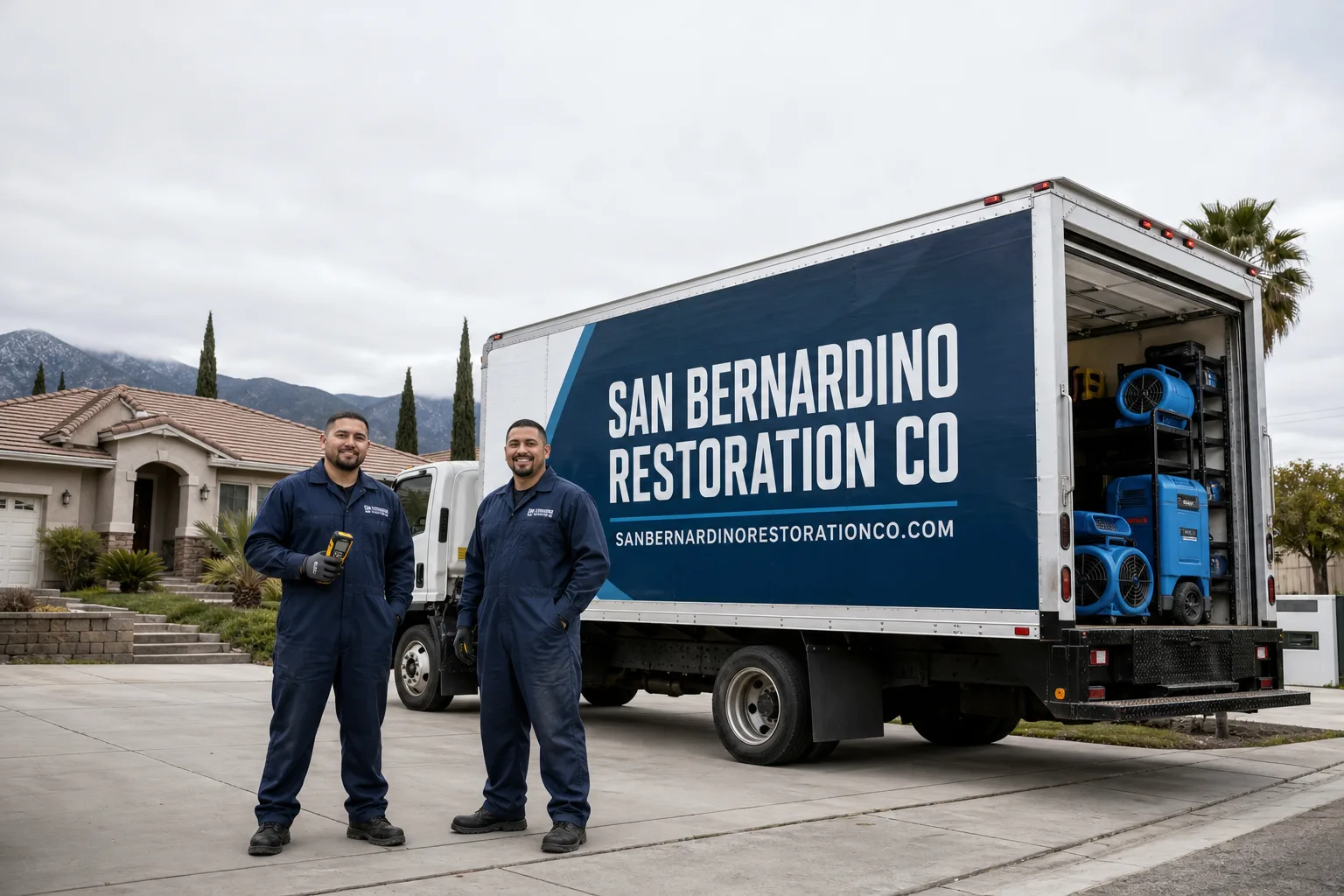
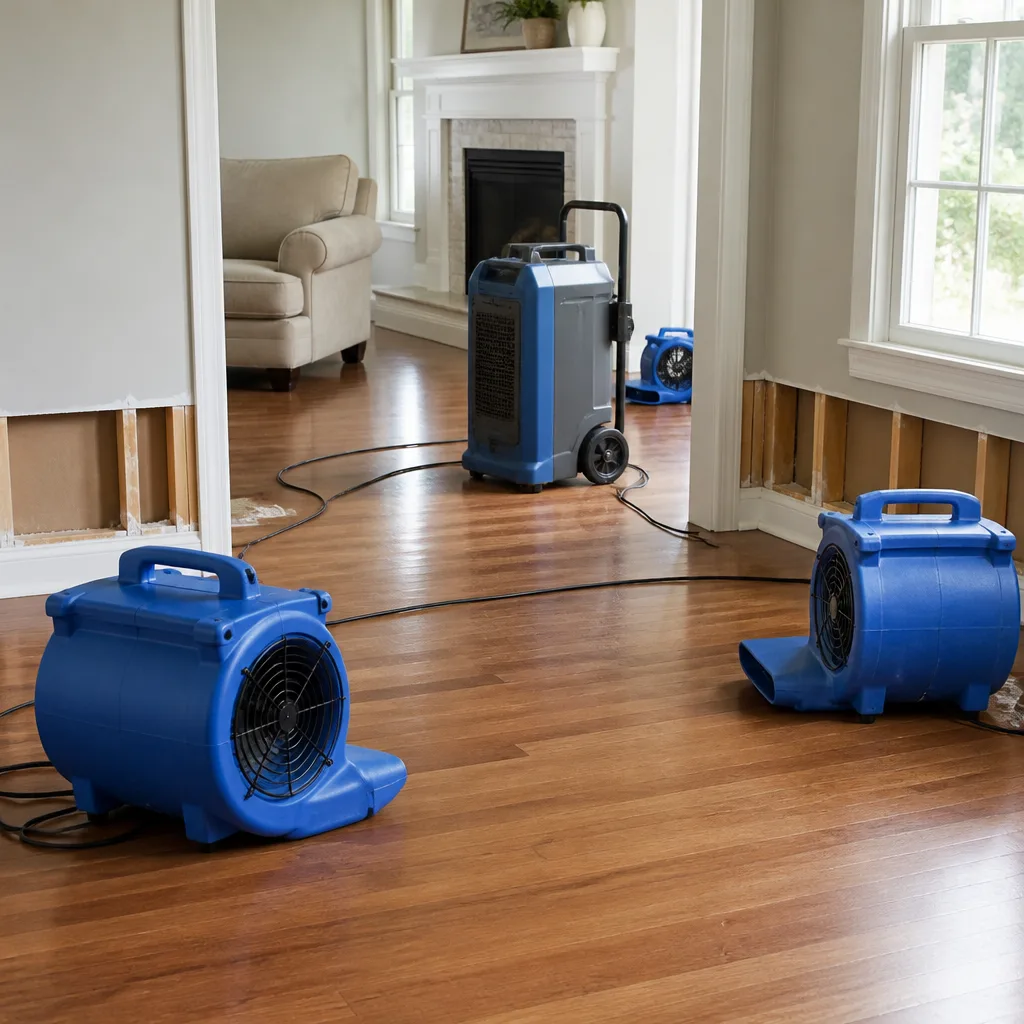
We didn’t become the restoration company Fountain Valley homeowners call by underbidding jobs and rushing crews through. We earned the reputation by doing something rare in this trade: writing down the scope, documenting every moisture reading, and drying your framing to the number, not to the clock. Our Water Damage Restoration team works exclusively with pro-tier equipment: Dri-Eaz and Phoenix dehumidifiers, XPOWER and B-Air air movers, and Injectidry wall-cavity drying panels. Fountain Valley property managers know the difference between a restoration company that owns this equipment and a crew renting blowers from a hardware store. The equipment shows up in the drying log, and the drying log is what your adjuster sees.
We also carry something most local generalists don’t: dual industry standing through the Restoration Industry Association and IFA, plus IICRC-certified technicians led by Noel Armenta. That certification means our people tested on water class, category, psychrometrics, and drying science before they ever touched a Fountain Valley entryway. It’s the difference between “we think it’s dry” and “the readings say it’s dry.”
And because we serve Fountain Valley regularly, we understand what a 1,300-square-foot ranch on Slater Avenue needs differently than a hillside home in Costa Mesa would. Response time to Fountain Valley runs 60 – 90 minutes on emergency water calls, and our crews know the tract home layouts, the slab quirks, and the local permitting environment.
Restoration work we handle
Emergency Water Removal in Fountain Valley
Emergency water removal in Fountain Valley is a same-day operation: we extract standing water, set containment, and place air movers and dehumidifiers before the water migrates further into adjacent rooms. A broken supply line behind a hallway wall in a 1960s ranch off Brookhurst can saturate the living room within two hours if the slab edge is carrying it. That’s why we treat every Fountain Valley water event as a time-weighted extraction, not a mop-up. Expect to pay $900 – $1,800 for the emergency extraction phase on most single-room losses; the full structural drying program runs separately, usually $1,200 – $3,000 depending on how many rooms are wet and whether we’re drying under flooring or inside wall cavities.
Slab-Edge Extraction Strategy
On slab-on-grade tract homes, we don’t just pull water from the visible pool. We check the slab edge in the room where the leak started, then walk the perimeter of the adjoining rooms. Water moves laterally under wall-to-wall flooring and along the slab edge, so extraction includes pulling baseboards where readings climb. This is also where our Injectidry system earns its place: wall cavities and sub-floor channels dry structurally without full demo in many Fountain Valley cases.
Documenting the Emergency Phase for Insurance
During emergency extraction, we photograph every affected surface, record moisture readings room by room, and note the water category. That documentation rolls directly into the claim file. If your adjuster wants to see a day-one timeline, we hand them the drying log with equipment placement and daily readings, not a narrative summary.
Flood Damage Restoration in Fountain Valley
Flood damage restoration in Fountain Valley usually means one of two things: a supply-line rupture that ran while you were at work, or a winter storm that punched through an aging wood-shake roof or a flat patio addition. Both are category 1 or 2 events on arrival, but if the water sat overnight against drywall and particleboard, it degrades quickly. A flooded 1958 ranch in the 92728 ZIP with water standing in three rooms typically runs $2,800 – $5,500 for full restoration, including extraction, drying, antimicrobial treatment, and rebuilding affected walls or flooring. If the flood touched the garage and its door hardware, we’re also checking for hidden corrosion contact where wall moisture met metal tracks and springs.
Post-Storm Roof and Patio Intrusion
When heavy rain hits Fountain Valley, the calls cluster around original wood-shake roofs and flat-roof patio additions built in the 1960s without today’s membrane standards. Water drops into the ceiling cavity, then follows the joists into closet ceilings and adjacent wall plates. We dry the assembly floor-up and ceiling-down simultaneously: air movers and dehumidifiers for the interior, Injectidry panels where the ceiling cavity needs positive pressure drying. Moisture mapping here is critical because the visible stain is rarely the full envelope.
Flooded Slab-Edge Carpet and Engineered Flooring
Fountain Valley slab homes flood laterally: the water loops under door frames and follows the slab edge into hallways and closets. Hardwood and carpet delaminate fast, and engineered flooring swells at the seams. We float-carpet extract where possible, remove padding that cannot be saved, and log the remaining moisture in the subfloor channel. Depending on saturation, some engineered floors can be dried in place with pressure-panel drying systems; others must come out and be replaced. The decision comes from the moisture readings, never from convenience.
Trusted Brands We Service in Fountain Valley
Our Fountain Valley customers run the full range of water-handling equipment and appliance brands, and we routinely service losses involving Rheem, Bradford White, AO Smith, Whirlpool, Kenmore, Moen, Delta, Kohler, PEX and copper supply systems, plus original cast-iron drain lines and galvanized supply piping. If your water heater ruptured or your dishwasher supply line split, we know the connectors, shutoff points, and typical failure patterns for what’s installed in these 1955 – 1975 tract homes. We keep common shutoff valves, supply risers, and floor-drying materials on our trucks, which shortens the timeline between arrival and full extraction in Fountain Valley.
See the difference
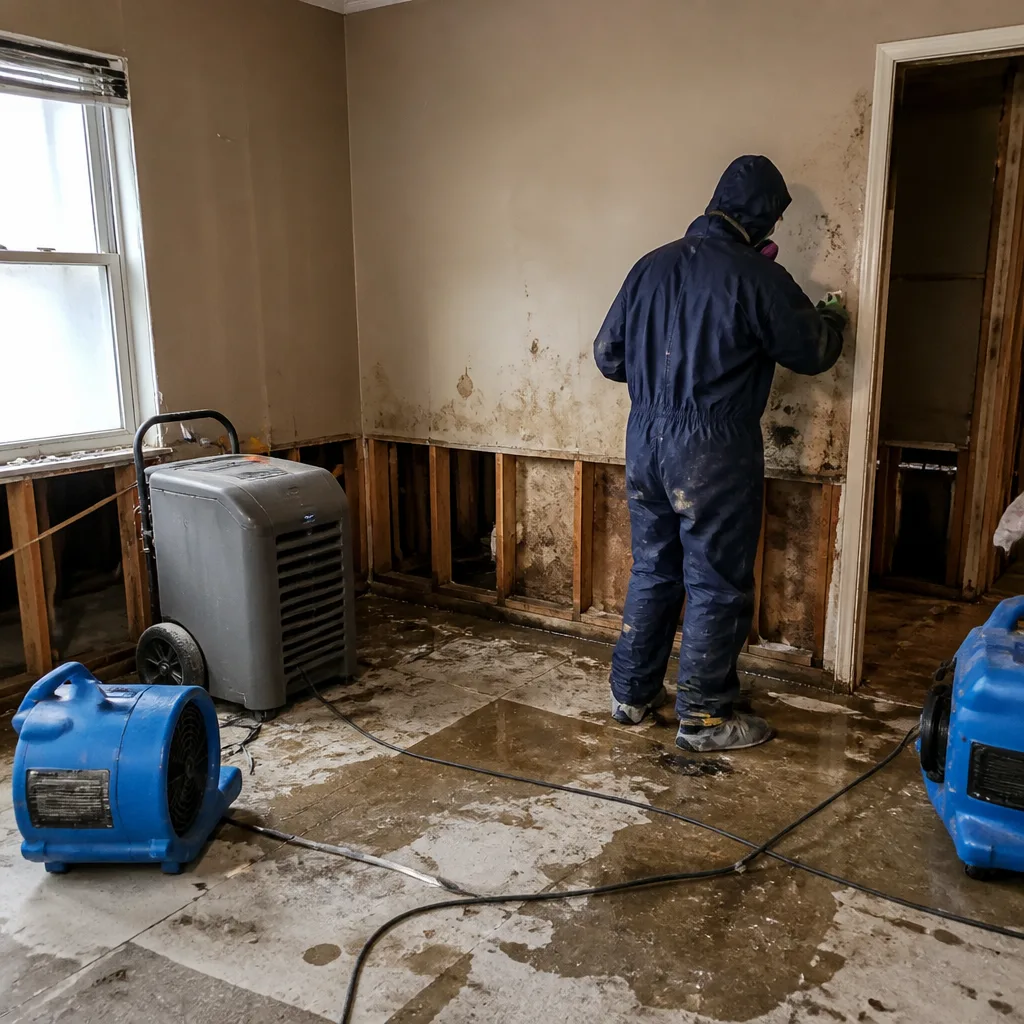 Before
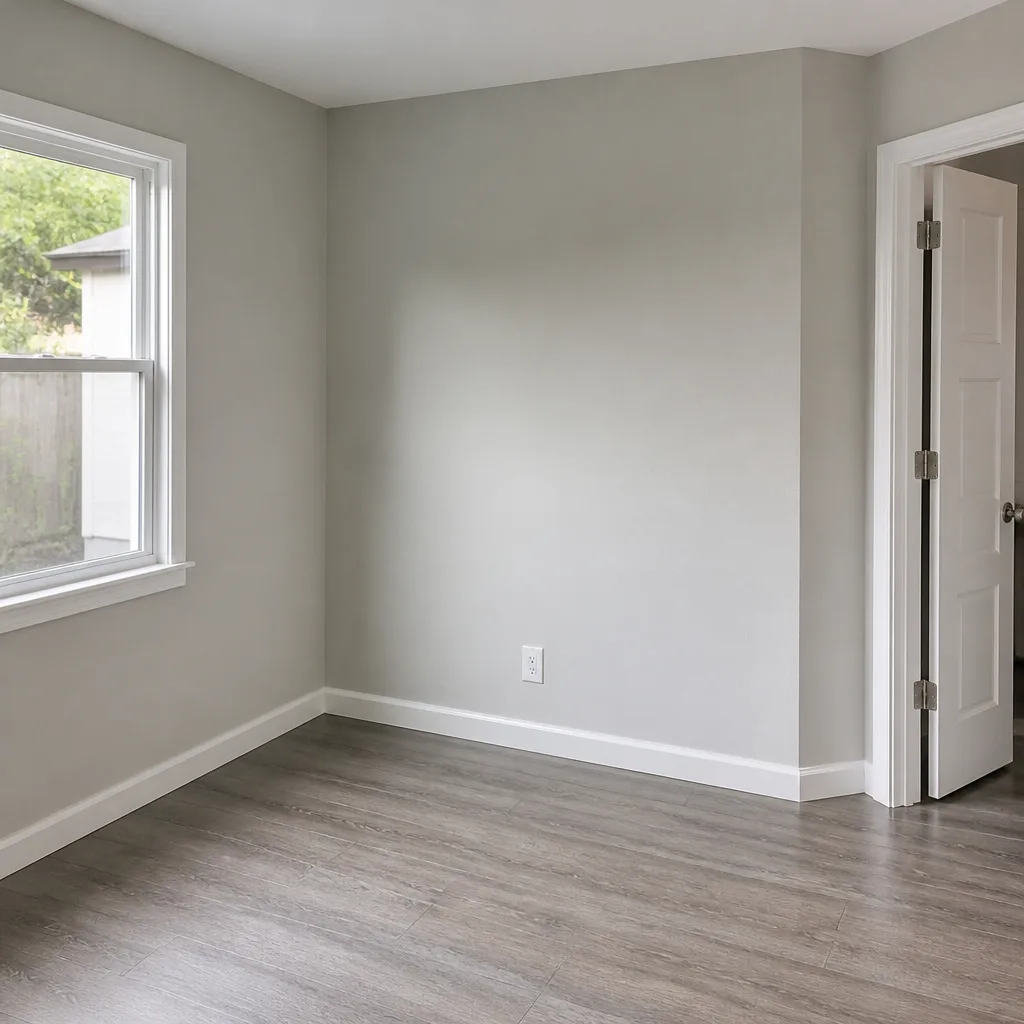 After
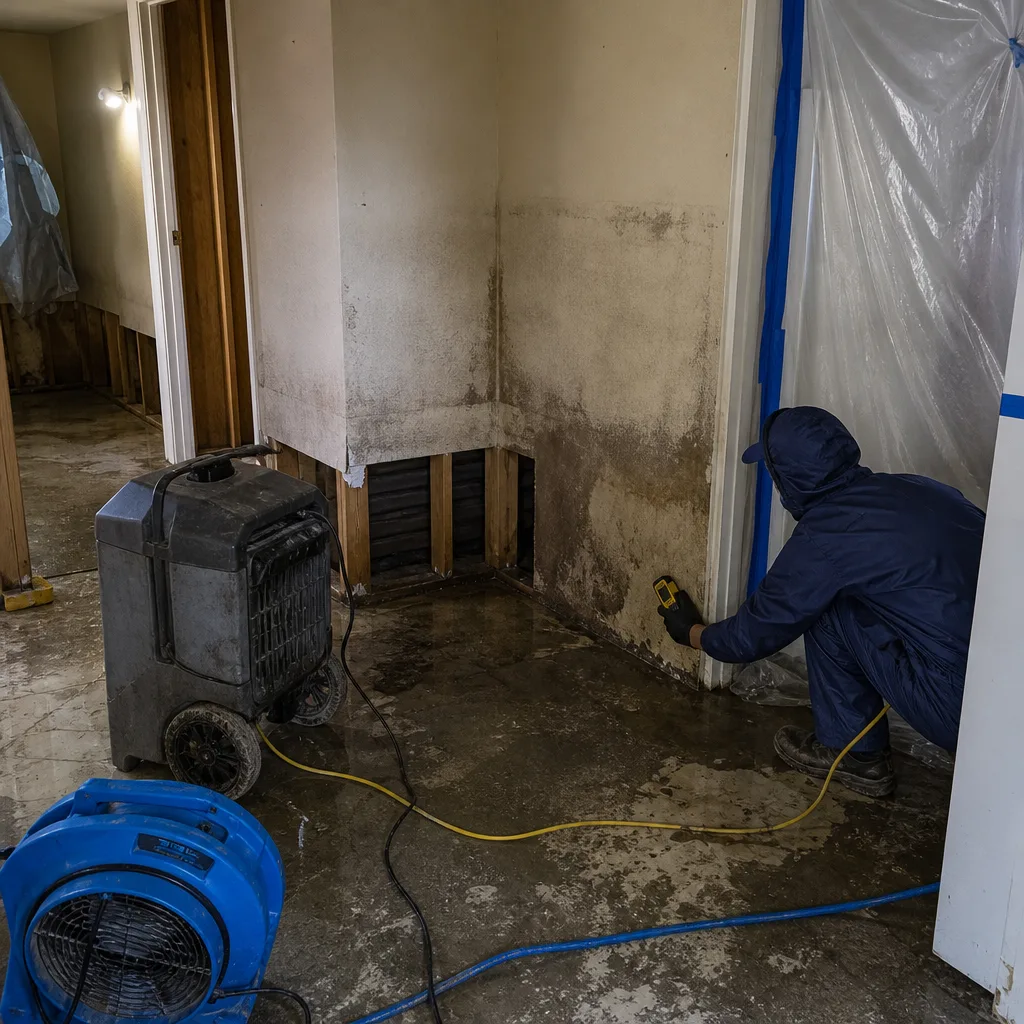 Before
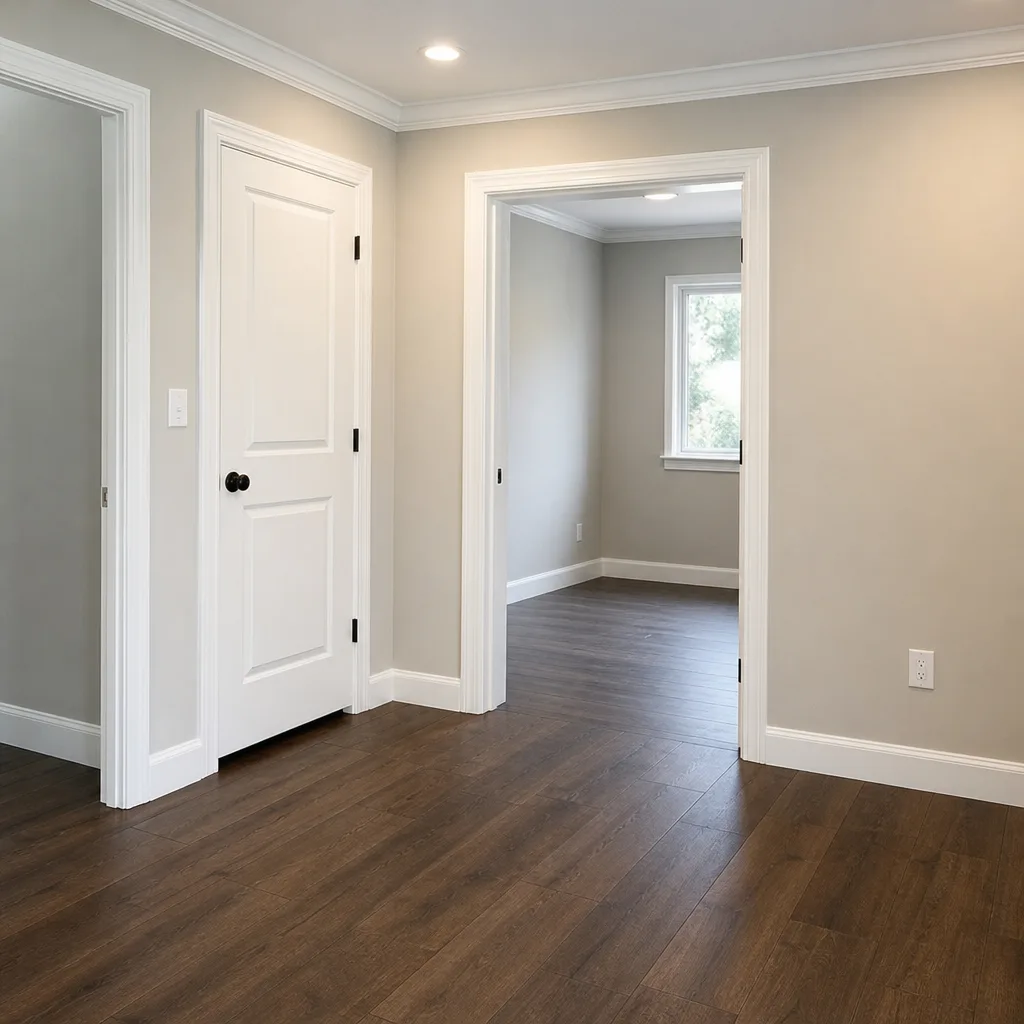 After
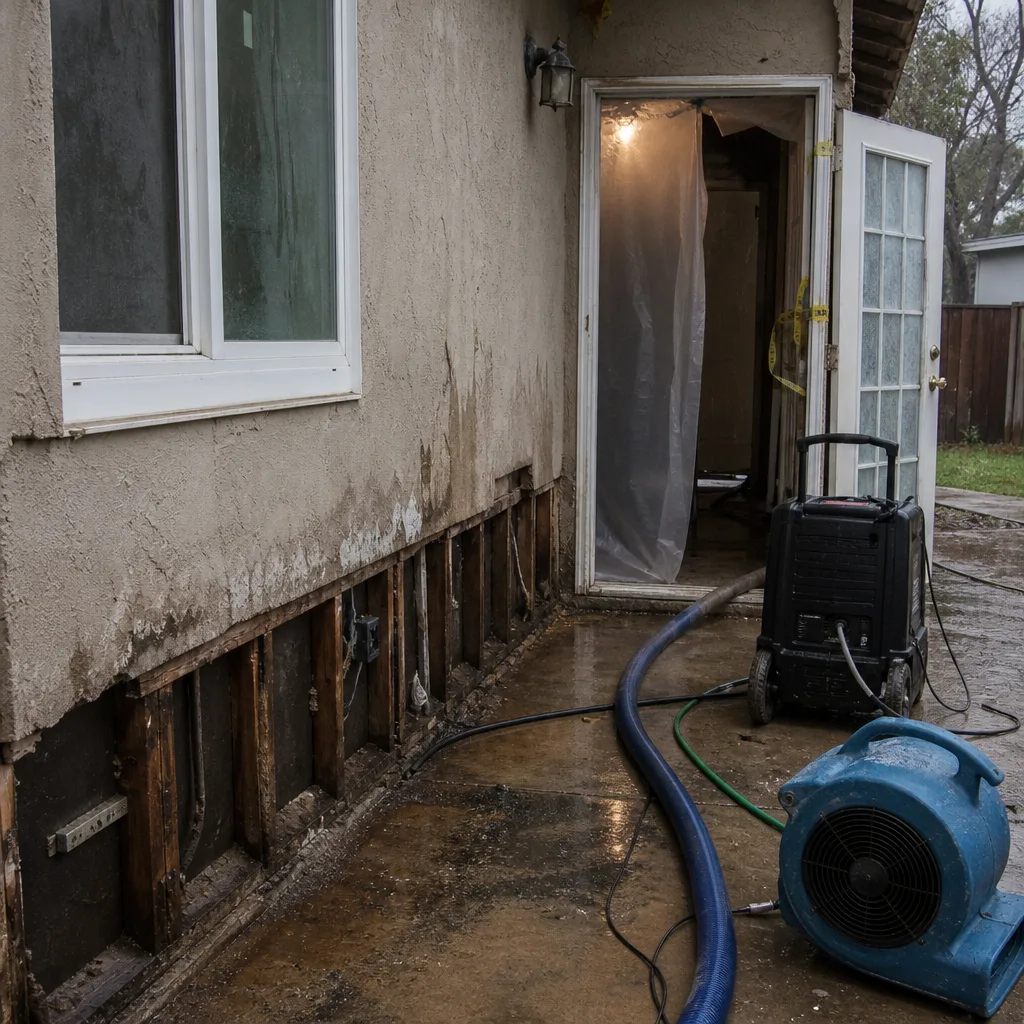 Before
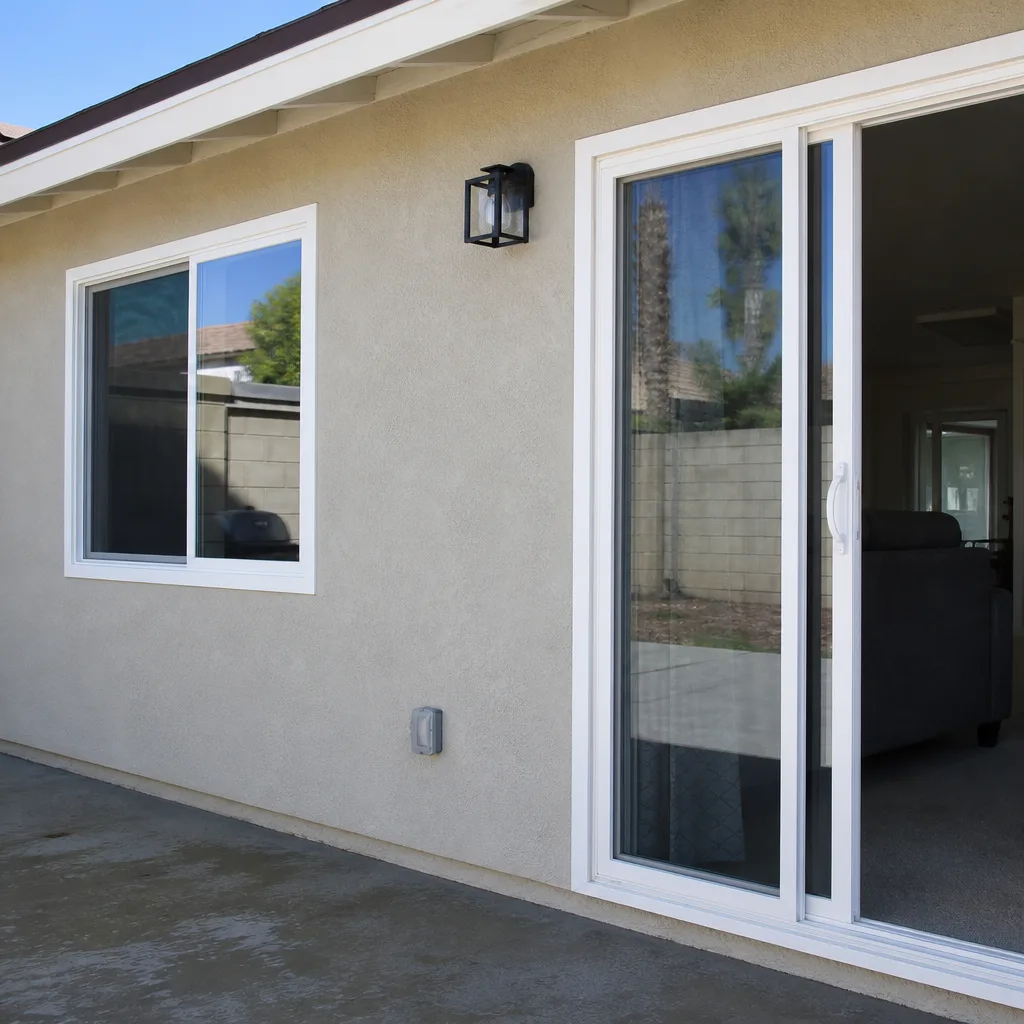 After
Common Water Damage Restoration Problems We See in Fountain Valley Homes
- Slab-edge lateral migration: Because Fountain Valley homes sit on slab-on-grade foundations, a slow leak in a bathroom can wick under wall-to-wall flooring and appear as damage in a hallway two rooms away. We walk the slab edge with moisture meters, not just the visible stain.
- Aged galvanized supply lines and cast-iron drains: Many original systems in 1955 – 1975 tract homes are reaching end-of-life together, so a category 1 supply leak can quickly pick up contaminants from a failing drain and turn into a category 2 or 3 loss. We identify the water category on arrival and set protocols accordingly.
- Coastal salt-air corrosion on garage-door hardware: Springs, hinges, rollers, and tracks corrode years faster near the coast than inland. During restoration, we often see failed door components adjacent to water-damaged wall assemblies, which means the damage envelope includes the garage hardware and sometimes the opener chain.
- Roof and patio intrusion points: Original wood-shake roofs and flat patio additions built before modern membrane standards let rain in during rare heavy winter storms. Ceiling cavities then hold moisture against drywall and framing, and the visible stain lags the actual wet envelope.
Pricing for Water Damage Restoration in Fountain Valley, CA
Here’s what Fountain Valley homeowners can expect on a typical single-room water loss: emergency water extraction $900 – $1,800, structural drying and dehumidification $1,200 – $3,000, antimicrobial treatment and surface cleaning $400 – $900, and any necessary drywall or baseboard replacement $600 – $2,200. Full flood restoration across three rooms with flooring and wall work runs $2,800 – $5,500. Multi-room slab-edge losses that require Injectidry wall-cavity drying or pack-out of contents add $800 – $2,000. We give you a written scope before any work starts, and our free estimate walks you through exactly what’s wet and what it takes to dry it. Call (877) 358-7678 to schedule one.
We Also Serve Cities Near Fountain Valley
Our service area includes Fountain Valley and the surrounding Orange County cities of Midway City, Huntington Beach, Costa Mesa, and Westminster. If your property sits near the city line or you manage units in more than one of these areas, the same IICRC-certified crew and pro equipment fleet covers the whole route.
Serving Fountain Valley, CA — Our Local Coverage Area
We’re based in the Fountain Valley area and know this community well. Use the map below to see our service coverage — if you’re nearby, we can almost certainly help.
FAQs About Water Damage Restoration in Fountain Valley
Because most Fountain Valley homes are 1950s-60s tract construction on slab-on-grade foundations, water spreads laterally under wall-to-wall flooring and along the slab edge rather than down into a basement. A supply-line leak behind a bathroom wall will travel under the slab edge and wick up into a hallway closet or bedroom two doors away. That’s why we moisture-map the entire slab perimeter, not just the visible wet spot. If you’ve got a leak in your Fountain Valley home, call (877) 358-7678 for a full mapping inspection.
Coastal salt air corrodes metal building materials faster, so garage-door springs, hinges, rollers, and tracks in Fountain Valley fail years earlier than in inland Orange County. When water damage reaches a garage wall or adjacent framing, the corroded door hardware often already has active oxidation, and we may recommend replacing the springs, hinges, or rollers during restoration so the opening doesn’t fail days later. We check the hardware on every garage-adjacent water loss in Fountain Valley.
Most Fountain Valley supply-line and water-heater leaks start as category 1 (clean water), but within 24 – 48 hours of contact with aged cast-iron drains, dust, and slab dust, they degrade to category 2 or 3. Category 3 is grossly contaminated and requires full removal of saturated porous materials, antimicrobial treatment, and often a higher equipment load. Since many Fountain Valley homes still have original cast-iron drains near the slab, a clean-water leak can pick up contamination quickly. We identify the category on arrival and document it in the drying log.
In many Fountain Valley slab homes, yes. We use Injectidry panels to create positive air pressure under flooring assemblies and inside wall cavities, which dries the subfloor channel and framing without pulling up the entire floor or opening walls. It works best when the water is category 1 or clean category 2 and the visible damage is limited. If the readings show saturation beyond recovery, we tell you before anything is torn out and include the demo scope in writing.
Shut off the water supply to the heater, cut power to the unit at the breaker, and call us at (877) 358-7678. Water heater leaks in Fountain Valley slab homes tend to run under the wall-to-wall flooring and along the slab edge quickly, so time matters. Don’t turn the water back on until we’ve checked the supply line and the drain condition, because an aged galvanized or cast-iron line can compound the loss. We’ll extract, map the moisture, and give you a written scope before any drying starts.
Written by Noel Armenta, Owner at San Bernardino Restoration Co, serving Fountain Valley and greater Orange County with IICRC-certified water, mold, and fire restoration.