Last updated October 30, 2026
 Water damage drying
 Fire & smoke cleanup
 Mold remediation
 Storm response
 Sewage cleanup
 Reconstruction
Free visual inspection and a written scope of work before any mitigation begins - photos, moisture readings, and drying logs go in your claim file
The scope we write is the scope we bill. Anything new gets shown to you, in writing, before we touch it.
Get your free estimateChoosing the Right Damage Restoration Brand: A Buyer’s Guide for San Bernardino
Here’s something most San Bernardino homeowners don’t realize until it’s too late: the name on the van rarely matches the name on the insurance policy. A major national restoration franchise and a locally-owned IICRC-certified firm can both show up with clean vans and confident technicians, but by day two, one may have subcontracted your job to a third-party crew nobody vetted while the other has a WRT/ASD-certified supervisor on-site for every phase of the dry-out. The franchise model, in many cases, is a marketing operation that sells work to licensed subcontractors who never signed your original agreement. The independent certified specialist answers for its own paperwork, its own equipment, and its own reputation when a moisture map gets questioned by an adjuster. This guide walks you through the brand evaluation framework that actually matters in San Bernardino, where summer heat accelerates mold growth and winter rains push water through slab foundations at a rate that surprises newcomers.
Restoration work we handle
Quick Answer
The right damage restoration brand in San Bernardino is not the one you recognize from a national TV ad. It’s the company that owns its equipment, holds IICRC certifications on individual technicians (not just a wall plaque), documents every phase with moisture readings and psychrometric logs, and answers directly for its work when an insurance review gets difficult. Verify credentials at the technician level, ask who actually performs the labor, and demand the three documentation deliverables detailed below before signing anything.
Table of Contents
- The Franchise vs. Independent Accountability Gap
- Certifications to Verify on Individual Technicians
- How Equipment Inventory Reveals a Company’s True Capability
- What “Insurance Preferred Vendor” Status Actually Means
- The Three Documentation Deliverables You Must Receive
- San Bernardino-Specific Factors That Change the Math
- How to Evaluate a Restoration Company in 7 Steps
- Common Mistakes to Avoid
- When to Call a Professional
- Frequently Asked Questions
- The Bottom Line
The Franchise vs. Independent Accountability Gap
The core difference between a national restoration franchise and an independent certified specialist comes down to one question: who is legally responsible for the work performed inside your home? In a franchise model, the franchisee often holds the brand license but not all the trade licenses. When call volume spikes, which it does after every major storm event in San Bernardino, franchise offices routinely subcontract overflow to unlicensed or minimally-vetted crews. Your contract says you hired the big-name brand. Your job is actually being performed by a crew that never signed anything with that brand and has no direct accountability to you.
An independent restoration firm operates differently. San Bernardino Restoration Co, for example, maintains its own IICRC-certified technicians on payroll, owns its equipment outright, and answers directly to the client, the adjuster, and the California State License Board. There’s no corporate office in another state to blame when documentation fails an insurance review. There’s no “we’ll escalate that to a regional manager.” The person you call is the person responsible for the outcome. That structural difference matters enormously when a mortgage lender is waiting on a clearance letter or an adjuster is questioning whether the dry-out was complete.
In our experience working throughout San Bernardino, the accountability gap shows up most visibly during the insurance documentation phase. Franchise subcontracted work often produces thin paperwork: a few photos, a lump-sum invoice, maybe a single moisture reading. Independent certified firms, especially those operating under RIA standards, tend to produce the complete documentation package because their reputation and licensing depend on it. When an adjuster asks for the psychrometric log from day three of your dry-out, you want the company that has it, not the company that says they’ll “look into it.”
Certifications to Verify on Individual Technicians
Here’s a truth most restoration marketing materials avoid: a company can claim to be certified while none of the technicians who actually perform your work hold the credential. The IICRC, or Institute of Inspection, Cleaning and Restoration Certification, certifies individuals, not companies. When evaluating a restoration brand in San Bernardino, ask for the specific certifications held by the technicians who will be dispatched to your property, not just the company’s marketing claims.
The three certifications that matter most for water and fire damage work are:
- WRT (Water Damage Restoration Technician): The foundational credential covering proper water extraction, drying science, and contamination management. Any technician touching water damage should hold this.
- ASD (Applied Structural Drying): The advanced credential that demonstrates understanding of psychrometrics, drying chamber management, and structural moisture behavior. This is the difference between drying and guessing.
- FSRT (Fire and Smoke Restoration Technician): Covers smoke behavior, soot chemistry, and proper cleaning methodologies for fire-damaged structures.
Why does this matter in San Bernardino specifically? Because the city’s older housing stock, much of it built before modern building codes, presents drying challenges that newer suburban homes don’t. Lath-and-plaster walls from the 1950s, raised foundations with crawl spaces, and stucco exteriors all behave differently under moisture load. A WRT-certified technician with ASD training understands these variables. A general laborer hired through a subcontracting chain does not, and the result is either incomplete drying that leads to secondary mold or over-drying that damages building materials and drives up the claim.
Ask directly: “Which technicians will be on my job, and what IICRC credentials do they hold?” If the answer is vague, walk away. The credential either exists or it doesn’t.
How Equipment Inventory Reveals a Company’s True Capability
You can learn more about a restoration company’s technical competence from a tour of their warehouse than from their website. The equipment they own tells you what kind of work they’re actually prepared to do. Many restoration operations rent equipment on a per-job basis from regional supply houses. That works for carpet cleaning. It fails catastrophically for structural drying, where continuous operation over 72 to 96 hours is the difference between a successful dry-out and a secondary mold problem.
A serious restoration firm owns its equipment because the equipment itself is the argument for their expertise. Look for these professional-grade brands and what they signal:
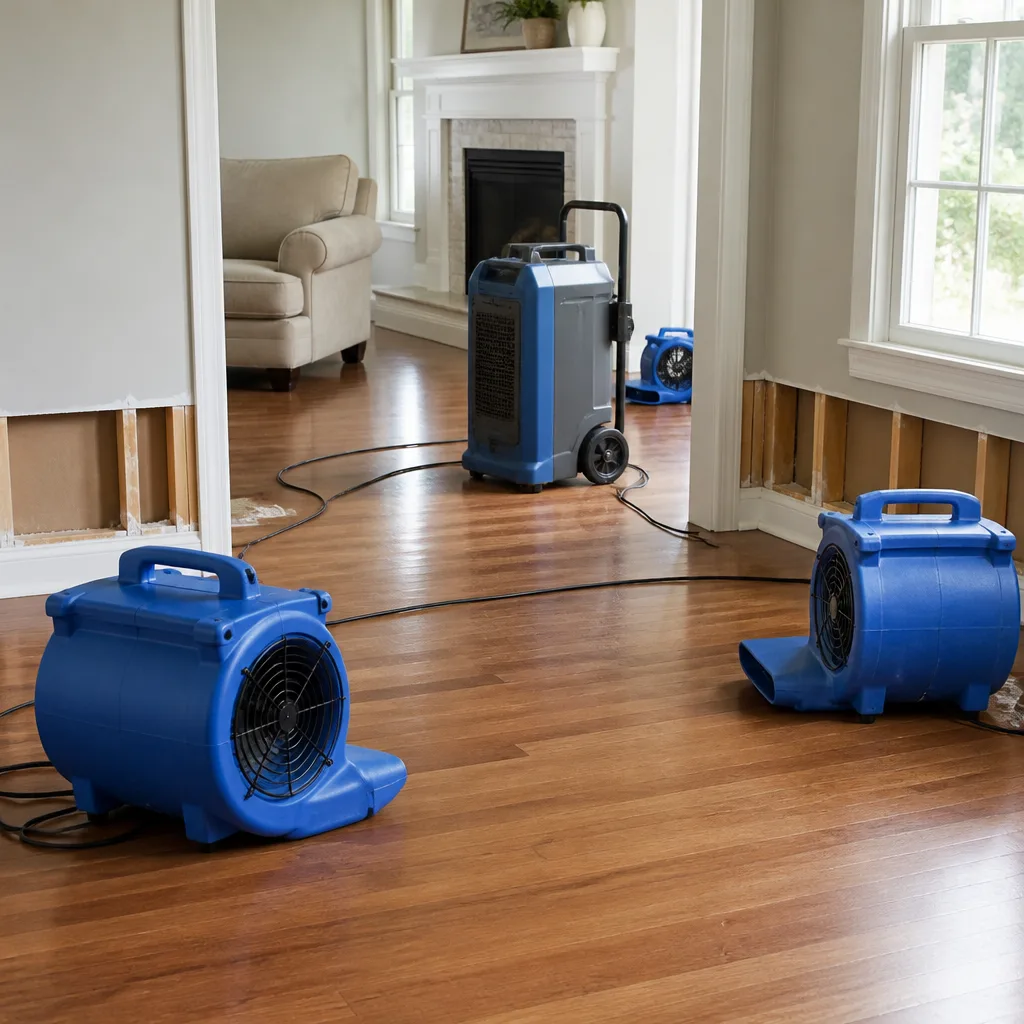
- Dri-Eaz dehumidifiers: The industry standard for LGR (low-grain refrigerant) dehumidification. These commercial units pull moisture at rates consumer-grade machines cannot match and maintain performance in San Bernardino’s summer heat, when garage temperatures routinely exceed 100°F and smaller units fail.
- Phoenix air movers and dehumidifiers: Another professional-tier brand known for durability and precise airflow control. Phoenix equipment is used on large commercial losses and indicates a company that invests in serious drying capability.
- XPOWER and B-Air air movers: Professional axial and centrifugal air movers that create the airflow patterns required for effective evaporation. Consumer fans cannot generate the velocity or coverage needed for structural drying.
- Thermal imaging cameras: Moisture doesn’t always show itself visibly. Thermal imaging reveals temperature differentials that indicate hidden water behind walls, under flooring, and in ceiling cavities.
- Moisture meters (pin and pinless): The baseline tool for any credible moisture assessment. Without them, a technician is guessing, and guessing is not a restoration methodology.
The equipment question matters because rental-dependent operations face a perverse incentive: the longer they keep equipment on your job, the more their rental costs eat into the profit margin. Owned equipment, by contrast, has already been paid for, so the company can leave dehumidifiers running until the moisture readings actually hit dry standard, not until the rental budget runs out. When we inspect water damage in San Bernardino homes, we document every reading with meters and thermal imaging so the dry-out is driven by data, not deadlines.
What “Insurance Preferred Vendor” Status Actually Means
Nearly every restoration company wants to tell you they’re “insurance preferred” or “insurance approved.” Here’s what that actually means: the company has an agreement with an insurance carrier or third-party administrator to perform work at negotiated rates. That’s it. It says nothing about the technical quality of the work. It says nothing about the training of the technicians. It is a pricing arrangement, not a quality certification.
In fact, the economics of preferred vendor programs can work against you in subtle ways. When a restoration company agrees to work at volume-discount rates for an insurance carrier, they have to make up the margin somewhere. In a franchise model, that margin comes from subcontracting labor at the lowest possible cost. In some independent operations, it comes from upselling unnecessary services or expanding the scope of work beyond what the damage actually requires. The adjuster is trying to keep the claim cost down. The restoration company is trying to keep its margin up. Your interests as the homeowner get squeezed in the middle.
What matters more than preferred vendor status is the quality of the documentation the company produces. Insurance carriers process claims faster when the paperwork is complete, defensible, and specific. Companies that operate under RIA standards and produce detailed moisture logs, photographic documentation, and scope-of-work reports actually help adjusters close claims faster, which benefits everyone. Our experience in San Bernardino has been that adjusters respond best to rigorous documentation, not to volume-discount relationships. When you’re evaluating a restoration brand, ask them to explain their documentation process before you ask about their insurance relationships. A company that can articulate their paperwork standards is a company that has been through the process enough times to know what adjusters actually need.
The Three Documentation Deliverables You Must Receive
At the close of your restoration project, you should receive three specific documents. Their presence or absence tells you a great deal about the quality of the work performed and the likelihood that your insurance claim will process smoothly. Many homeowners in San Bernardino don’t know to ask for these documents, and restoration companies that operate on thin margins often omit them because they require time and technical skill to produce.
1. The Psychrometric Log
A psychrometric log records daily readings of temperature, relative humidity, and specific humidity throughout the drying process. These readings are taken at the start of each day, typically from multiple locations throughout the affected structure, and they track the drying curve from initial saturation to dry standard. Without this log, neither you nor your insurance adjuster has any evidence that the structure actually reached an appropriate moisture level before the equipment was pulled. A restoration company that cannot produce psychrometric logs is telling you, by omission, that they were not actually monitoring the drying process scientifically.
2. The Moisture Mapping Report
Moisture mapping is the process of taking systematic moisture readings across affected and unaffected building materials to establish the true boundary of water migration. Water moves through building materials in ways that are invisible to the naked eye. It travels along floor joists, wicks up drywall, and settles in wall cavities far from the visible damage area. A proper moisture map identifies exactly where the water went, which areas require drying, and which areas can be left alone. This map is the difference between treating the visible damage and treating the actual damage. For mold remediation work specifically, the moisture map is also the evidence that the source of moisture has been eliminated, which is the prerequisite for any credible mold remediation in San Bernardino.
3. The Certificate of Completion
This document states that the restoration work is complete, that drying targets have been met, and that the structure is ready for repair or reconstruction work. It should reference the specific project, the dates of service, the equipment used, and the final moisture conditions. The certificate of completion is what allows you or your contractor to proceed with rebuilding, and it’s what your insurance carrier uses to close out the restoration phase of your claim.
If a restoration company completes work and hands you an invoice without any of these three documents, you have not received professional restoration services. You have received wet-vacuuming and fan-rental. The documentation is not bureaucracy. It is the evidence that the science was applied.
San Bernardino-Specific Factors That Change the Math
Restoration is not a geography-neutral discipline. The conditions in San Bernardino create specific challenges that should inform your choice of restoration brand, and a company without local experience may not anticipate them.
First, the summer heat. San Bernardino regularly sees daytime temperatures above 100°F in July and August. This accelerates the growth of mold dramatically. A small amount of moisture left behind after an incomplete dry-out can become a visible mold colony within 48 to 72 hours in San Bernardino’s summer conditions, far faster than in coastal climates. Restoration companies that work in this environment know that drying targets must be reached quickly and verified thoroughly. Companies that fly in crew members from cooler climates may not internalize the urgency the way a team with San Bernardino-specific experience does.
Second, the housing stock. San Bernardino contains a significant inventory of mid-century construction: lath-and-plaster walls, original hardwood floors, raised foundations, and stucco exteriors. These materials respond to water damage differently than the drywall-and-carpet construction common in newer suburban developments. A technician who has primarily worked on modern construction may not know how to properly assess moisture in plaster walls or how to dry a raised foundation’s subfloor without damaging the materials. The IICRC training covers these scenarios, but practical local experience reinforces the training.
Third, the winter rain patterns. San Bernardino sits in a region where periodic heavy rain events, often separated by long dry spells, can cause water intrusion through older roofing, foundation cracks, and poorly-sealed windows. Homeowners who haven’t experienced these issues during dry years are often caught off guard by the sudden appearance of water during a storm cycle. A restoration brand with San Bernardino experience knows the typical failure points in area homes and can often identify the source of intrusion faster than a company working from a general protocol.
Fourth, the insurance landscape. San Bernardino County has a mix of older homes with limited coverage and newer homes with comprehensive policies. Adjusters in this market are familiar with the local building stock and the local restoration vendors. A restoration company that has worked repeatedly with San Bernardino-area adjusters knows what documentation is expected and how to communicate effectively about local conditions. This familiarity can mean the difference between a claim processed in three weeks and a claim dragged out for three months.
Our team at San Bernardino Restoration Co has worked across the full range of San Bernardino property types, from small Craftsman bungalows near downtown to larger commercial spaces along Hospitality Lane. The local knowledge compounds: each job teaches us something about the next one, and that accumulated experience is not something a national brand operating from a regional office can replicate.
How to Evaluate a Restoration Company in 7 Steps
Use this framework when you’re comparing restoration brands, whether you’re doing the research after a water event or proactively before one occurs. These steps are ordered by importance.
- Verify individual technician certifications. Ask for the names of the technicians who will be dispatched and their IICRC credential numbers. Confirm they hold WRT at minimum, and ASD for structural drying work. If the company cannot or will not provide this information, consider that a disqualifier.
- Ask who actually performs the labor. Get a written answer to the question: “Do you use subcontractors for any portion of your work?” The right answer is either “no” or a clear explanation of the rare circumstances where a subcontractor might be used. A vague answer is a red flag.
- Request to see the equipment. A legitimate restoration company has a physical location where their equipment is stored. Ask for a description of their dehumidifier inventory, their air mover fleet, and whether they use thermal imaging. The equipment brands they name will tell you whether they operate at a professional level.
- Ask about their documentation process. Specifically: “Will I receive a psychrometric log, a moisture mapping report, and a certificate of completion at the end of the project?” A qualified restoration company will say yes without hesitation. A company that hesitates or asks why you want those documents is signaling that they don’t produce them routinely.
- Check their professional associations. RIA membership indicates a company that holds itself accountable to a professional peer community with ethical standards. IFA affiliation suggests broader industry engagement. Neither is a substitute for IICRC credentials, but both are positive signals.
- Ask for a written scope of work before any work begins. This is non-negotiable. A legitimate restoration company will assess the damage, identify the work required, and put it in writing before equipment is deployed or demolition begins. This protects you from scope creep and gives your adjuster a clear reference point.
- Evaluate their communication style. Restoration is a process that unfolds over days, not hours. During that time, you should receive regular updates on progress, changes in scope, and next steps. A company that communicates clearly and consistently is more likely to produce documentation that satisfies your insurance carrier.
Common Mistakes to Avoid
- Defaulting to brand recognition. The most advertised restoration brand is not the most qualified. National franchises spend heavily on marketing, which means those costs are built into their pricing structure. The brand you recognize from TV has no bearing on the technician who shows up at your door.
- Hiring a general contractor for restoration work. General contractors are skilled at building and repairing. Restoration is a different discipline that requires drying science, moisture measurement, and contamination control. A general contractor who offers to “take care of the water damage” without proper restoration equipment and certifications is likely to create a moisture problem that will surface months later.
- Accepting a verbal estimate without a written scope. This is the single most common way San Bernardino homeowners get overcharged on restoration projects. Without a written scope of work, the contractor can expand the project incrementally and the homeowner has no reference point for disputing the charges.
- Overlooking documentation requirements. Homeowners who don’t ask for psychrometric logs and moisture maps find themselves in a difficult position when the insurance claim stalls or the work is questioned. The documentation is your evidence that the work was performed professionally.
- Rushing the decision. Restoration work feels urgent, and it often is. But the urgency of a water event or mold discovery does not excuse skipping basic verification steps. A reputable company will answer your questions quickly and move fast once you’ve verified their credentials. A company that pressures you to sign before you’ve done your due diligence is counting on your panic.
- Assuming the lowest price equals the best value. In restoration, low pricing often means rental equipment, uncertified labor, or incomplete documentation. The most expensive quote is also not necessarily the best. The right metric is the quality of the process and the completeness of the documentation, not the size of the number on the estimate.
- Ignoring the “restoration vs. cleanup” distinction. A company that focuses on extraction and surface cleaning is addressing the visible problem. A company that focuses on structural drying, moisture verification, and documentation is addressing the actual problem. The difference shows up in the months after the work is done, when hidden moisture either manifests as mold or doesn’t. For fire damage work specifically, smoke and soot require specialized knowledge and equipment that general cleaners don’t possess. Proper fire damage restoration in San Bernardino addresses both the visible damage and the hidden contamination that can affect indoor air quality long after the fire is out.
When to Call a Professional
Some water events are manageable with towels and a fan. Many are not, and the line between the two is often invisible to an untrained eye. For a deeper look at what to expect, see The Complete Water Damage Restoration Guide for San Bernardino Homeowners. You should call a professional restoration company immediately if: water has penetrated walls, flooring, or ceiling cavities; the water source is contaminated (sewage, toilet overflow, storm runoff); water has been standing for more than 24 hours; you notice a musty odor indicating mold growth; electrical outlets or wiring have been exposed to water; or the affected area is larger than what you can thoroughly dry within a day. Fire damage, even a small kitchen fire, also warrants professional evaluation: smoke penetrates porous surfaces throughout the home, and the residue requires specialized cleaning agents and techniques. San Bernardino Restoration Co offers free estimates in San Bernardino, call (877) 358-7678 to schedule an assessment.
Frequently Asked Questions
Water damage restoration in San Bernardino typically ranges from $1,200 to $4,500 for a single-room event, with whole-home dry-outs running higher depending on square footage, water category, and drying time required. For detailed pricing factors, see our Damage Restoration Cost Breakdown: The San Bernardino Homeowner’s Reference for 2026. The cost varies significantly based on whether structural drying is possible without demolition and whether dehumidifiers must run for three days or seven. Call (877) 358-7678 for an exact quote based on your specific situation, estimates are free.
Most professional restoration companies in San Bernardino can dispatch a crew within hours of your call, and same-day service is standard for active water events. The critical window for preventing secondary damage is the first 24 to 48 hours, so call as soon as you notice standing water, a ceiling leak, or a musty odor. Faster response times reduce the total cost of restoration by limiting the extent of the damage.
Homeowners insurance covers water damage restoration for sudden and accidental events, such as a burst pipe or appliance failure, but generally excludes damage from gradual leaks, poor maintenance, or flooding from external water sources. Your restoration company should document the cause of the damage thoroughly and communicate with your adjuster to support your claim with photographic evidence and moisture readings.
Water mitigation is the emergency phase: extraction, demolition of unsalvageable materials, and setup of drying equipment. Water damage restoration is the process of returning the property to its pre-loss condition, including structural drying verification, antimicrobial treatment where needed, and preparation for repairs. A company that offers both phases under one roof, from extraction to clearance, eliminates the coordination gaps that occur when multiple contractors are involved.
Visible mold growth, a persistent musty odor in a specific area, water staining on walls or ceilings, or a known past water event that wasn’t professionally dried are all indicators that mold remediation may be needed in San Bernardino. Because the city’s summer heat accelerates mold growth dramatically, small moisture problems can become significant contamination within days. A professional mold assessment includes moisture mapping to identify the source and scope of the problem.
Look for IICRC-certified fire and smoke restoration technicians who understand smoke behavior, soot chemistry, and the differences between protein, synthetic, and natural-material fire residues. Fire damage requires specialized cleaning agents and techniques that general cleaners don’t possess, and the work should always include documentation of the cleaning and deodorization process for your insurance claim. Verify the company’s specific fire restoration experience, not just their general restoration credentials.
The Bottom Line
Choosing a damage restoration brand in San Bernardino is not about picking the most recognizable name. For a comprehensive overview, read The Complete Guide to Damage Restoration in San Bernardino. It’s about verifying the things that actually determine whether your home gets dried, remediated, and documented properly: individual technician certifications, equipment ownership, documentation standards, and direct accountability. National franchises can perform excellent work. So can independent certified specialists. The difference is structural: a franchise may subcontract your job to hands that were never vetted, while an independent firm answers directly for its own labor and its own paperwork. In San Bernardino’s climate and housing stock, proper drying and remediation are non-negotiable protections against secondary damage. Ask the hard questions before you sign. Demand the documentation when the work is done. And if you’re facing a damage event right now, call (877) 358-7678 for a free, no-obligation estimate from a team that uses professional-grade equipment and IICRC-certified protocols. From extraction to clearance, restoration is the work, not just cleanup.
Written by the team at San Bernardino Restoration Co, serving San Bernardino since 2016.
See the difference
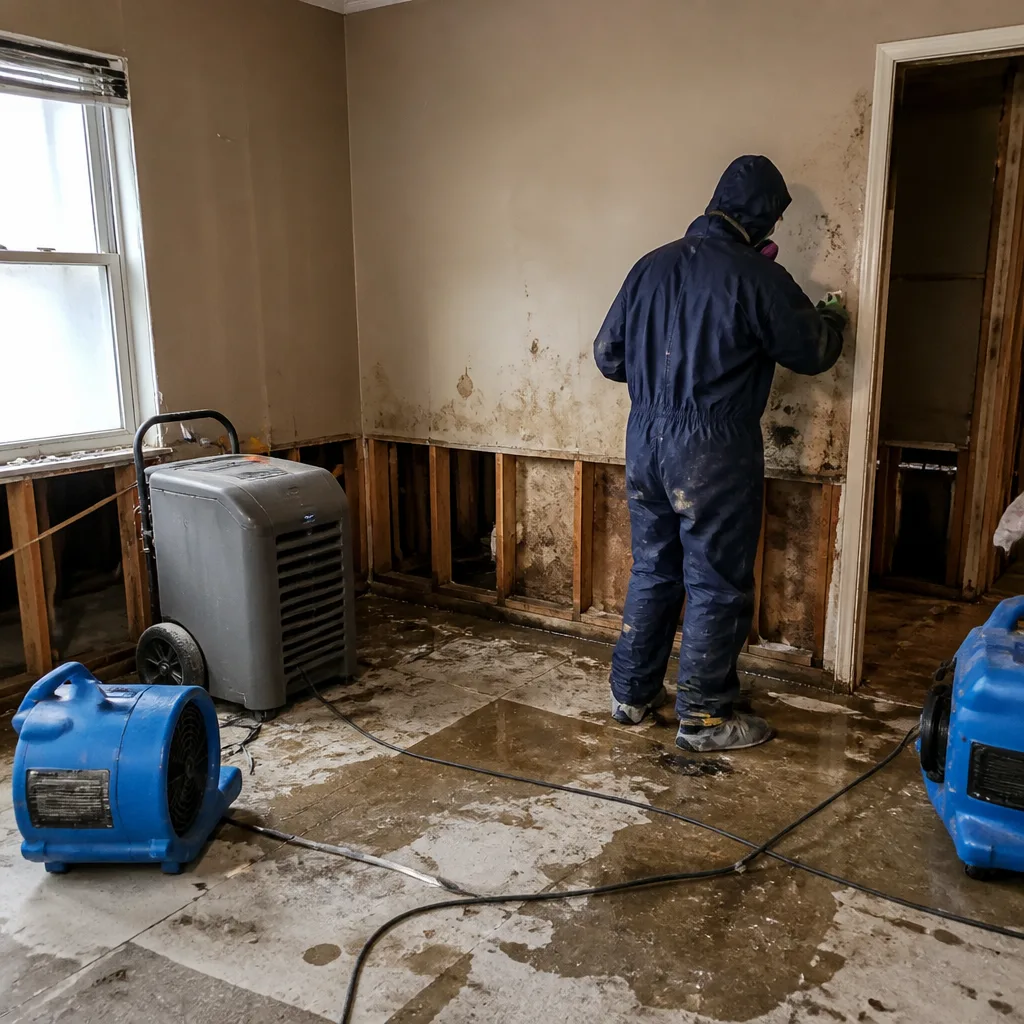 Before
 After
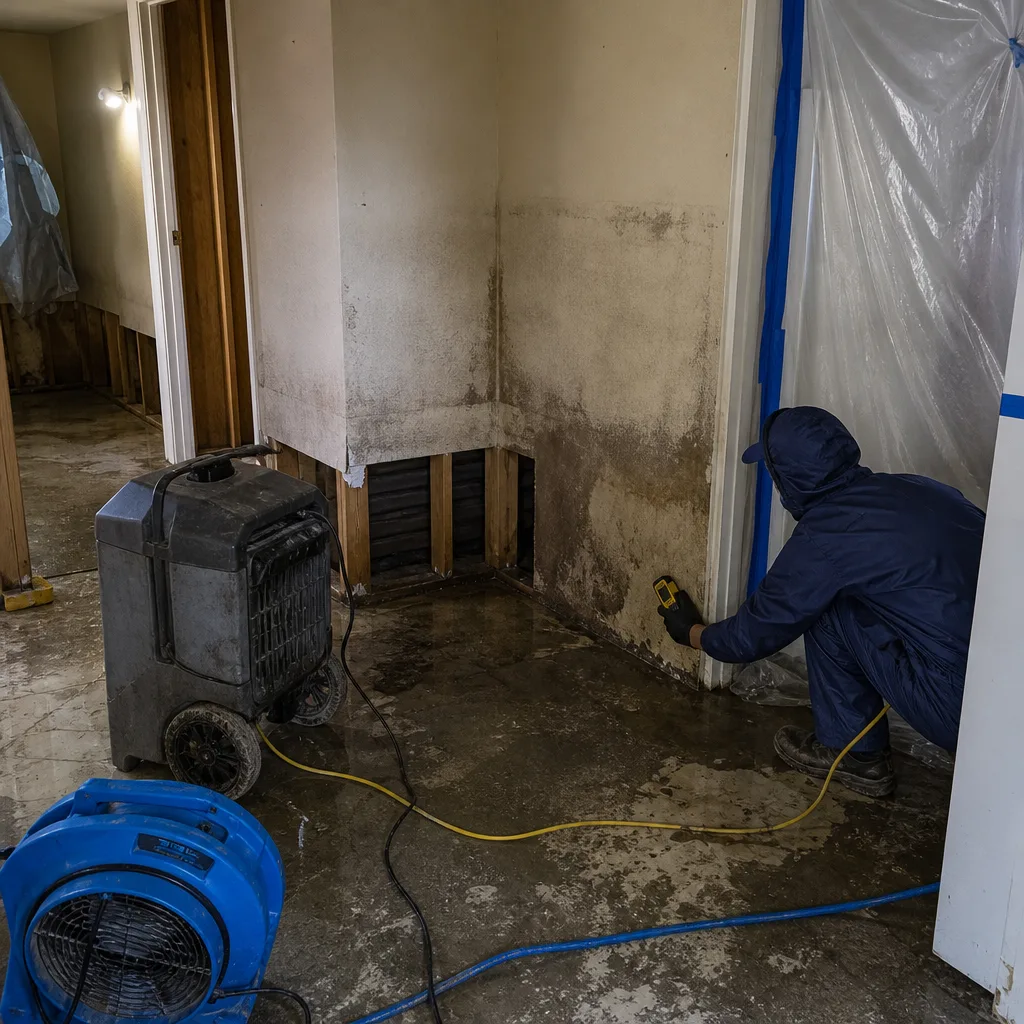 Before
 After
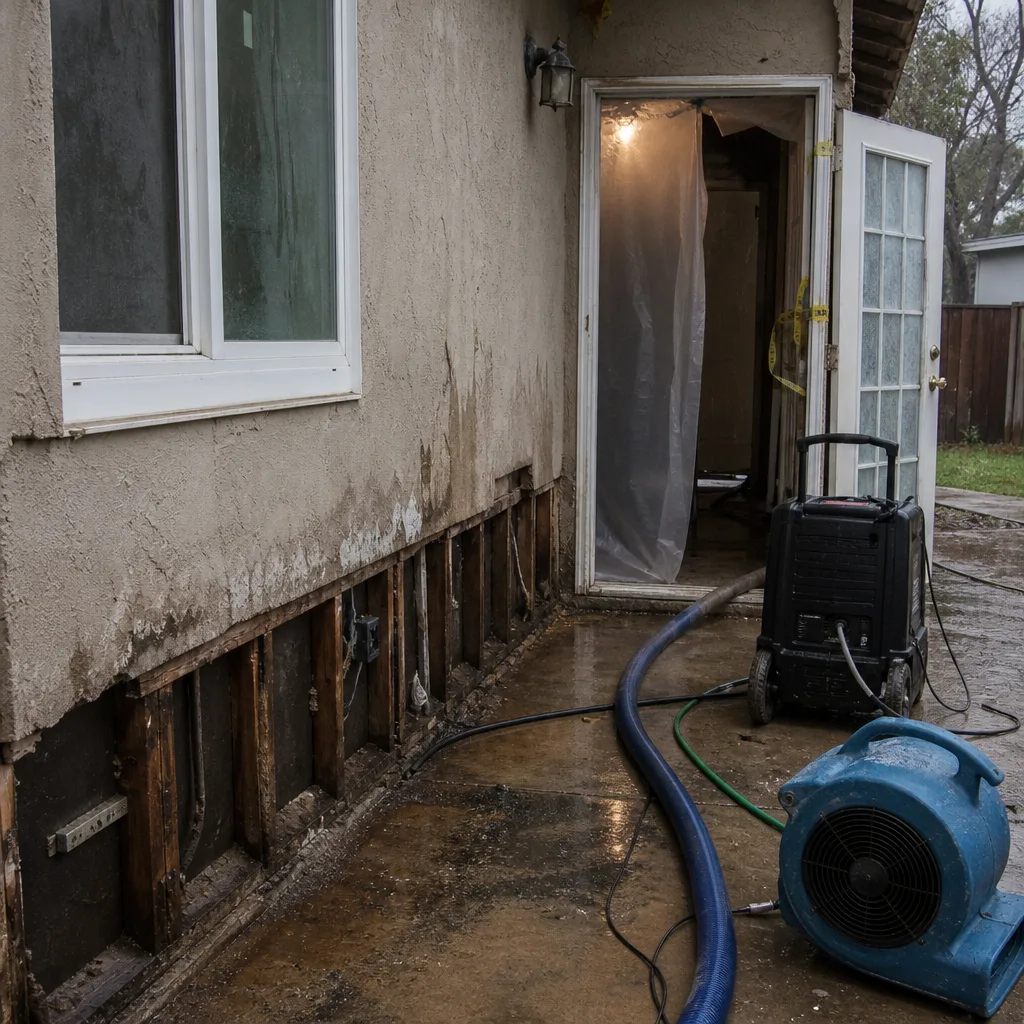 Before
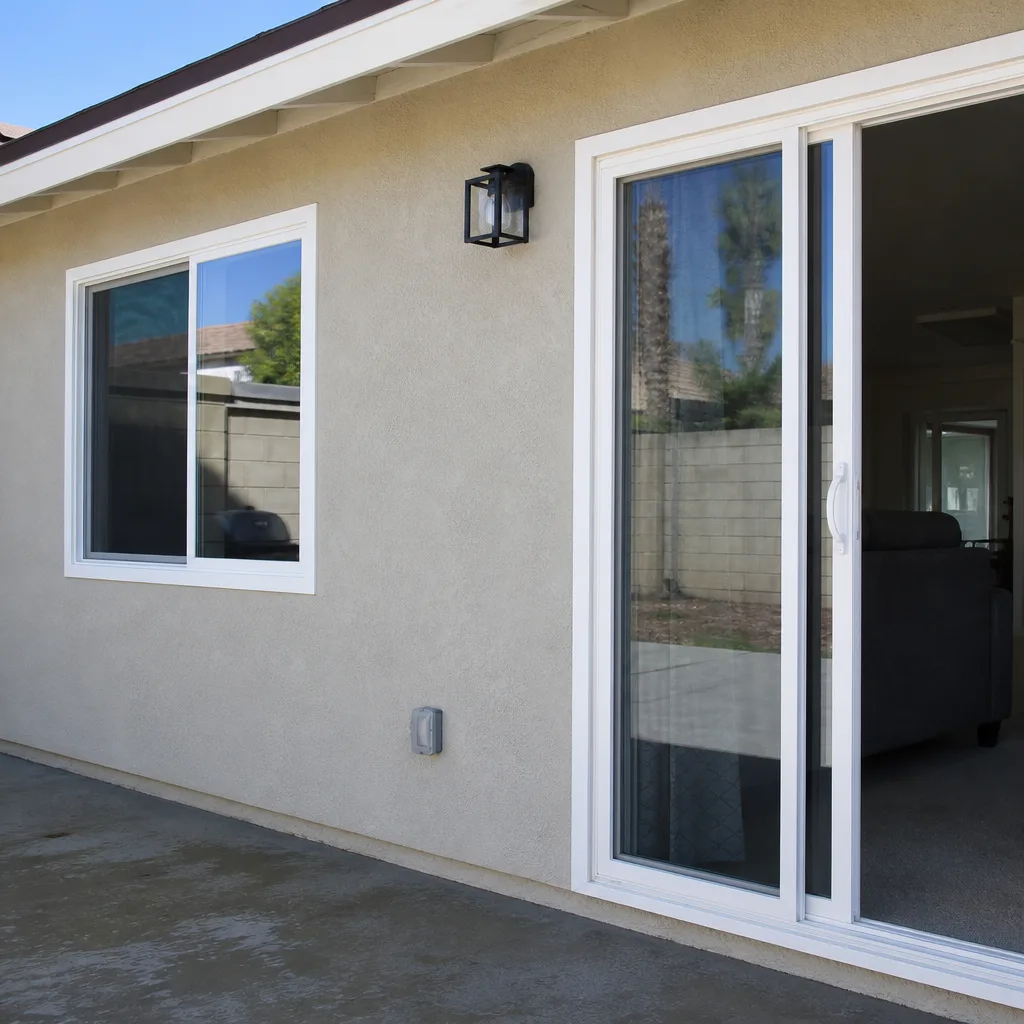 After