 Water damage drying
 Fire & smoke cleanup
 Mold remediation
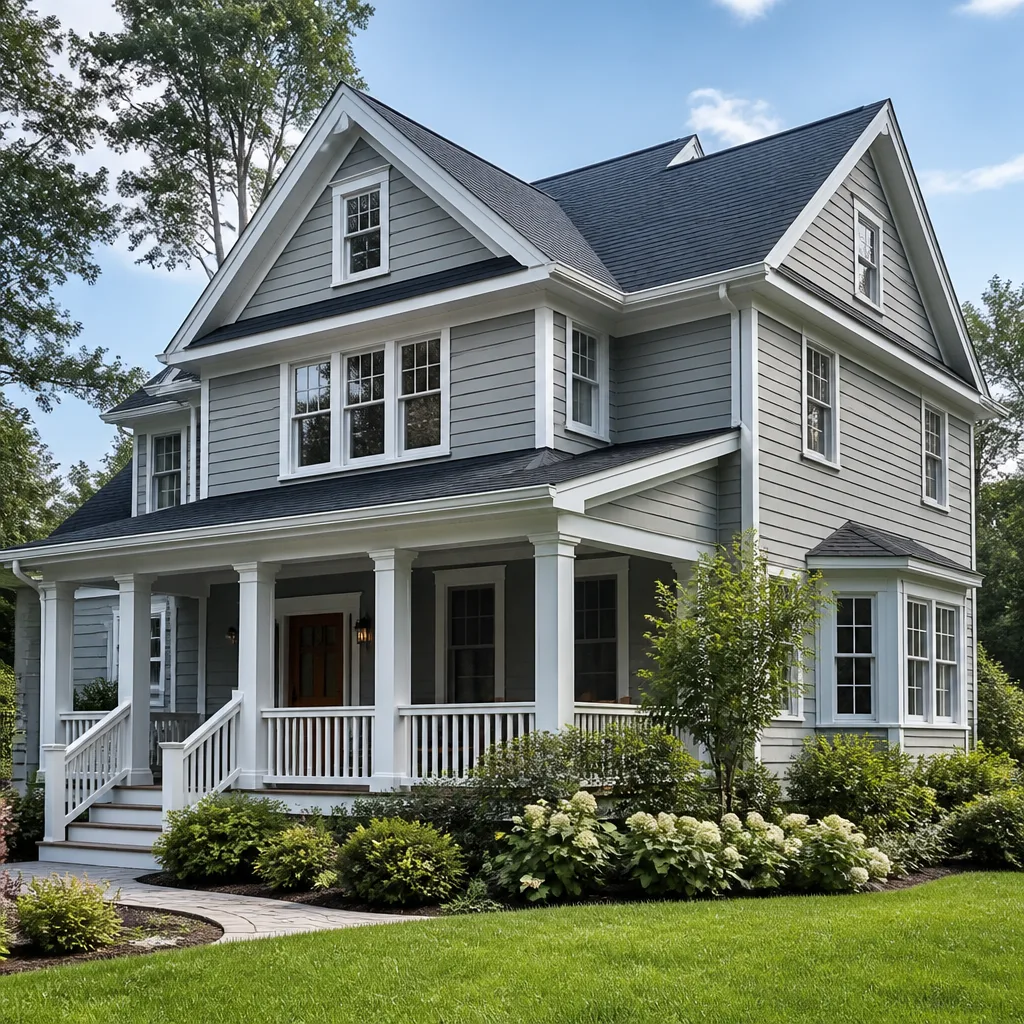 Storm response
 Sewage cleanup
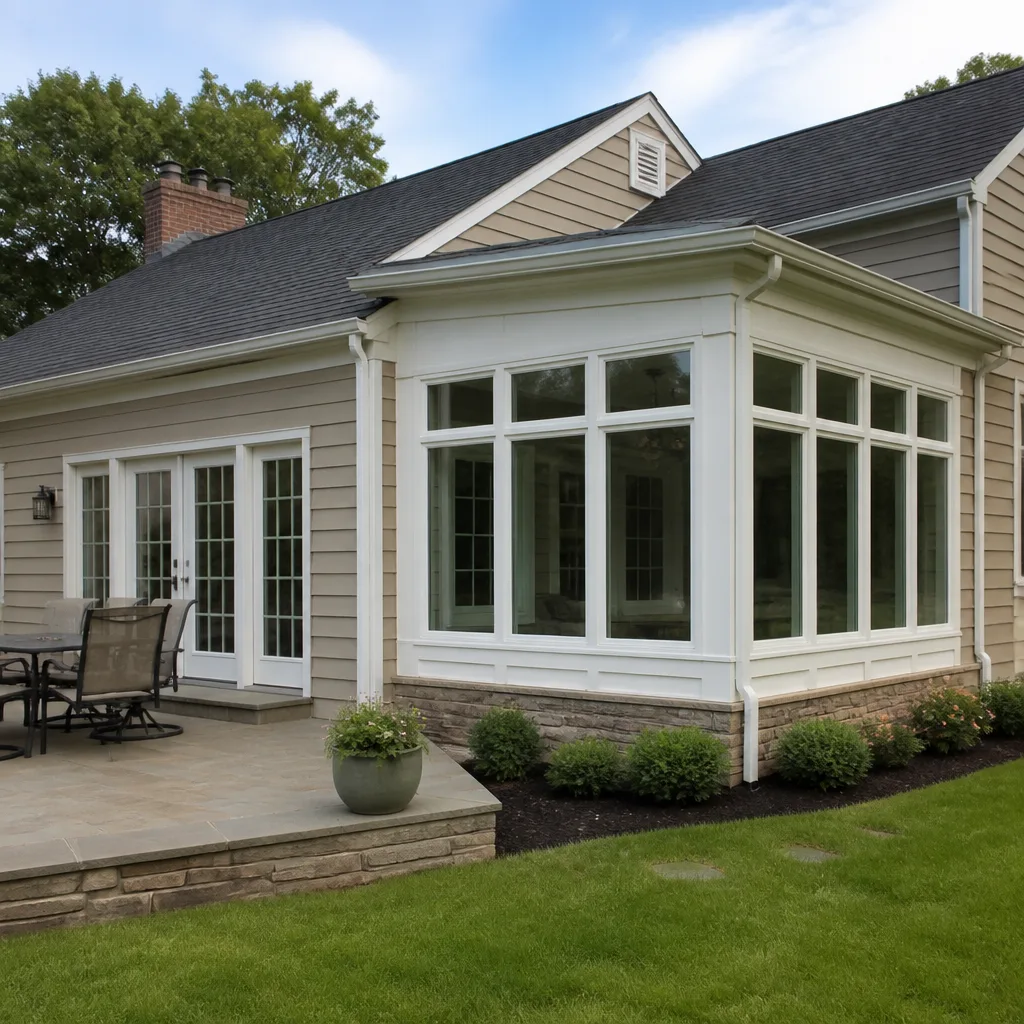 Reconstruction
Free visual inspection and a written scope of work before any mitigation begins - photos, moisture readings, and drying logs go in your claim file
The scope we write is the scope we bill. Anything new gets shown to you, in writing, before we touch it.
Get your free estimateFast, Reliable Water Damage Restoration Across Desert Hot Springs
Water damage restoration in Desert Hot Springs typically costs $2,400 – $6,800 depending on the scope of extraction, drying time, and structural repair. For a mid-sized room affected by a leaking evaporative cooler line or monsoon intrusion, most homeowners in the 92240 and 92241 zip codes pay between $3,200 and $4,900. We respond to calls in Desert Hot Springs every day, and our crews know this city’s housing stock the way only people who work in it constantly can. If you’re standing in water right now, call (877) 358-7678 and we’ll walk you through the first steps before our truck arrives.
Why San Bernardino Restoration Co Is Desert Hot Springs’s Preferred Water Damage Restoration Company
Our Water Damage Restoration team works on homes across Desert Hot Springs that were built during the spa-era boom of the 1950s through the 1980s. That means we’re not surprised by flat roofs with original penetrations, single-pane windows that have been wind-blasted through the San Gorgonio Pass for decades, or stucco walls with hairline seismic cracks that let moisture behind the surface. The IICRC-certified technicians who run our drying equipment are trained to map moisture, not guess at it. When a homeowner in the spa district near Palm Drive calls us about a ceiling stain, we already know the most likely source before we walk through the door: an evaporative cooler line that’s been dripping into insulation for weeks.
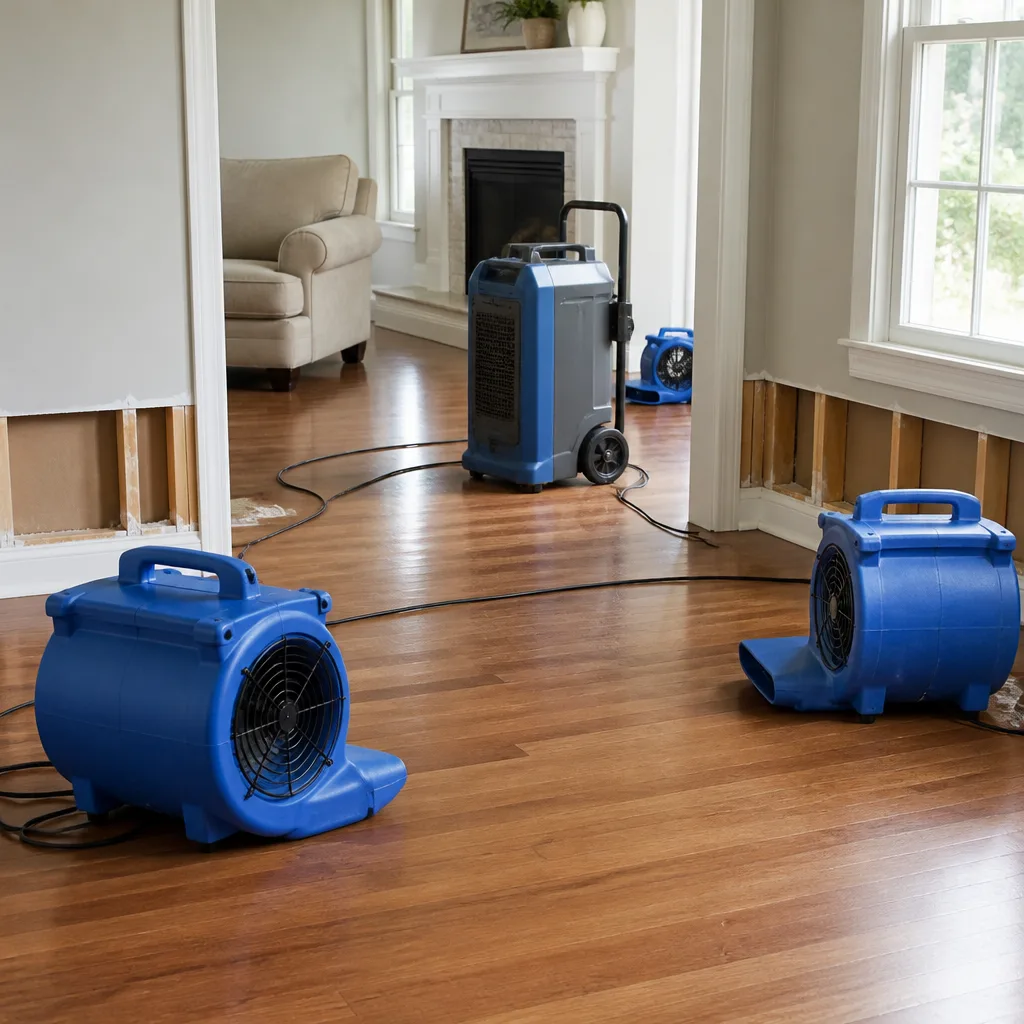
We carry professional-grade equipment that most restoration companies in the Coachella Valley don’t invest in. Dri-Eaz dehumidifiers, Phoenix air movers, and Injectidry wall-cavity drying systems are standard on our trucks. That matters here because Desert Hot Springs homes hide water in places consumer-grade fans will never reach: behind the original plaster and lathe, under concrete block, inside walls where wind-driven sand has been accumulating alongside moisture for years. Our Water Damage Restoration process documents every moisture reading, so you have a written record for your insurance adjuster.
Restoration work we handle
Water Extraction in Desert Hot Springs
Water Extraction in Desert Hot Springs usually runs $800 – $1,900 for a single room, depending on how much standing water is present and how long it has been sitting. We see two main scenarios: a slow leak that has saturated flooring and baseboards over days or weeks, or a sudden dump of water from a burst supply line, monsoon storm runoff, or a failed appliance. Both require immediate extraction before the water migrates into adjoining rooms. A flooded living room on Mission Lakes Boulevard in a 1970s concrete-block home will behave differently than the same amount of water on a wood-frame tract house near the 92241 zip.
Extraction Under Desert Conditions
Desert Hot Springs heat accelerates evaporation, which sounds helpful but is not. Surface water dries quickly while moisture trapped beneath tile, under carpet pad, or inside walls stays put and keeps migrating. That hidden moisture is what feeds mold growth and weakens framing. Our extraction crews use truck-mounted vacuums and sub-surface extraction mats to pull water from padding and concrete pores before drying equipment goes in.
What It Costs Here
A single-room extraction with basic drying on a slab foundation in Desert Hot Springs typically falls between $1,200 and $2,400. Two-story wood-frame homes with water that has traveled through floor cavities run higher, $2,800 to $4,600, because of the additional ceiling and wall access required.
Emergency Water Removal in Desert Hot Springs
Emergency Water Removal in Desert Hot Springs costs $900 – $2,200 for the initial response, extraction, and equipment setup, with most full projects landing between $2,800 and $5,500 once drying and repairs are complete. We prioritize these calls because the damage compounds every hour. A ruptured water heater in a garage off Two Bunch Palms can spread through an entire 1960s block home in under an hour. Monsoon flash floods push contaminated runoff into doorways, garages, and sunken living rooms on the city’s east side. The faster we get water out and air movers running, the less demolition you’ll need.
What Happens in the First Hours
Our crew arrives with commercial extractors and moisture meters, documents the affected zones, and sets up containment if the water is category 2 or 3. In Desert Hot Springs, post-quake stucco cracks often mean floodwater has found a hidden path into wall cavities, so we check those voids rather than assuming the surface tells the whole story.
Drying, Not Guessing
We set drying goals based on documented moisture readings from the day of the loss. In the desert’s dry air, a homeowner might think everything is fine after 48 hours. The wood framing inside a wall cavity can hold moisture for weeks. That is exactly where mold starts in Desert Hot Springs homes, and why we verify dryness with meters before we call a project complete.
Trusted Brands We Service in Desert Hot Springs
We’re equipped and trained to work on the equipment and building systems found in Desert Hot Springs homes of every era. That includes older evaporative cooler lines on flat roofs, original plumbing from the 1960s and 1970s, and newer tract builds with PEX runs and slab leaks. When we dry a wall cavity, we use Injectidry systems that pull moisture from behind stucco without tearing the wall apart. For dehumidification, we run Dri-Eaz and Phoenix units sized to the square footage, not consumer rental machines. We keep the fittings, antimicrobial treatments, and documentation tools stocked so our Desert Hot Springs jobs never stall waiting on parts.
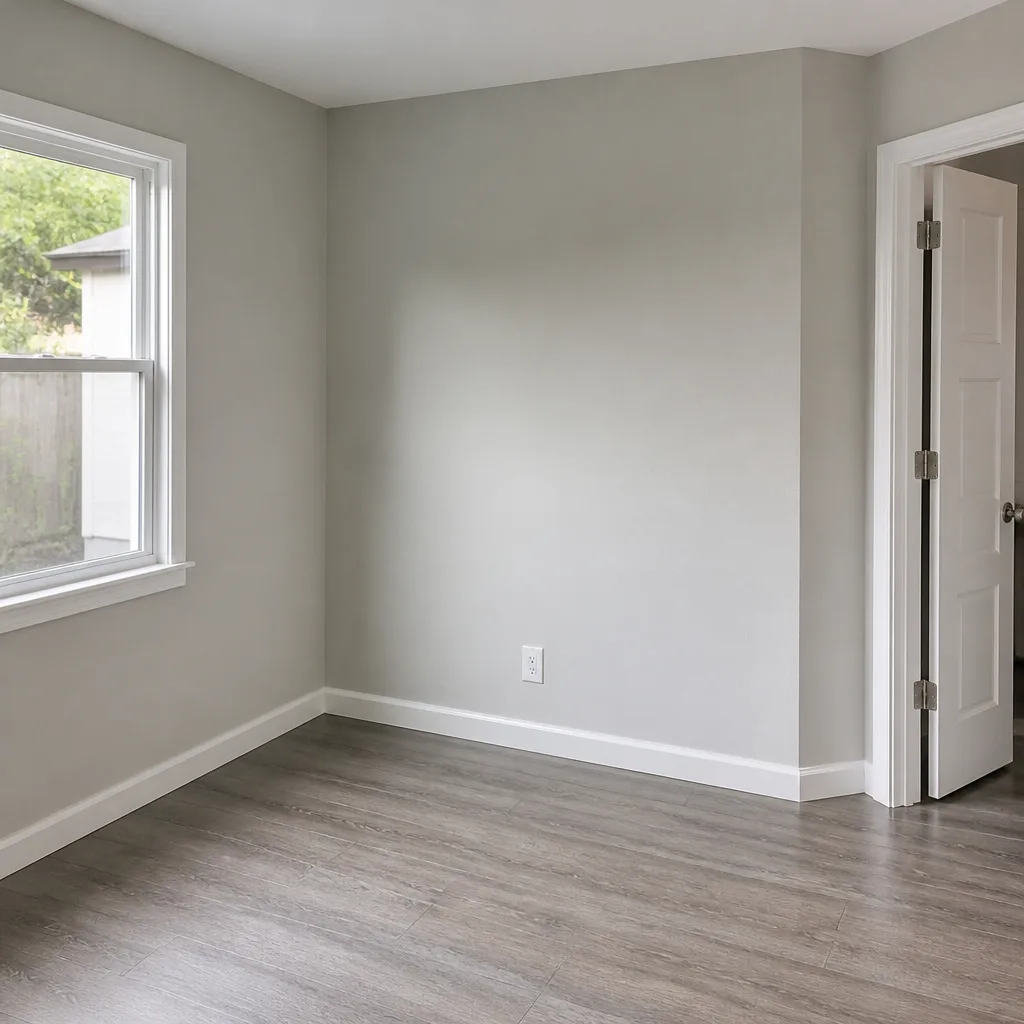
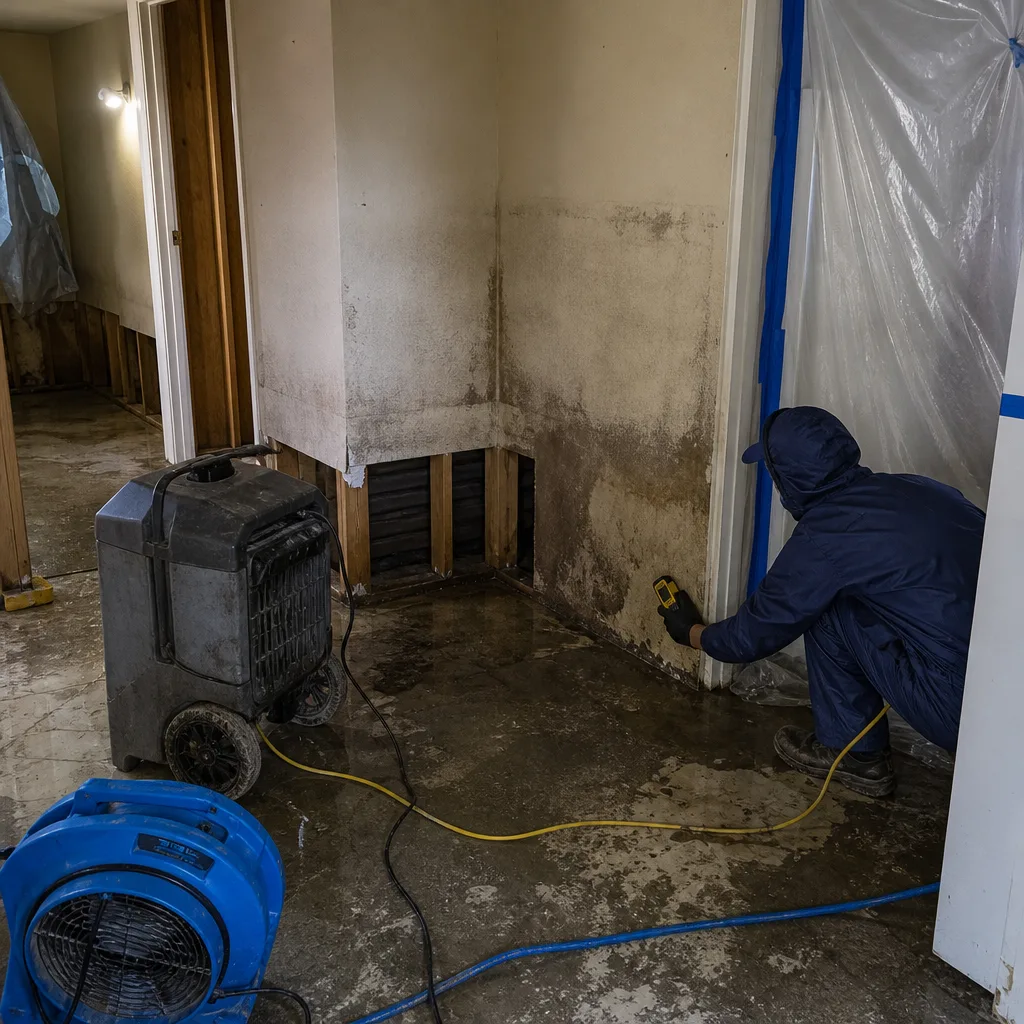
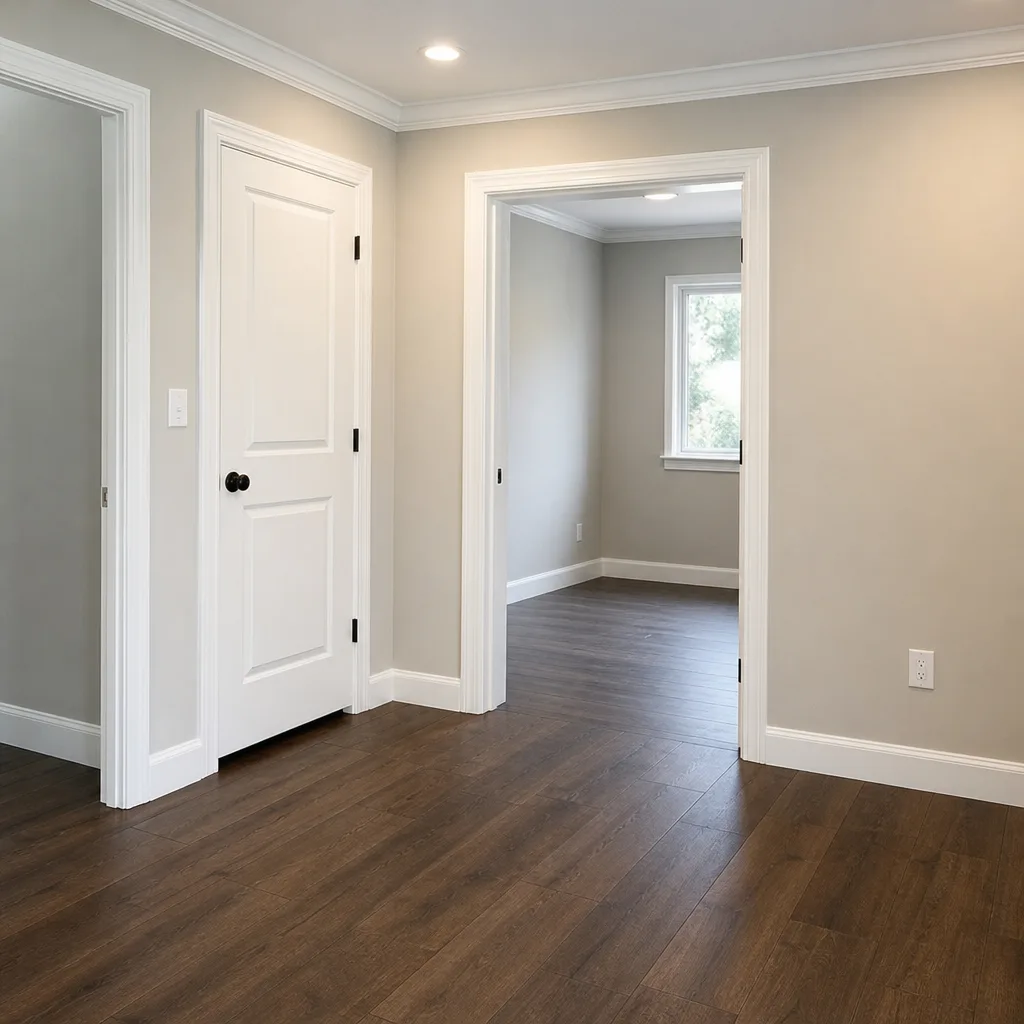
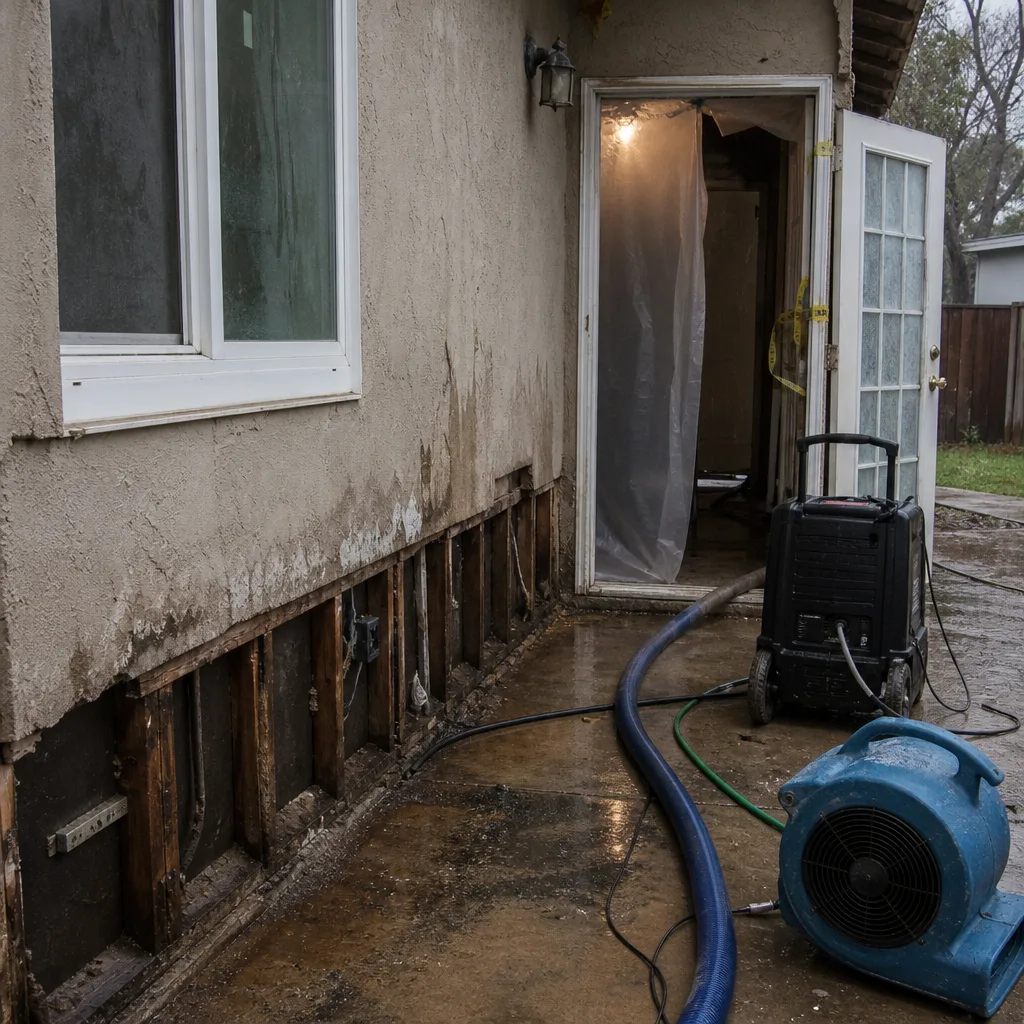
See the difference
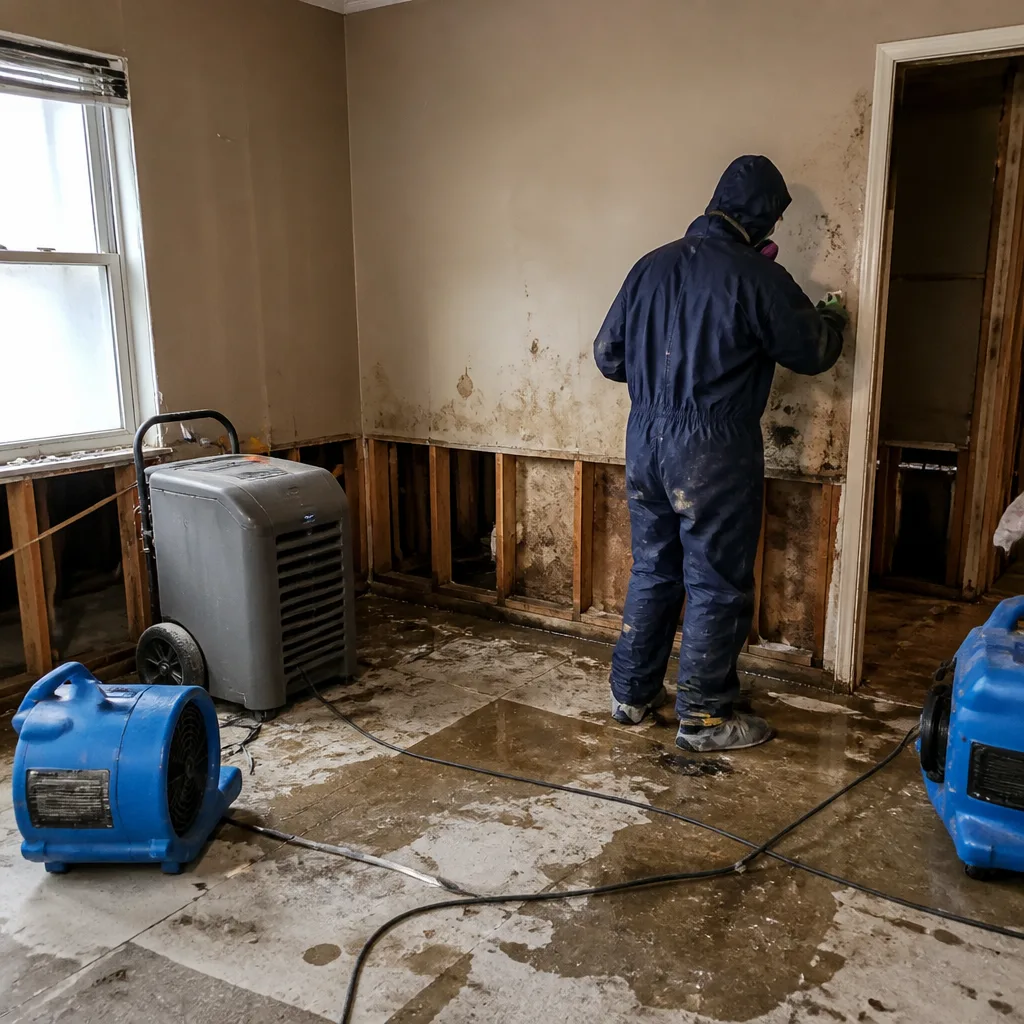 Before
 After
 Before
 After
 Before
 After
Common Water Damage Restoration Problems We See in Desert Hot Springs Homes
- Evaporative cooler lines on flat roofs. The original water supply line on a 1960s spa-district motel or home corrodes slowly, dripping category 2 water into ceiling insulation for weeks before a stain appears. By the time you see it, the drywall and framing above that ceiling are already saturated.
- Post-quake stucco cracks that let water and sand in. The 1948 and 1986 quakes left hairline shear cracks in older block homes near the fault zone. Wind-blown sand widens those cracks over decades, and when a monsoon hits, water chases the same path into wall cavities.
- Single-pane windows and roof penetrations failing against wind abrasion. 40 – 60 mph gusts through the San Gorgonio Pass eat at sealants and flashing. Homes built with original single-pane aluminum windows often show chronic moisture intrusion that gets misdiagnosed as condensation.
- Slab-on-grade homes with plumbing in the concrete. Much of the 92240 housing stock sits on slabs. When a supply line leaks under the slab in a Desert Hot Springs home, water travels up through the concrete and into flooring, baseboards, and lower wall cavities before anyone notices.
Pricing for Water Damage Restoration in Desert Hot Springs, CA
We quote fixed-scope pricing after we assess the loss. You’ll know the number before we start, and we hand you a written scope before any equipment goes in. Here’s what we see in Desert Hot Springs:
- Water extraction, single room: $800 – $1,900
- Full structural drying with equipment, 3 – 5 days: $1,800 – $3,600
- Complete restoration including drywall repair, paint, and flooring in a mid-sized room: $3,200 – $6,800
- Monsoon flash flood response with contaminated water and containment: $2,500 – $7,500 depending on square footage and category
Call (877) 358-7678 and we’ll give you a realistic range for your specific situation before we schedule anything. No charge for the estimate.
In the spa district near Palm Drive, our crew responded to a 1960s concrete-block motel where the original evaporative cooler water line on the flat roof had leaked for years, staining ceilings and saturating the wood-frame interior. We performed water extraction, mapped moisture in the lathe-and-plaster walls, and set up structural drying with Dri-Eaz air movers and Phoenix dehumidifiers. Post-quake stucco hairline cracks had let in wind-blown sand that abraded the walls, so we used Injectidry to dry the wall cavities and applied antimicrobial treatment to prevent mold growth.
We Also Serve Cities Near Desert Hot Springs
Our crews run through Desert Hot Springs daily and stay close to the surrounding communities. That includes Desert Edge to the north, Sky Valley to the northeast, Garnet just across the 62, and Thousand Palms on the way into the valley. If your home or property sits in one of those spots, we’re already working nearby most weeks. Same equipment, same IICRC-certified crews, same documented drying logs.
Serving Desert Hot Springs, CA — Our Local Coverage Area
We’re based in the Desert Hot Springs area and know this community well. Use the map below to see our service coverage — if you’re nearby, we can almost certainly help.
FAQs About Water Damage Restoration in Desert Hot Springs
Desert Hot Springs sits directly on the San Andreas Fault zone, and the 1948 magnitude-6.0 quake plus the 1986 Palm Springs 6.0 left hairline cracks in many older stucco and concrete-block homes that were never properly repaired. Those shear cracks create hidden pathways for water intrusion that generic restoration work misses. Our crews know to check wall cavities and stucco seams for post-quake damage whenever we respond to a water loss in the 92240 or 92241 zip codes, because the water often travels far from the visible wet spot. Call (877) 358-7678 if your home has both visible water damage and older stucco cracking.
Because this city’s housing stock was built around evaporative coolers on flat or low-slope roofs, and those original supply lines are now 40 to 60 years old. The lines corrode, split, or the float valves fail, and water seeps quietly into ceiling insulation. By the time a stain appears on the ceiling, the framing and drywall above it have often been wet for weeks, feeding mold and structural rot. We see this pattern in spa-district motels and older homes throughout Desert Hot Springs. If your cooler has been running without any attention for a season or two, a quick moisture check now can prevent a full tear-out later. Call for a documented inspection at (877) 358-7678.
Monsoon flash floods in Desert Hot Springs almost always produce category 3 water, known in the restoration trade as black water. Runoff carries soil, animal waste, fertilizers, and whatever else is on the ground through doorways, garages, and sunken rooms. Category 3 water requires full containment, antimicrobial treatment, and disposal of porous materials like carpet pad and some drywall. Attempting to clean this up with a shop vac and household fans leaves behind contaminants and sets up long-term mold problems. Our teams set up containment zones and document the category of water in the drying logs we provide for your adjuster. Call (877) 358-7678 and we’ll talk you through the first 30 minutes over the phone while a crew is on the way.
Mold can begin visible growth within 24 to 48 hours after water damage in a Desert Hot Springs home, especially inside wall cavities where the desert heat and trapped moisture create an incubation chamber. Even a small roof leak or evaporative cooler drip can start mold growth in insulation and drywall before a stain appears on the visible surface. The older construction in this city, with original plaster and single-pane windows, offers plenty of organic material for mold to feed on. We treat active mold growth with antimicrobial application during the drying phase and recheck moisture readings until the structure clears. If you suspect mold after a leak that happened days or weeks ago, call (877) 358-7678 and we’ll assess what is actually happening inside your walls.
Yes, every project includes documented moisture mapping and drying logs. We take initial moisture readings across all affected surfaces, set drying goals based on those numbers, and recheck daily until every zone reads dry. You receive the log, and we coordinate with your insurance adjuster directly. That documentation matters in Desert Hot Springs because adjusters may not understand how wind-driven moisture and post-quake stucco cracks create hidden water paths in this city’s older homes. Photographs from the first assessment through final clearance are part of every file. Call (877) 358-7678 for a free estimate and a written scope before we start any work.
Written by Noel Armenta, Owner at San Bernardino Restoration Co, serving Desert Hot Springs and the surrounding Coachella Valley.