
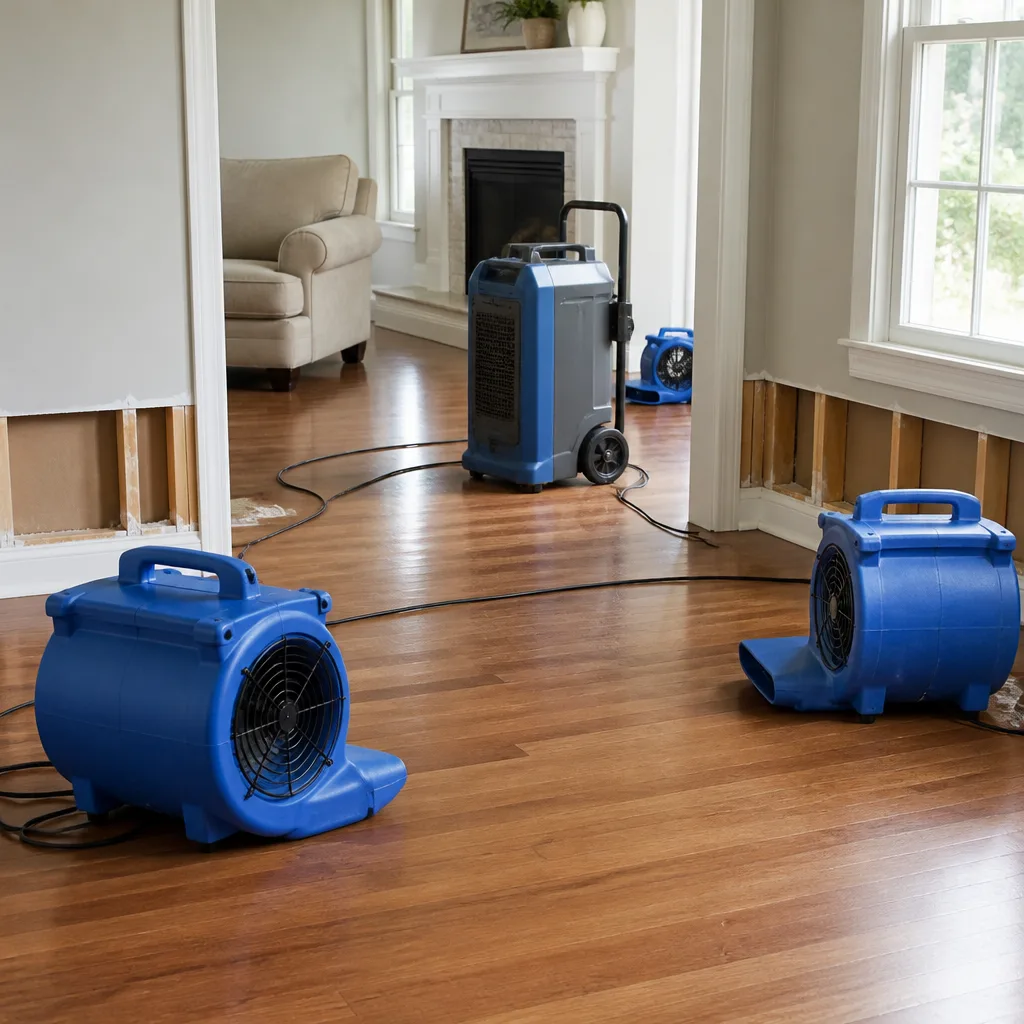
 Water damage drying
 Fire & smoke cleanup
 Mold remediation
 Storm response
 Sewage cleanup
 Reconstruction
Free visual inspection and a written scope of work before any mitigation begins - photos, moisture readings, and drying logs go in your claim file
The scope we write is the scope we bill. Anything new gets shown to you, in writing, before we touch it.
Get your free estimateFast, Reliable Water Damage Restoration Across Crestline
Water damage in Crestline rarely announces itself politely. A supply line splits during a January freeze inside a cabin that’s been empty since Thanksgiving, and by the time anyone notices, the subfloor is saturated and mold is already thinking about moving in. That’s the reality of mountain restoration work at 4,600 feet. Our Water Damage Restoration team responds to Crestline properties with commercial-grade extraction equipment, IICRC-certified technicians, and a drying plan built around what your specific structure actually needs, not a generic checklist. Call (877) 358-7678 the moment you suspect water intrusion. The sooner we get moisture mapping and containment set up, the less of your cabin we have to tear out.
Why San Bernardino Restoration Co Is Crestline’s Preferred Water Damage Restoration Company
Crestline properties aren’t like San Bernardino houses. They’re built on slopes, elevated on pier-and-post foundations, wrapped in wood siding, and many sit empty for months at a time. That combination means water moves differently here. It travels under floors, wicks into uninsulated wall cavities, and hides behind finished surfaces where a homeowner walking through once a month would never see it. We know what that looks like because we’ve dried it. Repeatedly.
Our reputation in Crestline is built on one thing: technicians who show up with professional equipment and a written scope, then document every step with moisture readings so you and your adjuster see the numbers, not a guess. Noel Armenta leads the operation, and the team he’s built operates under IICRC standards and Restoration Industry Association guidelines. When a Crestline property manager calls us about a vacant cabin that flooded three weeks ago, we don’t lecture them. We start extraction, set containment, and get to work.
Restoration work we handle
Emergency Water Removal in Crestline
Emergency Water Removal in Crestline usually means one of two scenarios: a pipe that froze and split while nobody was home, or a storm event that pushed runoff where it didn’t belong. Either way, standing water in a mountain cabin needs to come out fast. In Crestline, we typically extract with truck-mounted or portable commercial units, then immediately place Phoenix dehumidifiers and XPOWER air movers on the affected areas. For a standard flooded room, emergency extraction and initial equipment placement in Crestline runs approximately $900 to $2,200, depending on how far the water traveled and what got wet.
Vacant Cabin and Second-Home Response
Crestline has a lot of second homes. The call we get most often is from a property owner or manager who found the damage days or weeks after it started. That changes the job. What began as clean category 1 water from a supply line has often degraded to category 3 by the time we arrive, meaning sewage-adjacent contamination protocols, antimicrobial treatment, and more aggressive drying.
Where the Damage Hides
In older Crestline cabins, water doesn’t just pool on laminate. It drops through the floor into the crawl space, seeps into the bottom plates of interior walls, and soaks into insulation that then holds that moisture for weeks. We map the moisture with meters and thermal imaging before we decide what gets dried and what gets removed. That’s what makes this restoration, not just cleanup.
Flood Damage Restoration in Crestline
Flood Damage Restoration in Crestline is typically tied to mountain weather, not coastal flooding. Atmospheric-river rain hits the San Bernardino Mountains, saturates already steep ground, and water finds its way into basements, crawl spaces, and daylight foundations. Snowmelt adds another layer in spring. Full flood restoration, which includes extraction, structural drying, and repair, runs approximately $2,500 to $8,000 in Crestline depending on square footage and how much of the structure was submerged or saturated. The wide range reflects an honest truth: a crawl space with six inches of standing water is a very different job from a finished lower level with three feet.
Structural Drying That Gets Verified
We don’t pull equipment when the surfaces feel dry. We pull it when the moisture meters say the material is actually dry, inside and out. This is the difference between a job that’s done and a job that looks done for six weeks until the wicking process brings moisture back to the surface and mold follows. Injectidry wall-cavity drying systems let us dry wall interiors from the inside out without cutting apart drywall or shiplap, which matters in older Crestline cabins where replacing original wood costs real money.
Pier-and-Post Foundation Drying
Half the water damage we handle in Crestline lives under the house. Pier-and-post foundations have air space underneath, which sounds convenient until you realize how much moisture gets trapped against the subfloor from below. Underfloor drying means setting up containment with plastic and getting commercial air movement down there. It’s slow, awkward work, and a lot of restoration companies skip it. We don’t, because that’s where the mold starts when the flooring above looks fine.
Trusted Brands We Service in Crestline
When we arrive at a Crestline job, we’re not bringing equipment from a hardware store rental desk. Our fleet includes Dri-Eaz and Phoenix dehumidifiers, XPOWER and B-Air air movers, and Injectidry drying systems, the same machines used on apartment-complex floods and commercial losses. We service them properly, and we carry the filters, hoses, sensors, and consumables needed to keep them running through a multi-week drying project. That matters in Crestline, where running back down the mountain for a part burns half a day and leaves your cabin sitting wet.
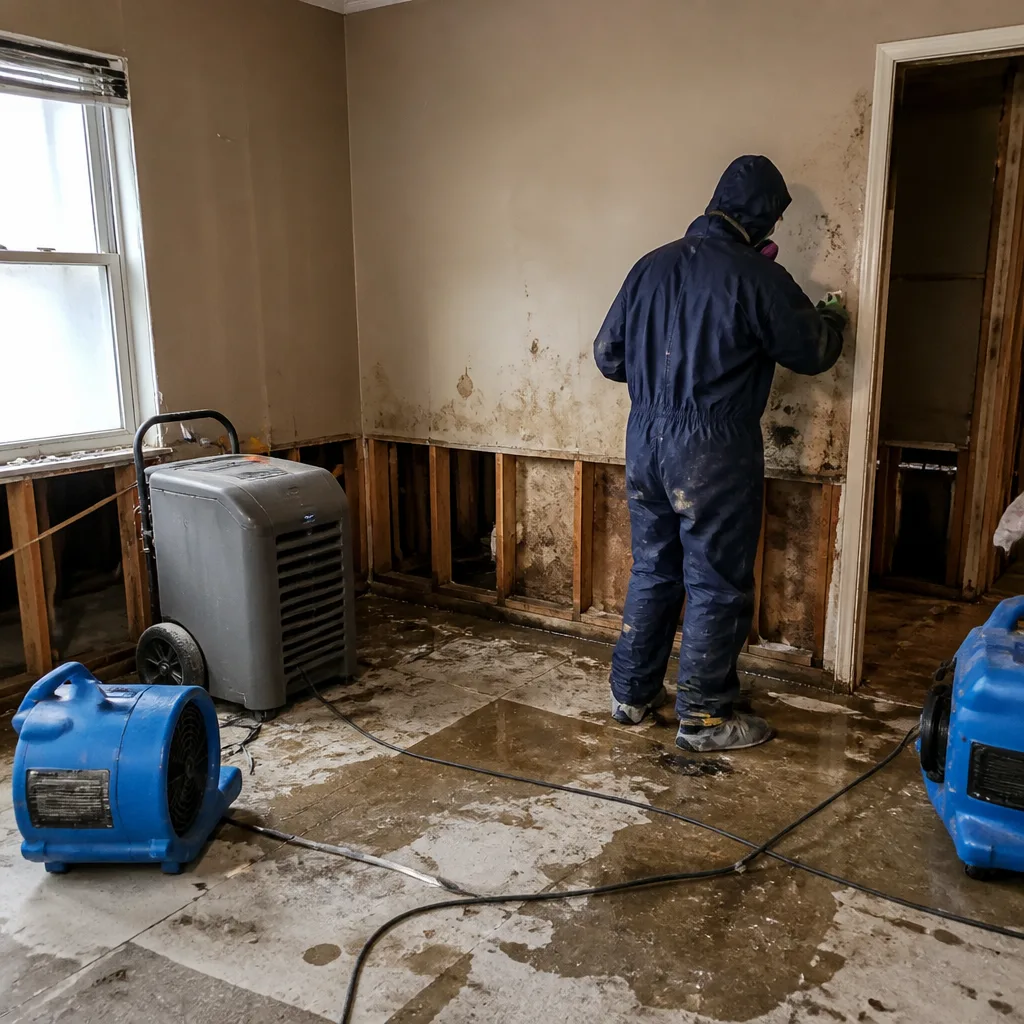
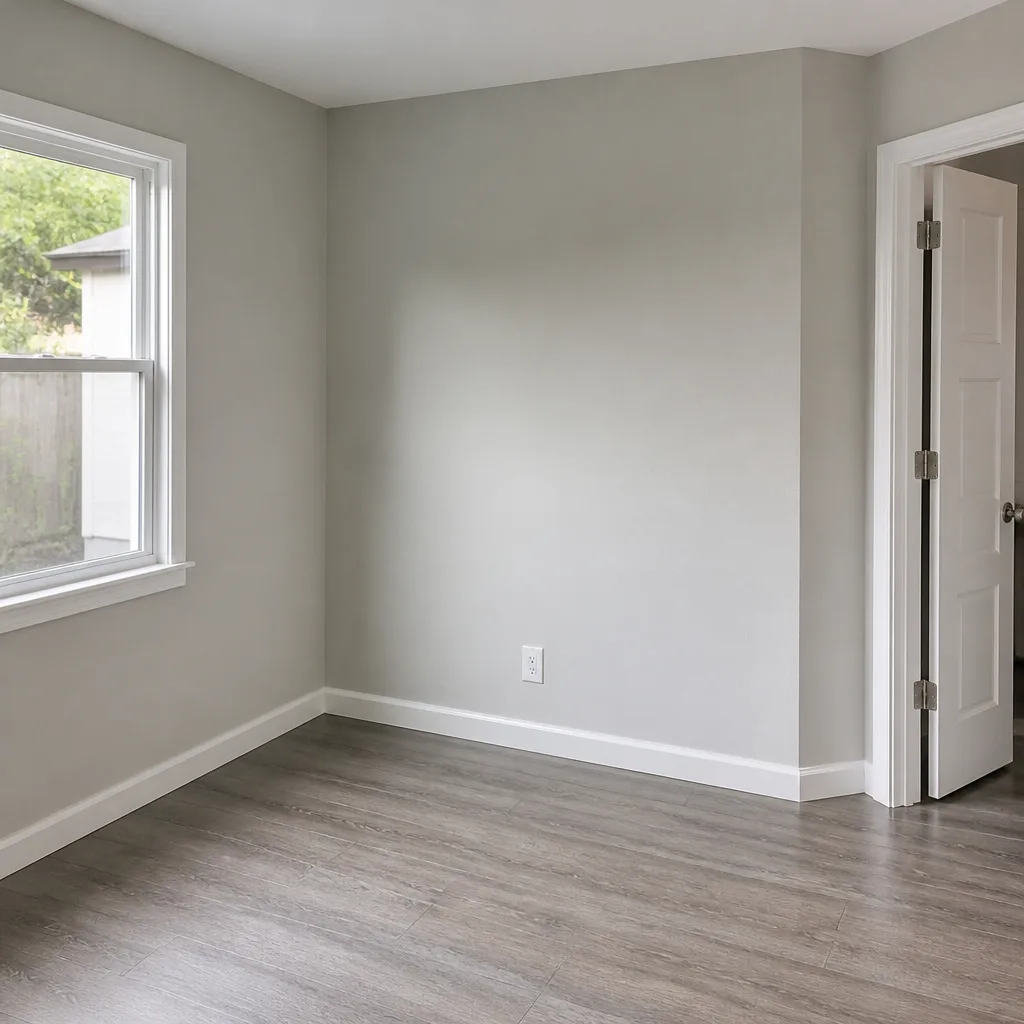
See the difference
 Before
 After
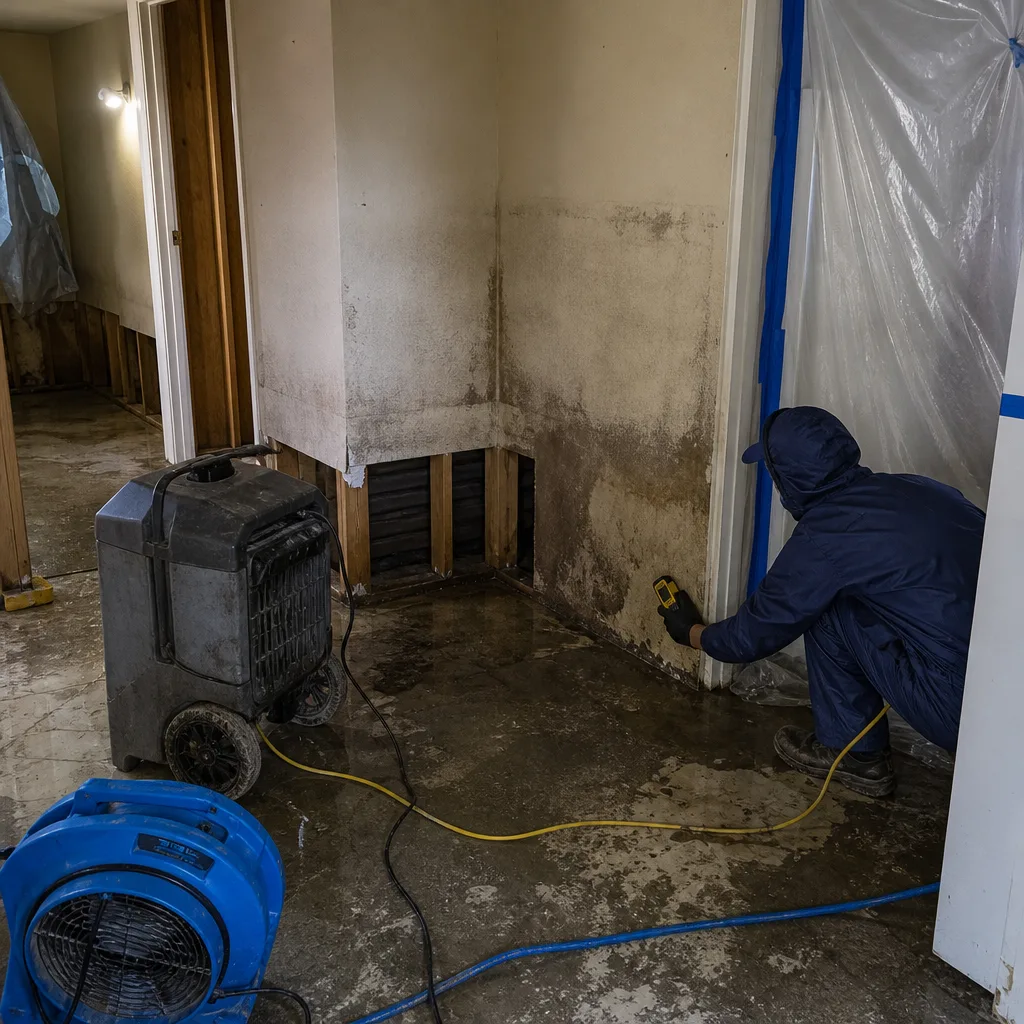 Before
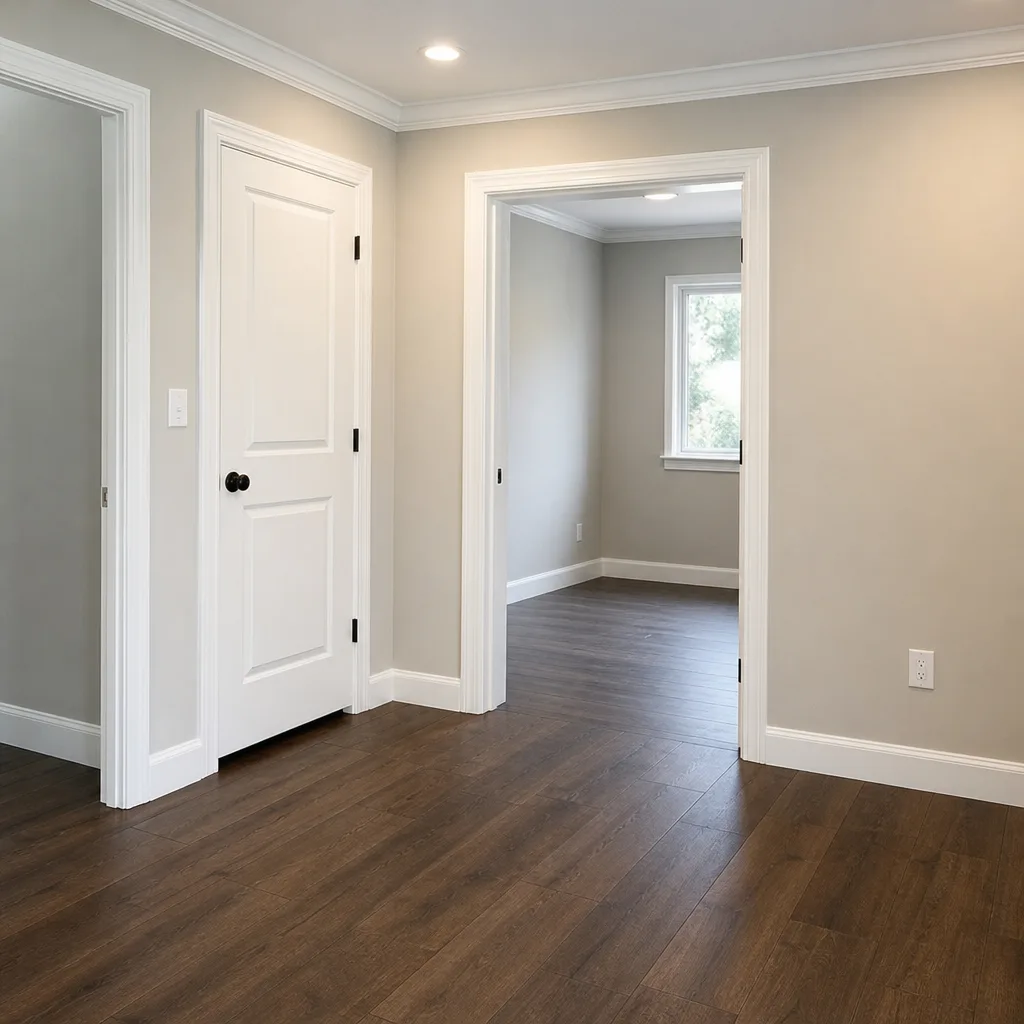 After
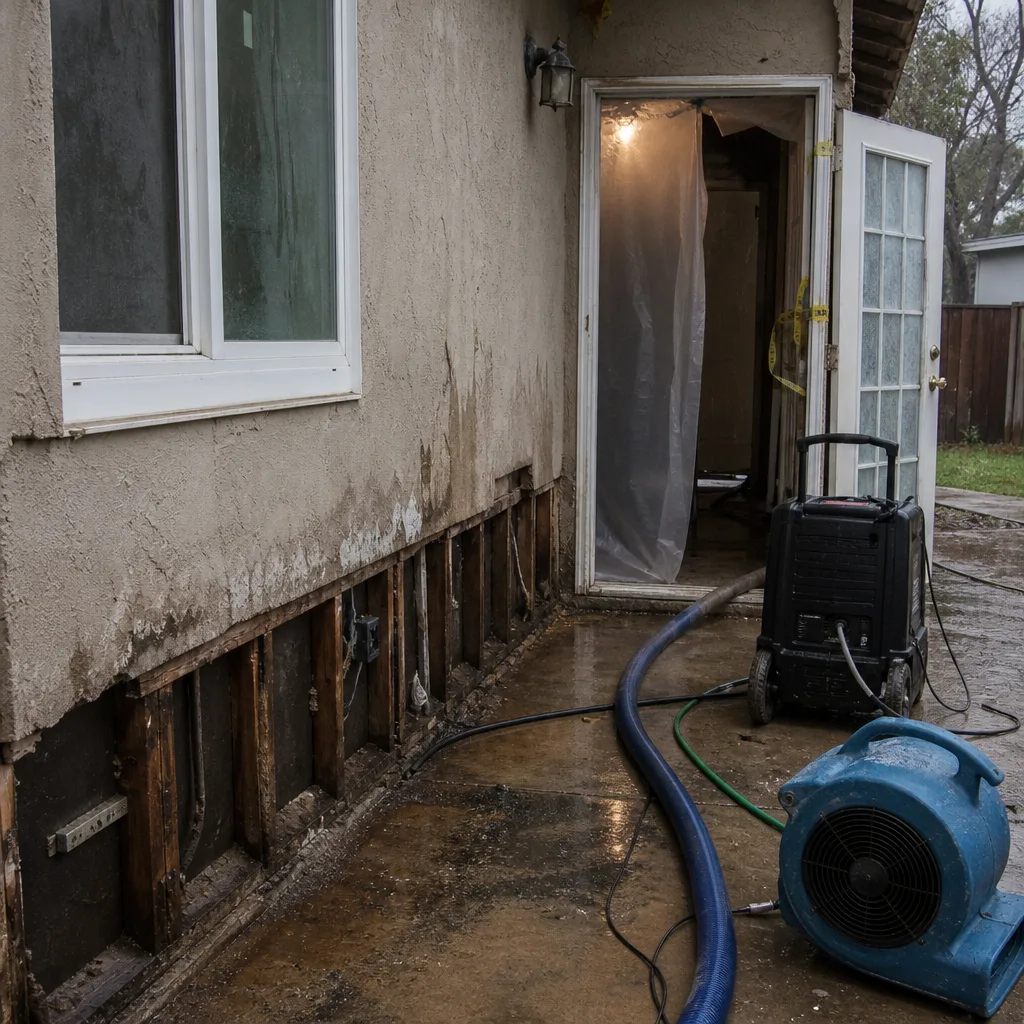 Before
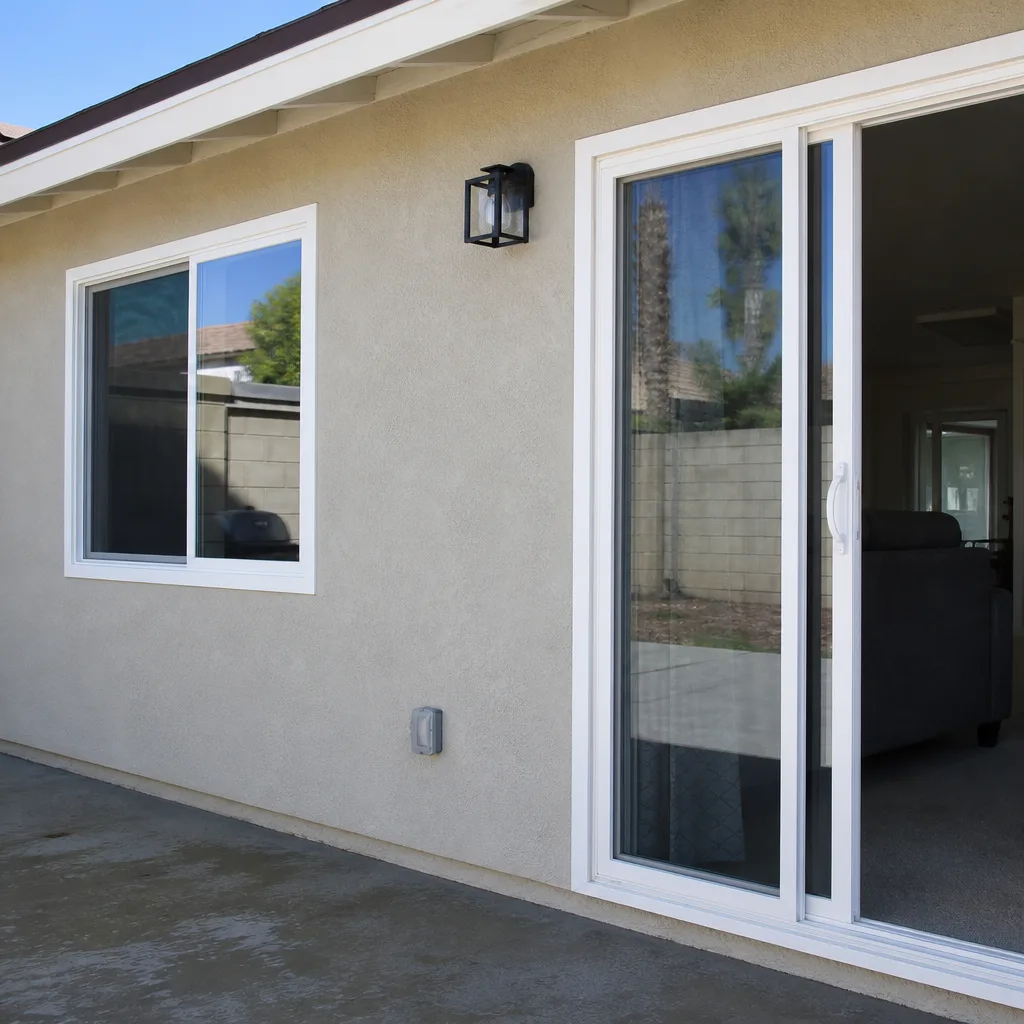 After
Common Water Damage Restoration Problems We See in Crestline Homes
- Freeze-thaw pipe splits in vacant cabins. A supply line in an unheated crawl space or exterior wall freezes, splits, and then starts running water the second temperatures rise. By the time the water bill spikes or a neighbor checks the property, the damage is weeks old.
- Hidden moisture behind wood siding and finished walls. Older Crestline cabins breathe differently than modern construction. Water gets behind siding, into uninsulated wall cavities, and under original flooring, and it stays there unless someone specifically looks for it with the right instruments.
- Access limitations on narrow ridge roads. Many Crestline homes sit off winding, one-lane roads, and in winter some of those roads are unplowed or barely passable. Equipment has to be hand-carried or staged from the street, which means the drying plan has to account for what can physically reach the structure.
- Secondary damage in crawl spaces and underfloor areas. Elevated foundations mean water drops down and pools in spots where casual inspection never goes. Without documented underfloor drying, that trapped moisture turns into mold and rot within a season.
Pricing for Water Damage Restoration in Crestline, CA
Expect the following ranges for common Crestline water damage scenarios:
- Emergency water extraction and initial drying setup: $900 to $2,200
- Full flood restoration including structural drying and repairs: $2,500 to $8,000
- Underfloor and crawl space drying on pier-and-post foundations: $1,200 to $3,500
- Wall-cavity drying with Injectidry systems (without tear-out): $800 to $2,400 per affected wall section
What moves a job toward the higher end is the same in every Crestline home: how long the water sat before anyone found it, how far it traveled through the structure, and whether contaminated water (category 2 or 3) is involved. We give you a written scope before any demolition or repair work starts, and we document everything for your insurance claim. Call (877) 358-7678 for a free estimate.
We Also Serve Cities Near Crestline
Our service area extends beyond Crestline to the surrounding mountain and valley communities, including Crestline and nearby Lake Arrowhead, Muscoy, San Bernardino, and Highland. If you own property in any of these areas and you’re dealing with water intrusion, the same IICRC-certified team and professional equipment fleet covers the whole region.
Serving Crestline, CA — Our Local Coverage Area
We’re based in the Crestline area and know this community well. Use the map below to see our service coverage — if you’re nearby, we can almost certainly help.
FAQs About Water Damage Restoration in Crestline
Freeze-thaw at 4,600 feet splits pipes at joints and low points, and the damage typically starts inside a wall or crawl space where you can’t see it. By the time the thaw comes and water starts running, it’s had days to saturate the structure, so restoration usually requires more than simple extraction. Cut the water at your main shut-off if you suspect a split line, then call us. These mountain properties hide water in ways valley homes don’t.
Yes. Our crews work from the street when necessary and hand-carry equipment to the structure. For tighter access in Lake Gregory Village and along the ridge roads, we sometimes stage equipment at the nearest passable point and run lines to the affected areas. Let us know about road conditions when you call, and we’ll plan for it.
We locate the water source and stop it, then map the moisture. In a vacant Crestline cabin, the leak has usually been running long enough that water has migrated into floors, walls, and the underfloor space, so that moisture map drives the entire drying plan. From there we set containment, place dehumidifiers and air movers, and start taking daily moisture readings. Call (877) 358-7678 and we’ll walk you through it.
We set up ground-level containment to isolate the underfloor space, then place commercial air movers and dehumidifiers beneath the structure and track moisture readings in the subfloor and framing until they hit dry standard. This is one of the most commonly skipped steps in mountain restoration work, and skipping it is why some cabins smell musty a year after a “completed” water damage job.
Yes, especially in older wood-framed cabins. What looks like a minor leak behind a vanity or under a sink often extends into the wall cavity or the underfloor, and those materials don’t dry on their own in mountain air. If moisture sits for more than 48 hours, mold is a real possibility. A quick moisture check is cheaper than opening walls later. Call us for an assessment.
Written by Noel Armenta, Owner at San Bernardino Restoration Co, serving Crestline and the San Bernardino Mountains.