
 Mold remediation
 Water damage drying
 Fire & smoke cleanup
 Storm response
 Sewage cleanup
 Reconstruction
Free visual inspection and a written scope of work before any mitigation begins - photos, moisture readings, and drying logs go in your claim file
The scope we write is the scope we bill. Anything new gets shown to you, in writing, before we touch it.
Get your free estimateFast, Reliable Mold Remediation Across Grand Terrace
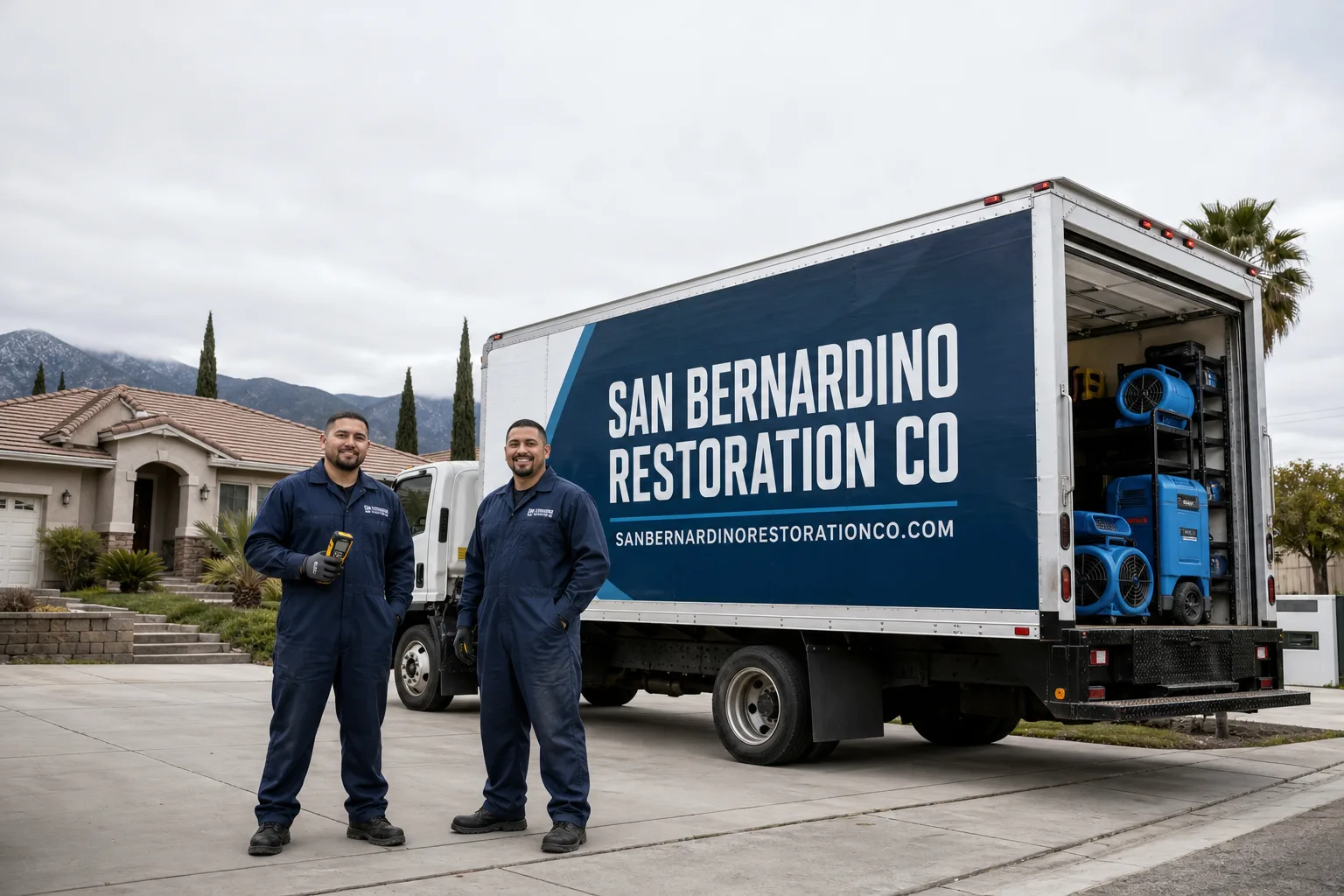
Mold in a Grand Terrace home is rarely just a surface problem. In the ranch-style and split-level houses that fill this city, mold usually traces back to a failed galvanized pipe weeping inside a wall cavity, or moisture trapped under a hillside crawl space. We’re San Bernardino Restoration Co, and our IICRC-certified technicians have spent years mapping moisture in exactly these homes, the ones built between the 1950s and 1980s off Barton Road, Mount Vernon Avenue, and the foothill streets above the Santa Ana River. We bring Dri-Eaz and Phoenix dehumidification, XPOWER air movers, and Injectidry wall-cavity drying systems to every job in the 92313 ZIP code. If you’ve spotted a stucco blister, a baseboard stain, or that telltale musty smell in a hallway, call (877) 358-7678. We’ll find the actual source, not just the stain.
Why San Bernardino Restoration Co Is Grand Terrace’s Preferred Mold Remediation Company
Grand Terrace homeowners call us because we understand how this city’s older housing stock fails. The original galvanized plumbing in these 1950s-1980s homes corrodes from the inside out, pinhole-failing inside wall cavities where nobody can see it until mold blooms on the opposite side of the room. A contractor who only treats the visible stain will be back in six months, and the homeowner knows it. That’s why our first step on any Grand Terrace mold call is a full moisture map of the affected wall, floor, and crawl space, not a surface wipe-down and a coat of paint.
Noel Armenta built this company on a simple principle: document everything, dry to standard, and never cut a corner that leaves moisture behind. Our technicians carry the IICRC credential, the restoration industry’s international standard for mold and water damage work, and we hold membership in both the Restoration Industry Association (RIA) and IFA. That means we answer to a professional peer community, not just a customer review page. When a Grand Terrace homeowner asks why we’re taking moisture readings in a room adjacent to the visible mold, we can show them the numbers on the meter. That’s the difference between restoration and cleanup.
We also know that Grand Terrace sits in a unique moisture cycle. Hot, dry summers with Santa Ana winds bake these hillside homes, then winter rains trigger flash flooding and mudslide runoff from the chaparral-covered slopes above Blue Mountain. A home that survived a wet winter can face a humid summer where trapped moisture in a crawl space or wall cavity keeps feeding mold growth for months. Our equipment, Dri-Eaz and Phoenix dehumidifiers pulling the same commercial-grade performance used on large commercial losses, gets the structure back to dry standard, not just dry to the touch.
Restoration work we handle
Mold Removal Contractor in Grand Terrace
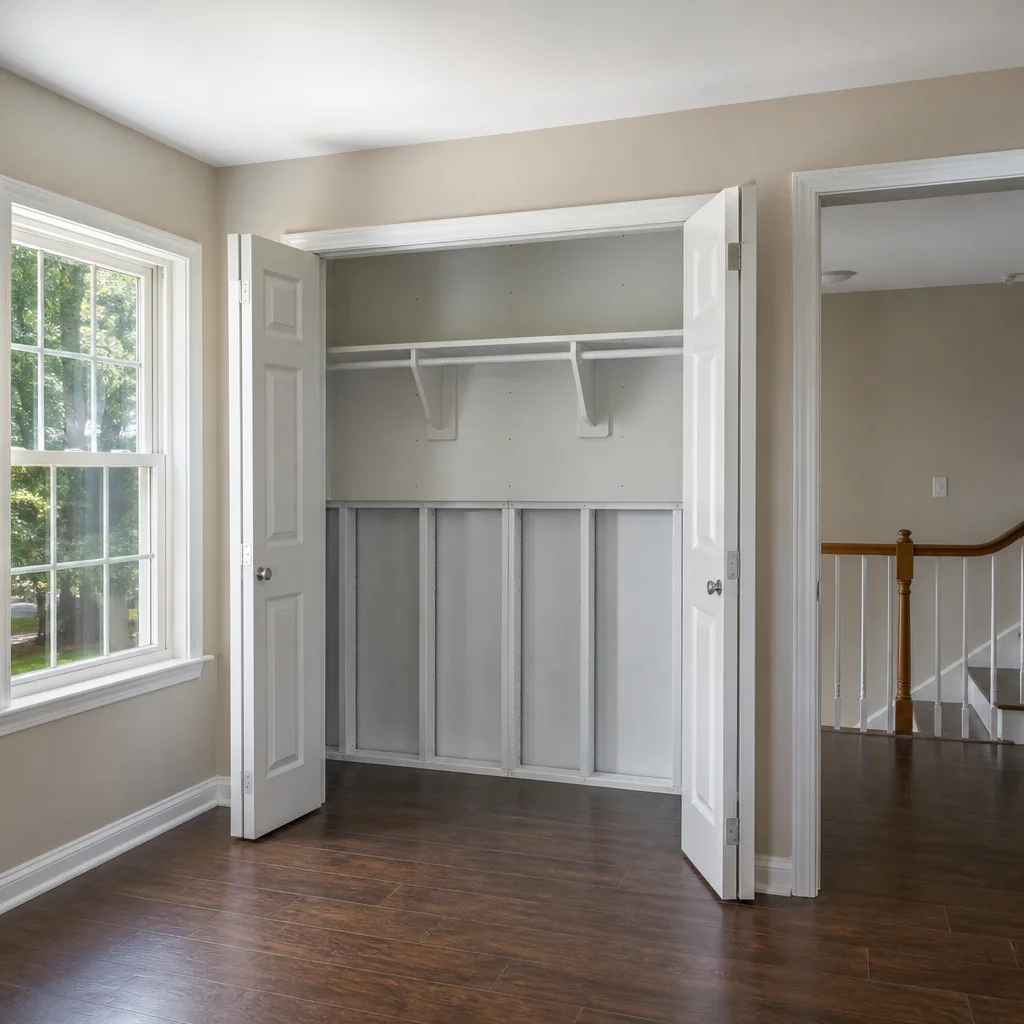
A Mold Removal Contractor in Grand Terrace does more than cut out stained drywall. The work starts with containment to keep spores from spreading through the rest of the house, then moves to removal of the affected material, antimicrobial treatment of the surrounding framing, and structural drying to a documented moisture standard. In a 1960s ranch home off Barton Road, that often means pulling baseboards, drilling inspection holes in wall cavities, and running an Injectidry panel drying system inside the wall itself rather than demolishing the whole section. In Grand Terrace, where original galvanized plumbing hides leaks a wall away from the visible mold, the contractor’s first job is finding where the water is coming from.
Containment and Moisture Mapping First
Before we cut anything, we seal the work area and map moisture throughout the affected zone. In a Grand Terrace split-level, that means checking the wall, the subfloor, and the crawl space below. The bloom you see on a hallway baseboard is often the exit point, not the entry point.
Source Repair Coordinates With Removal
We don’t remove mold and leave a leaking pipe behind. Our team coordinates the plumbing repair with the remediation scope so the wall cavity gets opened once, dried, treated, and closed with the source already fixed. In Grand Terrace’s older homes, where a single galvanized line can feed a bathroom and a laundry wall, this coordination is the only way to stop the cycle.
Bathroom Mold Removal in Grand Terrace
Bathroom Mold Removal in Grand Terrace almost always involves more than a vent fan problem. In this city’s 1950s-1980s homes, bathroom mold frequently traces to a pinhole leak in the original galvanized supply line running behind the shower valve or under the tub. The leak weeps for months, saturates the framing, and the mold shows up on baseboards, caulk lines, or the back side of an adjacent wall. We start with moisture readings along the entire bathroom wall, not just the visible stain. A typical bathroom mold removal in Grand Terrace, including containment, removal, drying, and antimicrobial treatment, runs between $900 and $2,400 depending on how far the moisture has traveled.
Drying the Cavity Without Full Demo
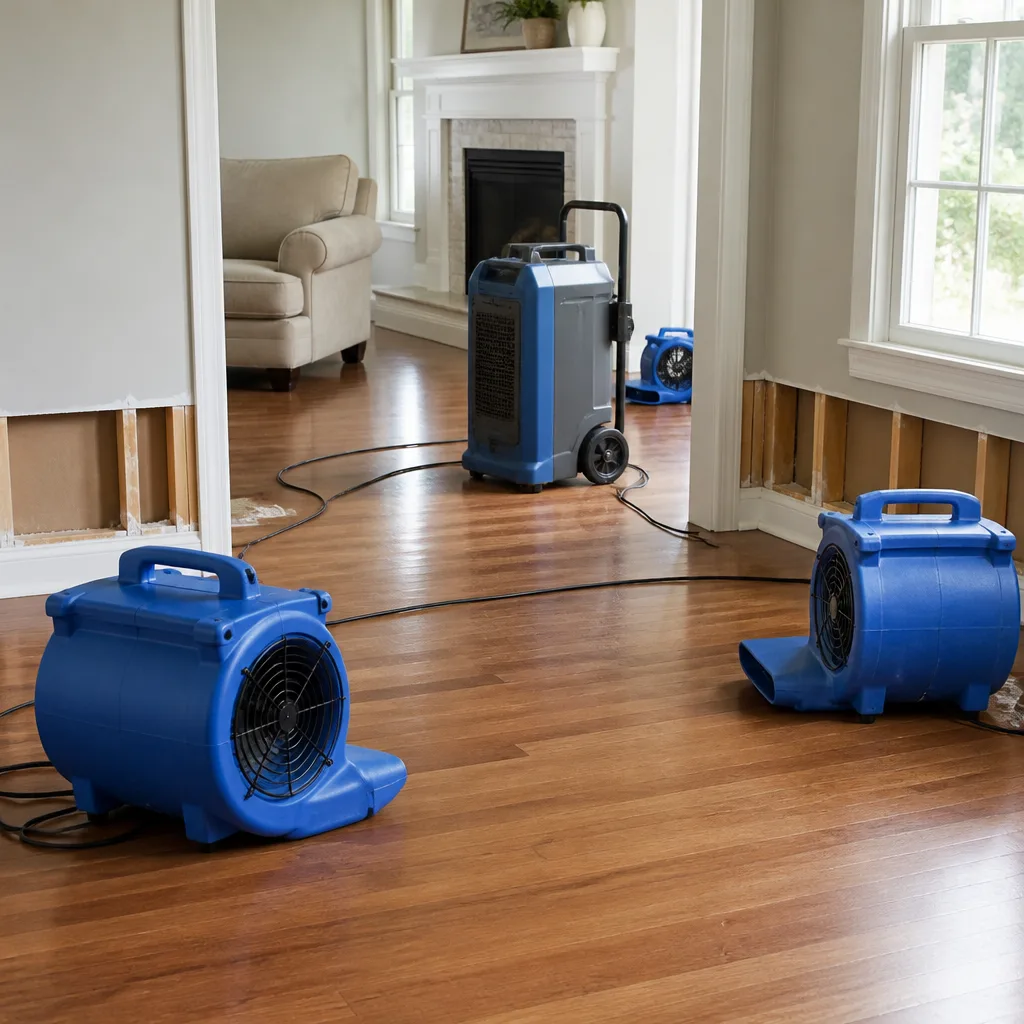
If the framing is still sound, we can often dry the wall cavity without tearing out all the tile or cabinetry. Injectidry panel drying pulls air through the stud bays, removing moisture from inside the wall. Dri-Eaz dehumidifiers then pull the water vapor out of the room air. This protects the homeowner’s budget and the original character of the home.
Crawl Space Connection
Grand Terrace hillside homes often have a crawl space under the bathroom, and that crawl space holds moisture against the subfloor from below. We check those readings too. Drying the bathroom without drying the crawl just gives the mold a new supply.
Trusted Brands We Service in Grand Terrace
We run Dri-Eaz and Phoenix dehumidifiers, XPOWER air movers, and Injectidry wall-cavity drying systems on Grand Terrace jobs. These are the machines used on large commercial restoration losses, not rental-store gear with a lower capacity. We keep the consumables, filters, and ducting for these systems stocked so a Grand Terrace homeowner isn’t waiting on a parts shipment while moisture spreads through the wall. When we set a drying plan, we’re not guessing at capacity, we’re calculating grain depression per hour against the moisture load we measured in your walls and subfloor.
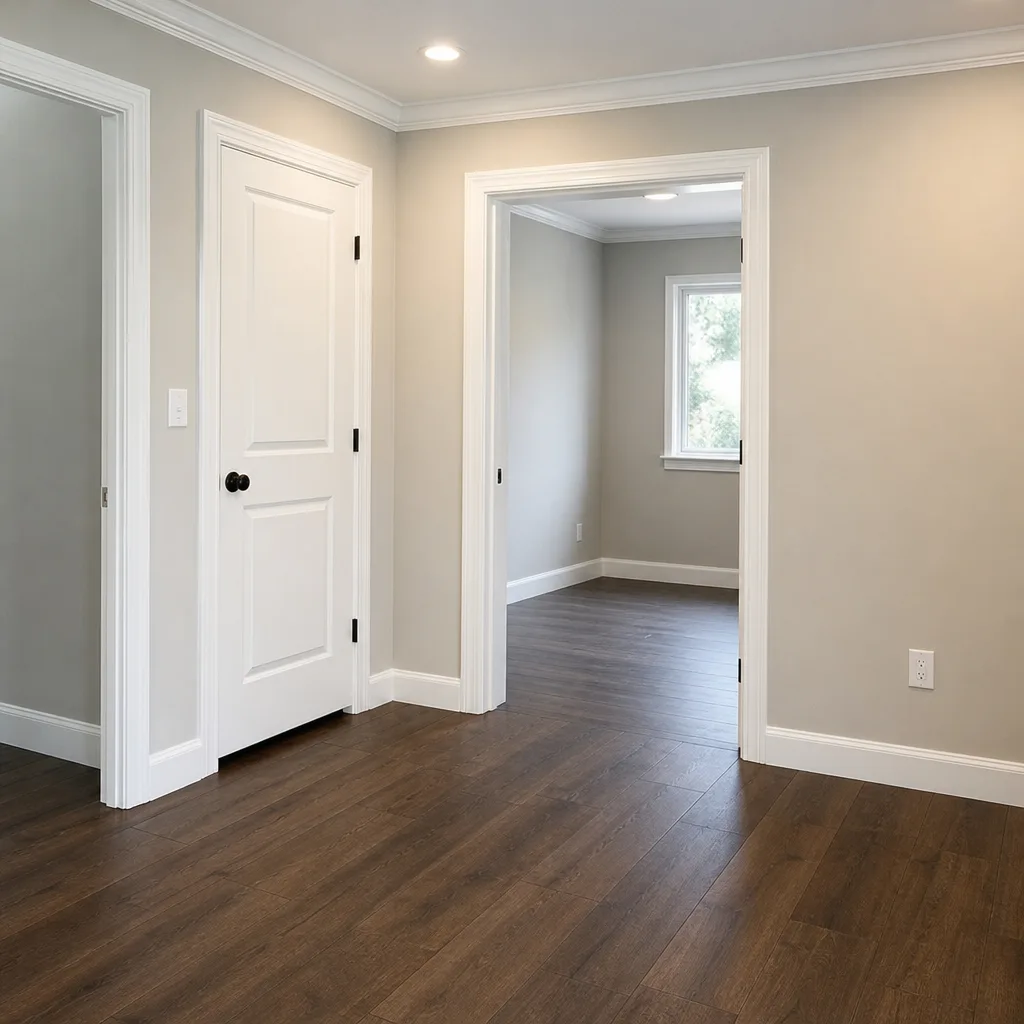
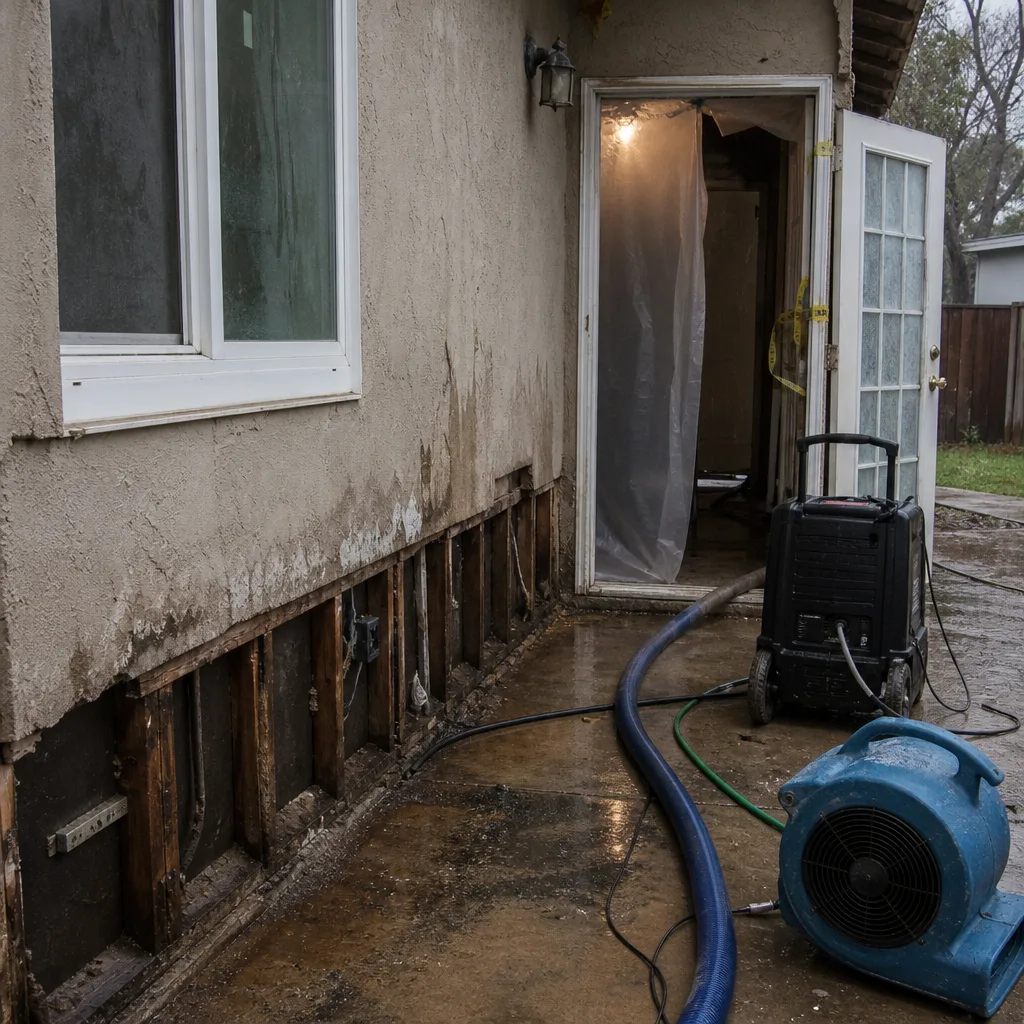
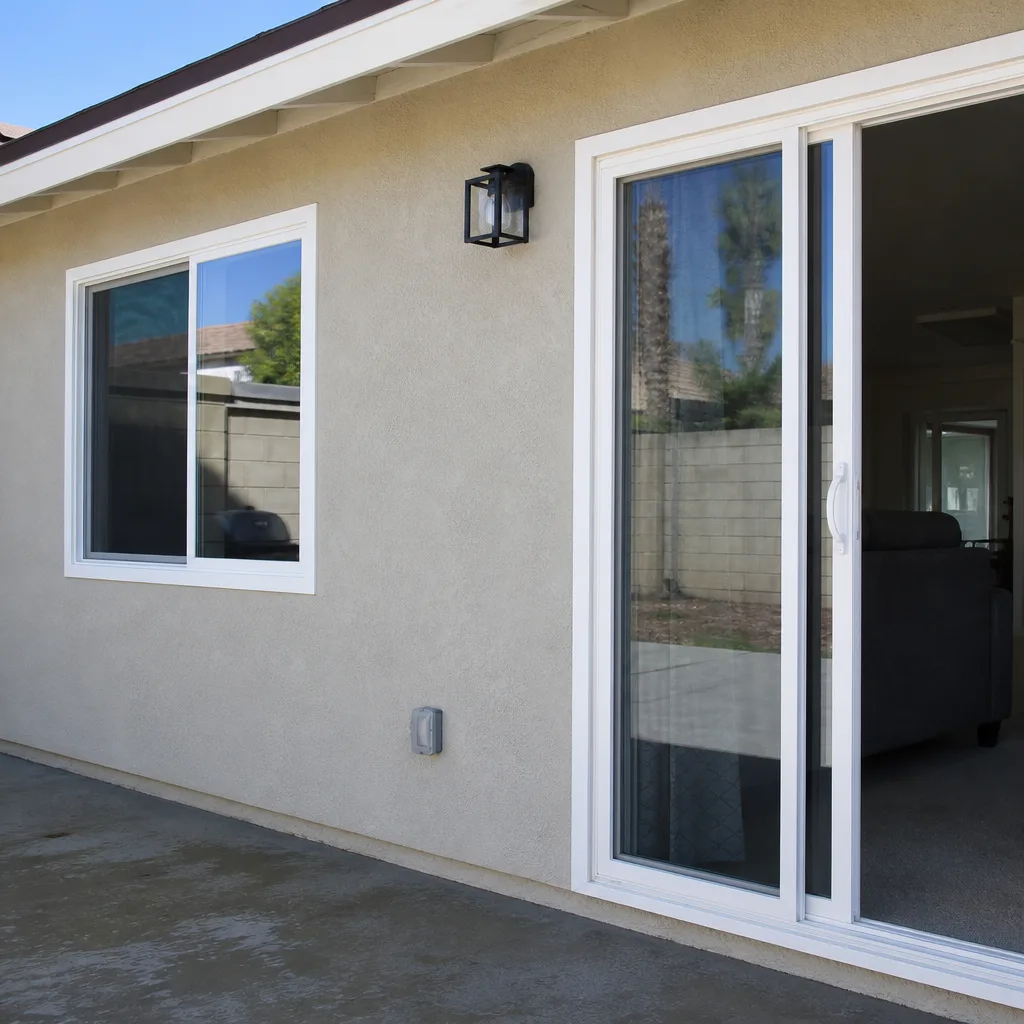
See the difference
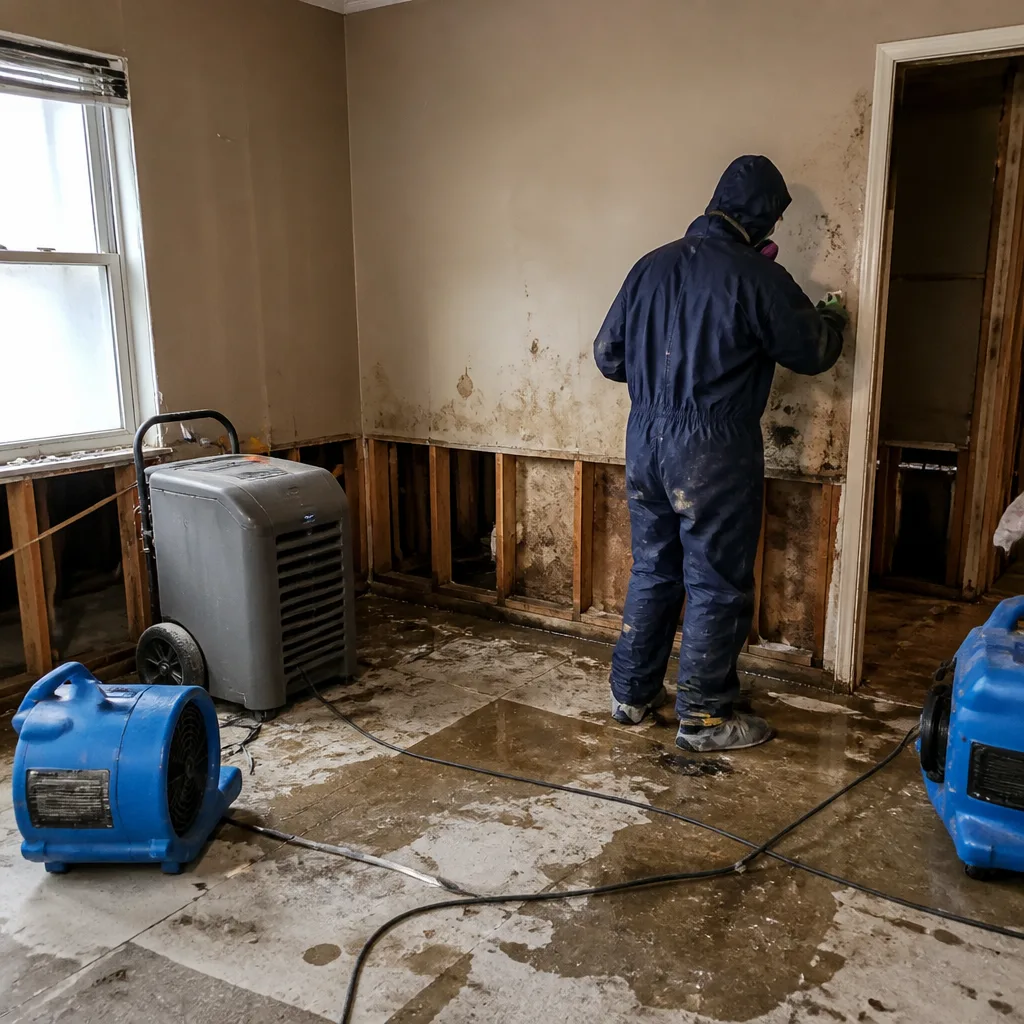 Before
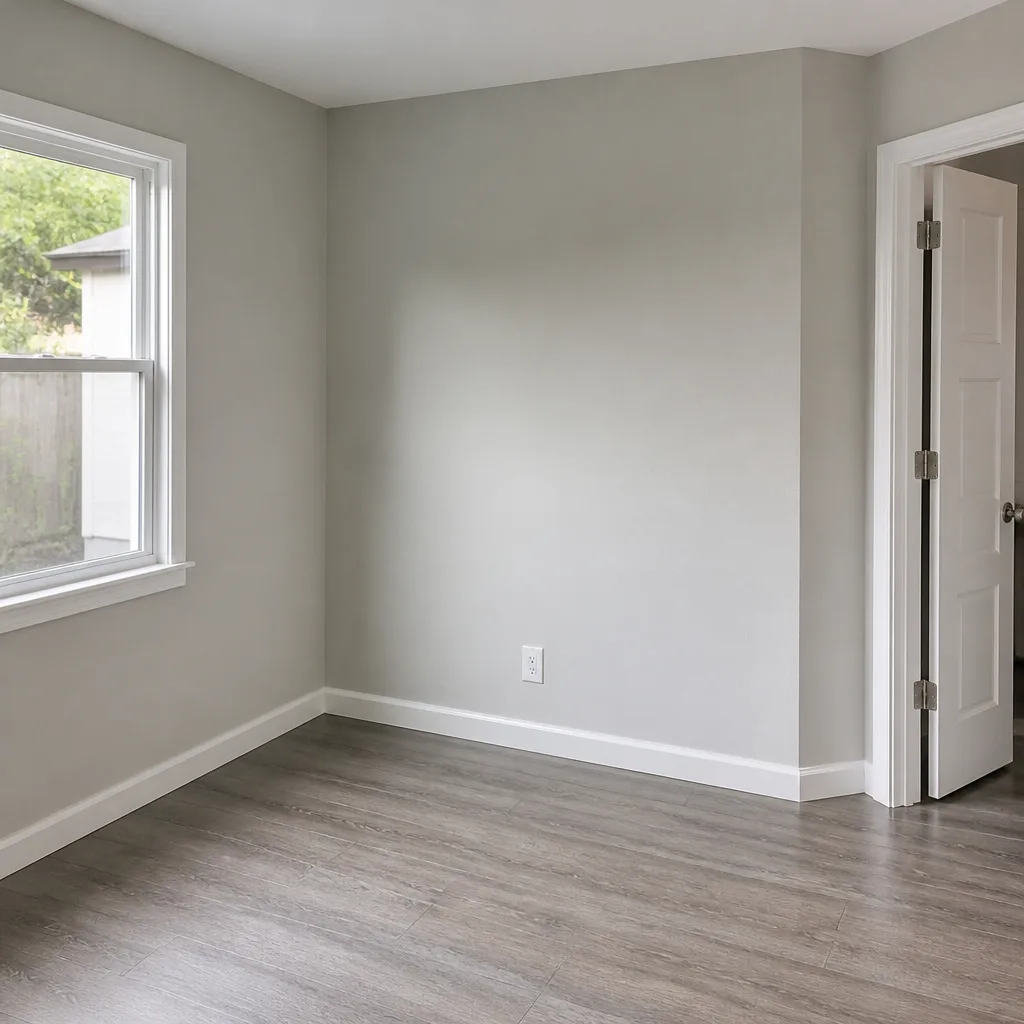 After
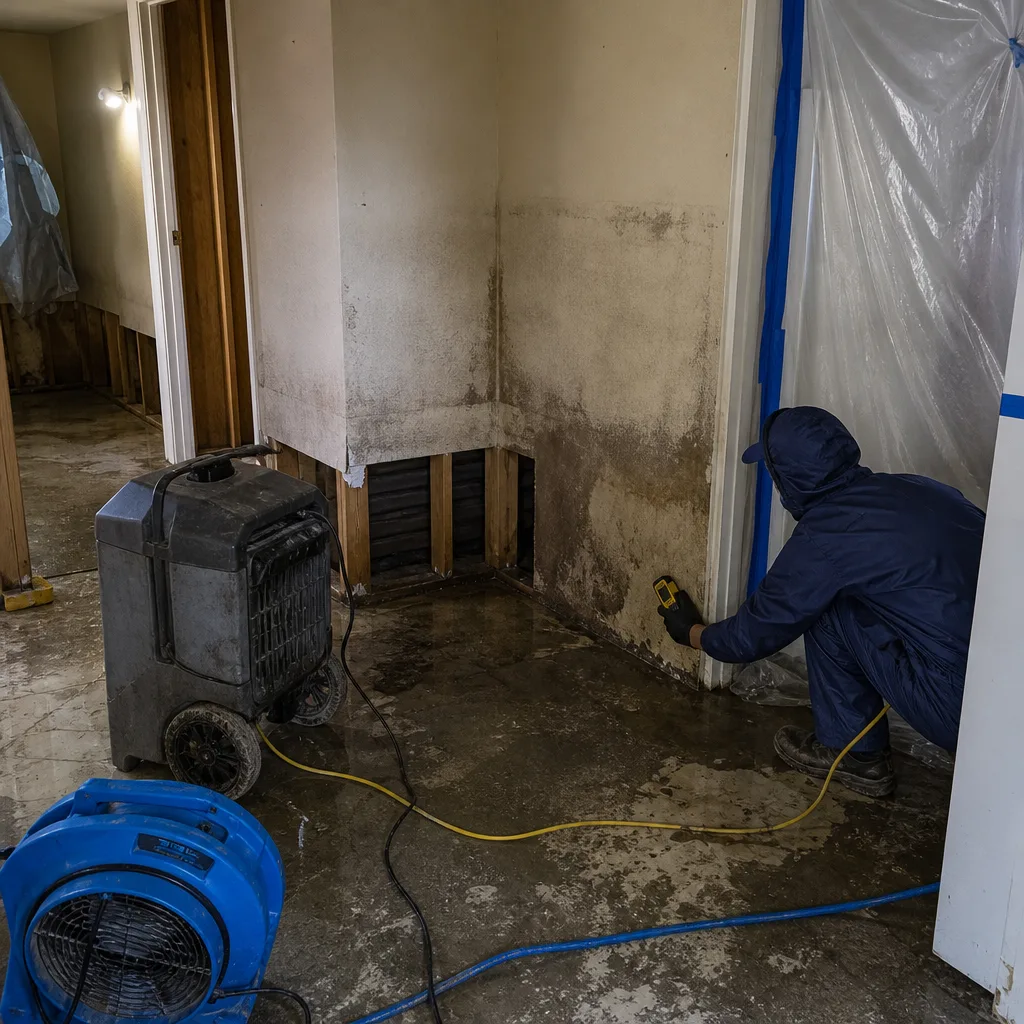 Before
 After
 Before
 After
Common Mold Remediation Problems We See in Grand Terrace Homes
- Stucco blisters on the opposite side of the room from the actual leak. Galvanized pipes in Grand Terrace homes pinhole-fail inside wall cavities, and the water travels along the bottom plate before showing up as a baseboard stain or stucco bubble eight or ten feet away. Treating that visible stain without moisture mapping the wall is the number one reason mold comes back.
- Crawl spaces feeding mold from below. Many hillside homes off Barton Road and the canyon side have crawl spaces that trap moisture from winter rains and post-fire runoff. Surface cleaning the bathroom or hallway won’t stop mold that’s being fed by subfloor moisture underneath.
- Category 2 water from old pipes treated like clean water. Water from a failed galvanized line carries rust, soil, and years of pipe scale. It’s not clean water. Materials saturated by that water need different containment and material decisions than water from a fresh supply line break.
- Santa Ana wind and rain cycle stress. Grand Terrace homes face a boom-bust moisture cycle: hot, dry Santa Ana winds that open small gaps in stucco and flashing, followed by winter rains that drive water into those same gaps. Homes that show no visible mold in October can bloom by January when the rain hits the compromised envelope.
Pricing for Mold Remediation in Grand Terrace, CA
We Also Serve Cities Near Grand Terrace
We handle mold remediation throughout the Inland Empire, including nearby Highgrove, Colton, Loma Linda, and Rubidoux. If you’re in one of those communities and dealing with a mold problem in an older home, the same IICRC-certified team that works in Grand Terrace will come out and map the moisture. Call (877) 358-7678 and we’ll get you scheduled.
Serving Grand Terrace, CA — Our Local Coverage Area
We’re based in the Grand Terrace area and know this community well. Use the map below to see our service coverage — if you’re nearby, we can almost certainly help.
FAQs About Mold Remediation in Grand Terrace
Why does mold keep coming back around bathroom baseboards in Grand Terrace’s older ranch homes?
It keeps coming back because the original galvanized supply pipe behind or under the bathroom is still leaking, and the moisture is wicking through the bottom plate into the baseboard. Cleaning the baseboard or replacing the caulk only treats the symptom. In Grand Terrace’s 1950s-1980s ranch homes, a pinhole leak in a wall cavity can keep feeding mold for months before it becomes visible. You have to find the leak, fix it, dry the cavity to standard, and then treat the materials. Call (877) 358-7678 and we’ll map the moisture and find the source.
Our Grand Terrace house has a crawl space under a split-level, do you have to dry that too for mold remediation?
Yes, you have to address the crawl space. In a split-level Grand Terrace home, the crawl space holds moisture directly against the subfloor and framing. If we dry the bathroom or hallway above ground but leave the crawl space wet, the mold has a continuous moisture source and will return. We take moisture readings in the crawl as part of every mold scope on these homes, and we’ll include subfloor drying or crawl space treatment in the written plan.
How fast does mold start after a galvanized pipe lets go in a 1950s Grand Terrace home?
Mold colonization typically starts within 24 to 48 hours when building materials stay wet. But a pinhole leak in a galvanized pipe doesn’t release a flood, it weeps. That means the framing can stay damp for weeks or months before mold becomes visible on a baseboard or stucco surface. In a 1950s Grand Terrace home, the first sign is often a paint blister or a musty smell in a hallway, long before any visible black mold appears. If you suspect a hidden leak, call (877) 358-7678 for a moisture inspection.
Can you remove bathroom mold without a full pack-out in an older Grand Terrace home?
In most cases, yes. If the vanity, tile, and fixtures are not saturated and the moisture mapping shows the framing can be dried in place, we can often remove the affected drywall, run Injectidry panel drying inside the cavities, and leave the rest of the bathroom intact. A full pack-out is only necessary when mold has spread behind cabinetry, into the subfloor, or the home has been wet long enough that porous materials need to come out. We’ll show you the moisture readings and explain exactly what needs to go and what can stay.
Do you handle both the mold and the water source, or just the mold?
We handle both. Leaving a leaking galvanized pipe behind while removing mold means the problem returns within months. Our team coordinates the plumbing repair with the remediation scope, so the source gets fixed, the cavity gets opened once, dried, treated, and closed. You’re not juggling a plumber and a mold company. One call to (877) 358-7678 covers the whole job, from extraction to clearance.
Dealing with mold in a Grand Terrace home? Call San Bernardino Restoration Co at (877) 358-7678 for a free estimate. We’ll map the moisture, find the source, and give you a written scope before any work begins.
Written by Noel Armenta, Owner at San Bernardino Restoration Co, serving Grand Terrace and the Inland Empire with IICRC-certified mold remediation and water damage restoration.