 Mold remediation
 Water damage drying
 Fire & smoke cleanup
 Storm response
 Sewage cleanup
 Reconstruction
Free visual inspection and a written scope of work before any mitigation begins - photos, moisture readings, and drying logs go in your claim file
The scope we write is the scope we bill. Anything new gets shown to you, in writing, before we touch it.
Get your free estimateFast, Reliable Mold Remediation Across Corona
Mold remediation in Corona typically costs between $1,800 and $6,500 depending on the square footage affected and where the moisture source sits. Most jobs in the 92879 and 92882 core run higher than foothill tract homes because we’re dealing with pier-and-beam subfloors and galvanized plumbing that hide moisture below the visual plane. Call (877) 358-7678 and we’ll walk you through what your specific address is likely to involve.
We know Corona’s two very different housing envelopes, and that matters more than most homeowners realize. A 1950s ranch off 6th Street and a 2005 stucco tract home off Foothill Parkway can both show bathroom mold, but the moisture source, the drying strategy, and the cost are rarely the same. Our IICRC-certified technicians carry both flood and soot experience on the same truck because Corona’s position at the bottom of the Santa Ana River watershed and against the Cleveland National Forest foothills means we respond to water intrusion and wind-driven smoke events in the same week, sometimes the same day.
Why San Bernardino Restoration Co Is Corona’s Preferred Mold Remediation Company
Corona homeowners call us because we treat mold as a moisture problem first and a surface problem second. The visible growth on your bathroom ceiling is the symptom. The wet joist, the failed wax ring, the galvanized supply line sweating inside a wall cavity, the attic vent that’s been pulling ember-laden air into eave spaces, that’s the job. Our Mold Remediation team runs moisture mapping and documented drying logs on every job, not because it’s protocol but because your insurance adjuster and your future buyer both want proof the structure dried back to pre-loss condition.
Noel Armenta leads the team, and he’s built our reputation in Corona around a simple standard: if we can’t show you the moisture readings before and after, we didn’t do the job. Reviews from Corona customers consistently point to the same things: containment set before demolition started, negative air running during the pull, and a written scope of work before any drywall came down. We serve all four Corona ZIP codes, 92877, 92878, 92879, and 92880, and we know which side of the 91 your address sits on without looking at a map.
When you’re staring at black growth spreading across a bathroom wall behind the toilet, you don’t need a company that guesses. You need someone who can tell you within the first hour whether this is a contained Category 2 cleanup or a Category 3 loss requiring full containment and structural drying. That’s the difference between a $1,800 job and a $6,500 job, and it should be decided by readings, not by feel.
Restoration work we handle
Mold Removal Contractor in Corona
A mold removal contractor in Corona handles the physical extraction of contaminated materials and the drying of the structure behind them. When a homeowner in the 92879 core calls us about mold climbing a hallway wall, the first thing we look for is a pier-and-beam subfloor with original galvanized plumbing underneath. Surface wiping won’t fix that. We need to open the wall, assess the joist bays, and decide whether the sheathing dries in place or comes out.
Typical mold removal contractor work in Corona runs $2,200 to $4,800 for a contained bathroom or hallway job. The range widens when subfloor sheathing and joist treatment enter the scope, which happens more often in the pre-1980 housing stock than anywhere else in the city.
Containment and Structural Drying
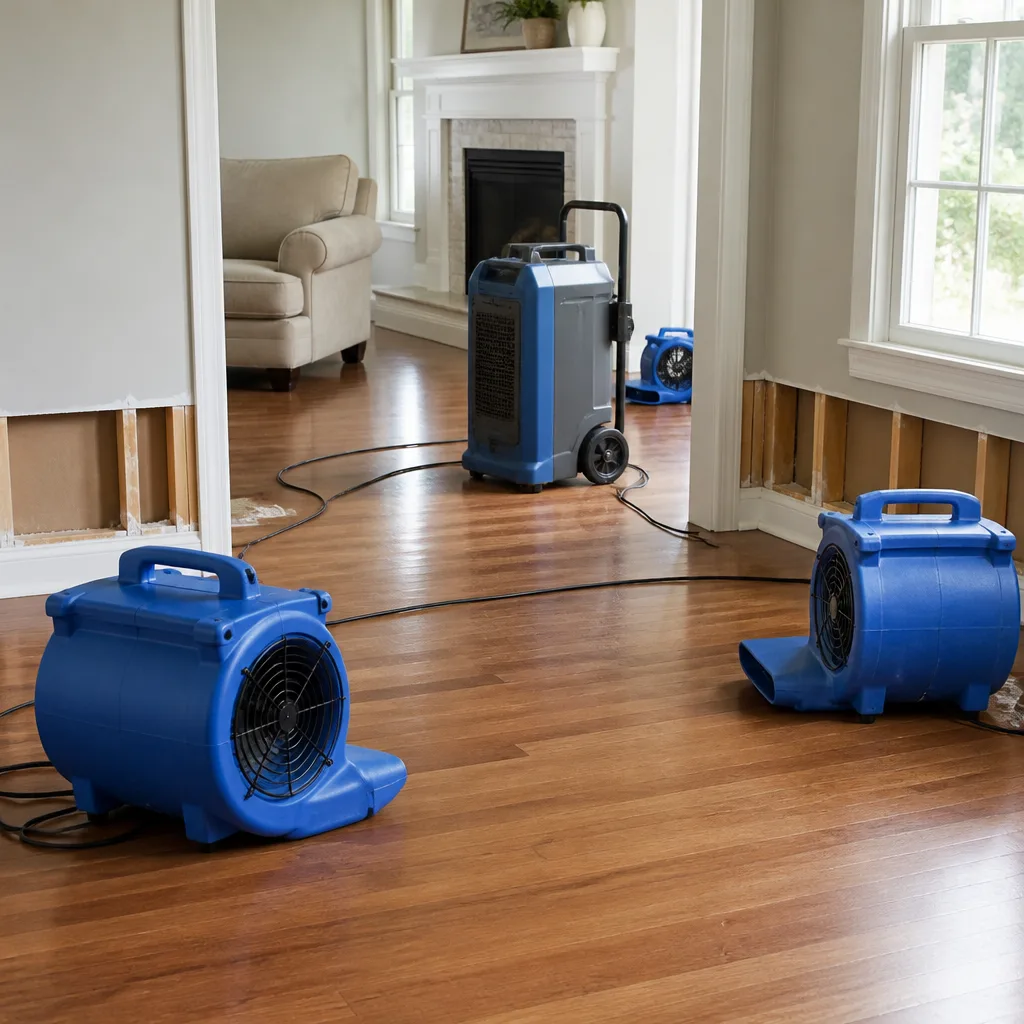
We set containment before demolition starts. That means 6-mil poly barriers, negative air with HEPA filtration, and air scrubbers running the entire time affected materials are being removed. Our Dri-Eaz dehumidifiers and XPOWER air movers run on a drying log we hand you at the end, not a verbal assurance that things are dry.
Subfloor and Joist Treatment
In Corona’s older core, the mold you see on the wall is often fed by a joist bay you can’t see. We pull the affected drywall, inspect the subfloor from above or below, and apply antimicrobial treatment to framing before rebuild. If the sheathing has lost structural integrity, it comes out and gets replaced, not painted over.
Bathroom Mold Removal in Corona
Bathroom mold removal in Corona is the single most common call we get, and the pattern is predictable once you know the housing stock. In the 92879 and 92882 core, it’s slow seep from galvanized supply lines and failed wax rings under pier-and-beam subfloors. In the 92880 and 92881 foothill tracts, it’s more often ventilation-related: hot showers meeting slab-on-grade bathrooms with underpowered exhaust fans, and Santa Ana wind cycles pushing moisture and organic debris into eave and attic spaces that connect to bathroom cavities.
Bathroom mold removal in Corona typically runs $1,800 to $3,500 when contained to the bathroom itself. If the moisture has migrated into an adjacent room or the subfloor below, the number shifts toward the higher end of the mold removal range.
Galvanized Supply and Wax Ring Failures
On a post-war ranch off 6th Street in the 92879 core, our crew found bathroom mold climbing out from behind the original galvanized supply stub under a pier-and-beam subfloor. Years of slow seep, not a burst. We ran moisture mapping across the joists, set containment, pulled the affected drywall and subfloor sheathing, applied antimicrobial treatment, and packed out the vanity cabinet. Drying logs from our Dri-Eaz dehumidification and XPOWER air movers documented the structural drying back to pre-loss condition before rebuild.
Ventilation and Slab-on-Grade Bathrooms
Foothill tract bathrooms fail differently. The stucco and slab construction keeps subfloor moisture out of the equation, but poor exhaust routing and tight building envelopes trap humidity in wall cavities. We check the fan CFM against the bathroom square footage as part of the scope, because removing the mold without fixing the ventilation just schedules another call in eighteen months.
Trusted Brands We Service in Corona
We run professional-grade equipment, not rental units. Dri-Eaz dehumidifiers handle the structural drying on our Corona jobs because they’re the same machines used on large commercial losses and they hold their grain depression numbers reliably across a week-long drying schedule. XPOWER air movers place airflow exactly where the moisture map says it belongs, and Injectidry wall-cavity drying systems let us dry inside finished wall and ceiling cavities without destroying the surface and triggering a full rebuild. For a Corona homeowner, that matters twice: it protects your walls and your budget. We keep replacement filters, HEPA cartridges, and common parts stocked for fast turnaround, so a Corona address off McKinley Street or Ontario Avenue doesn’t wait on a supply run from out of state.
See the difference
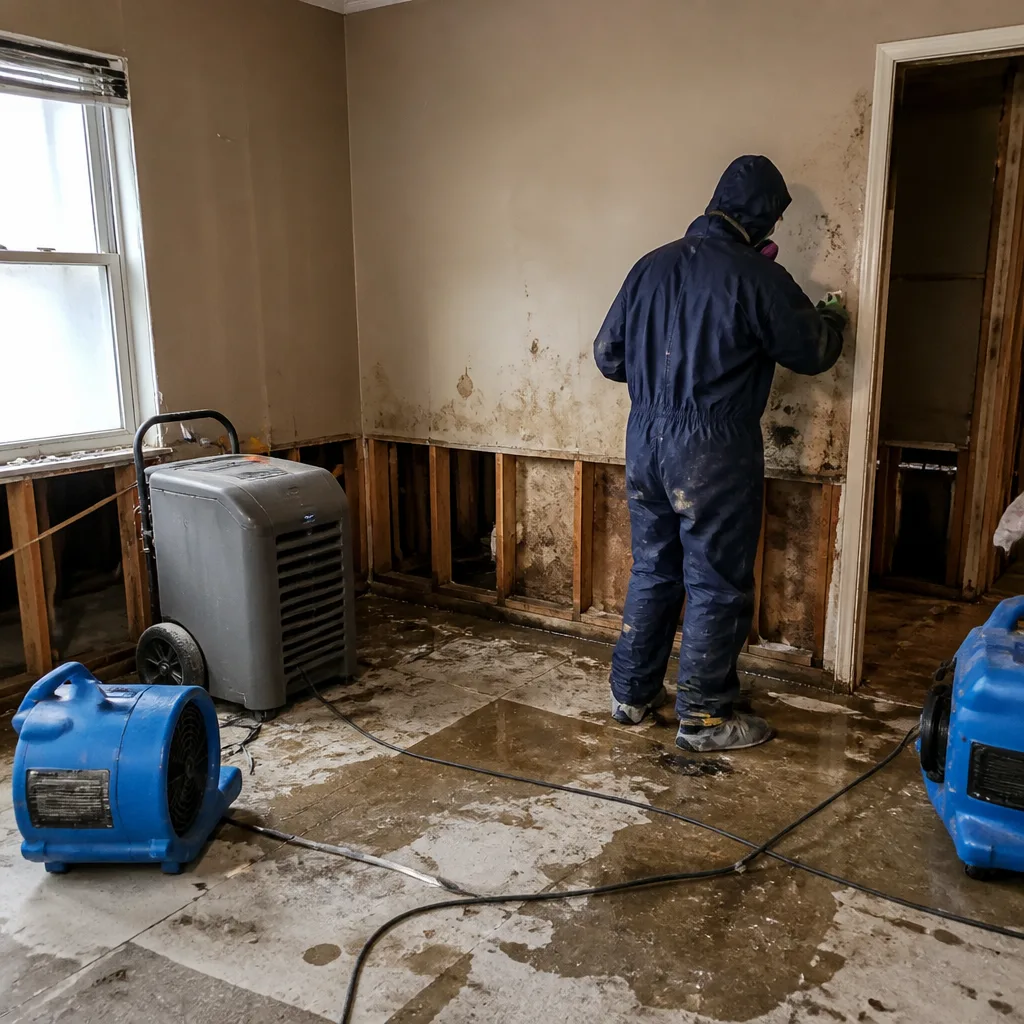 Before
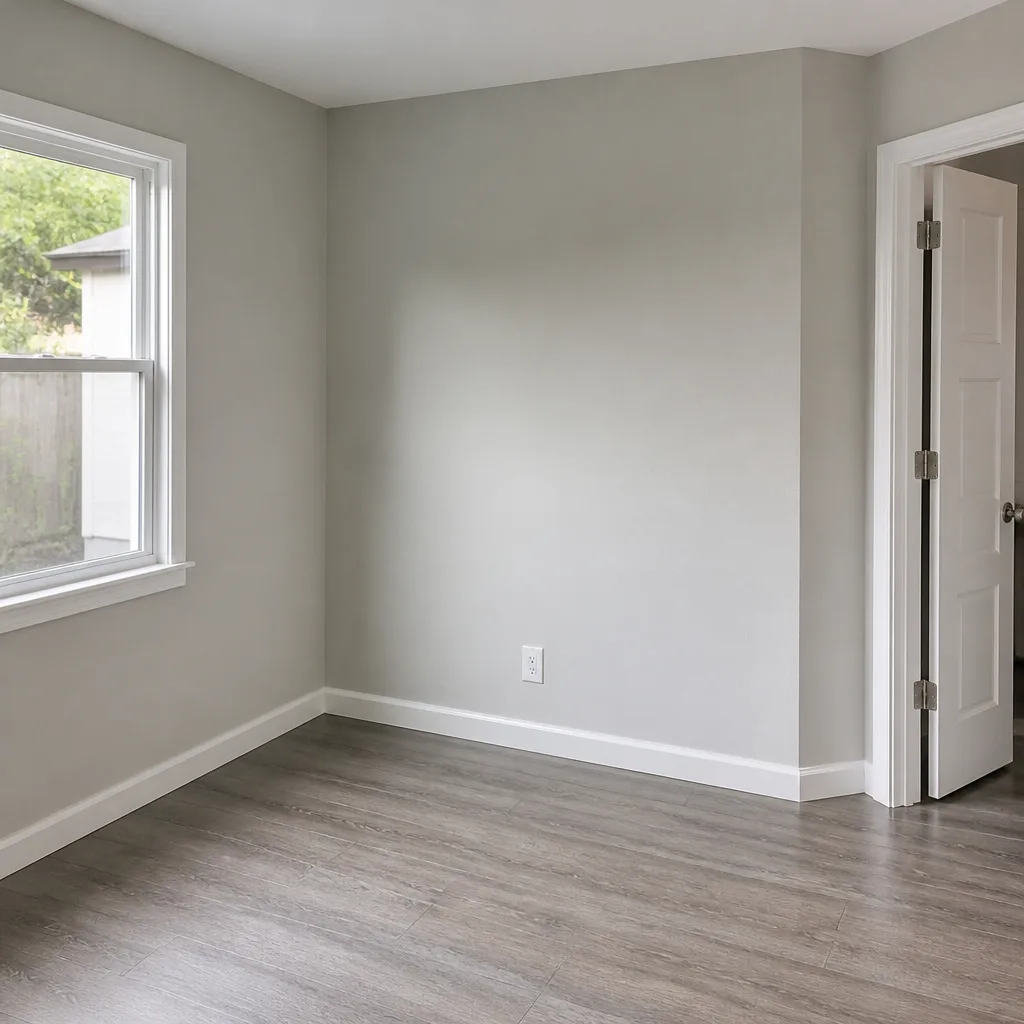 After
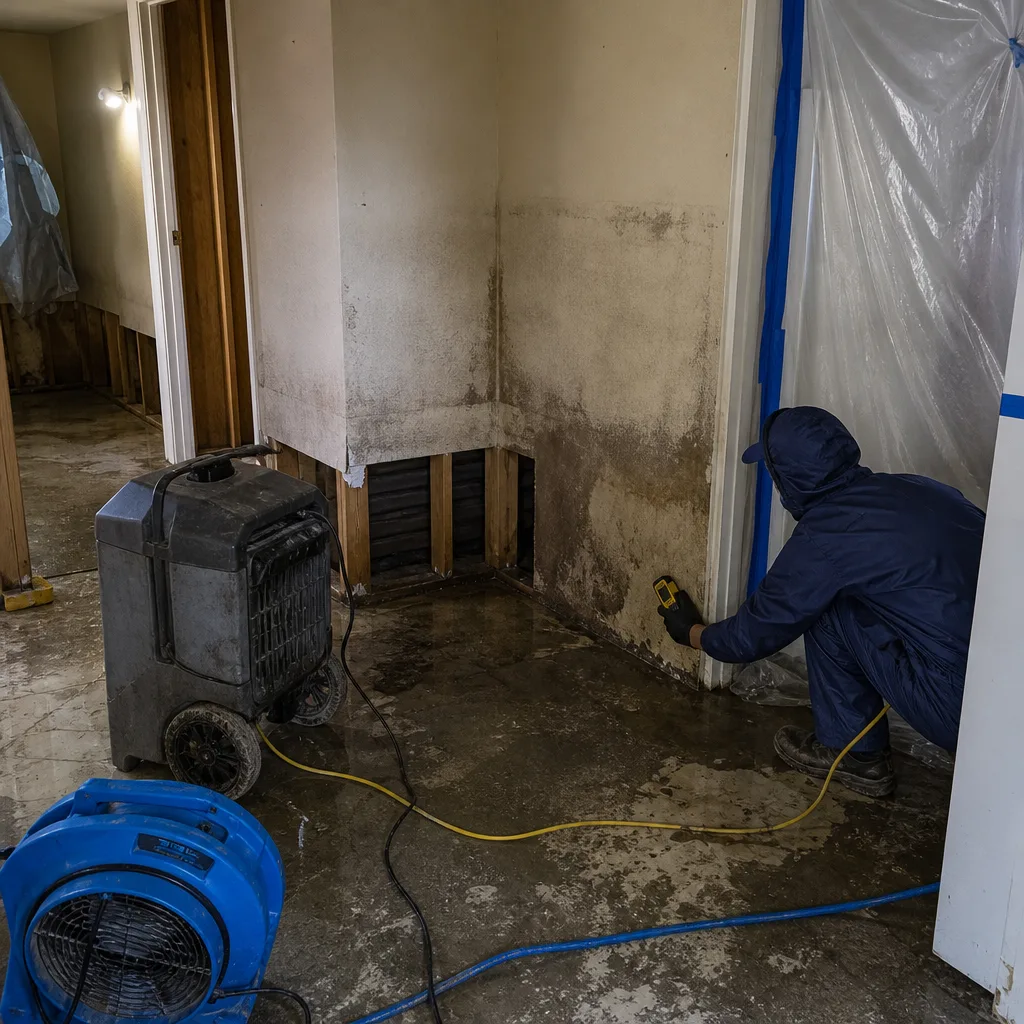 Before
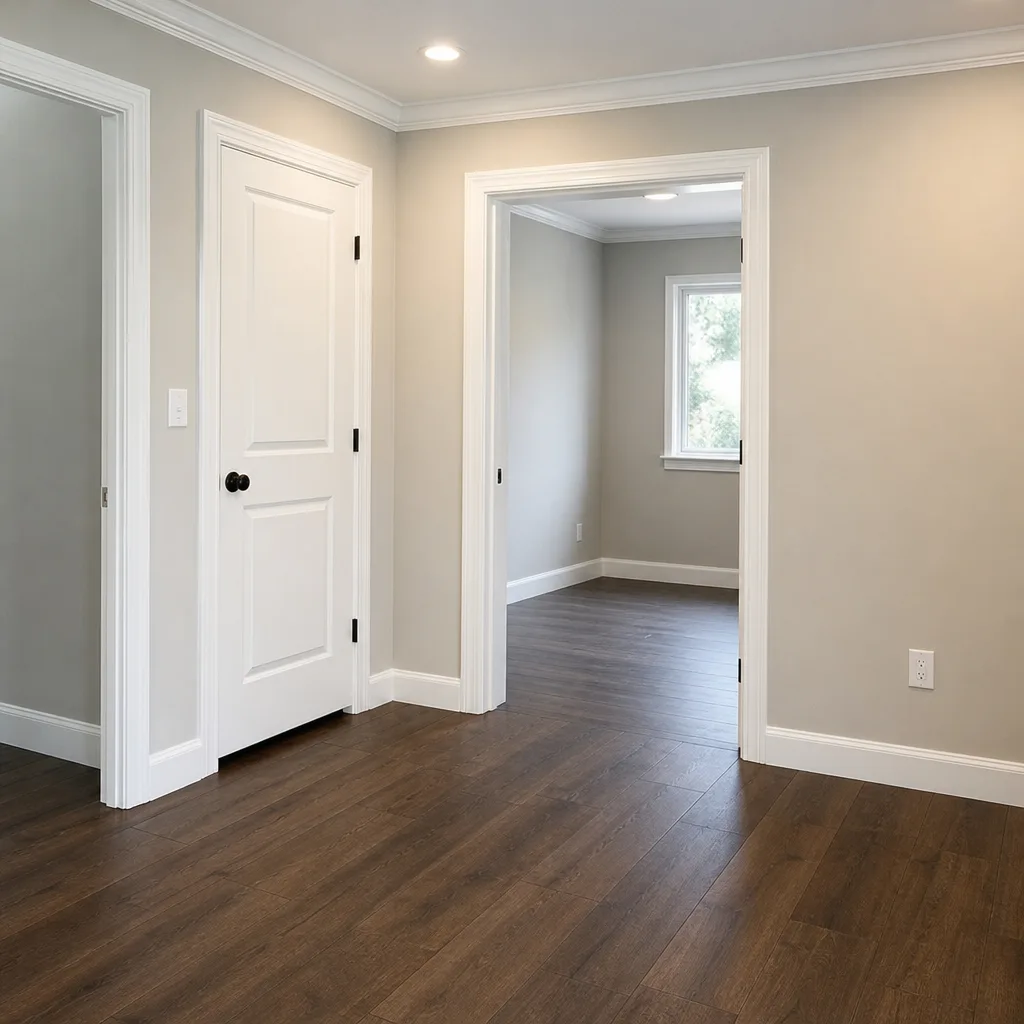 After
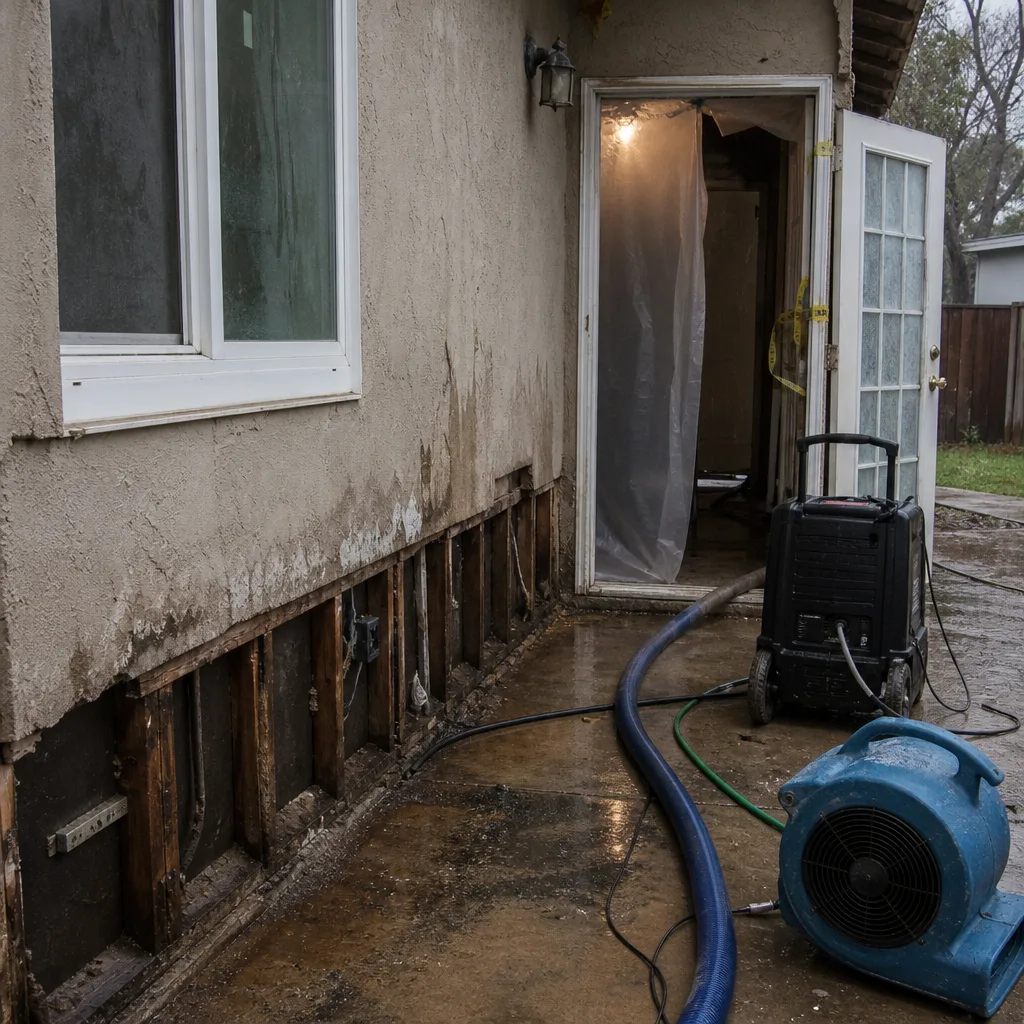 Before
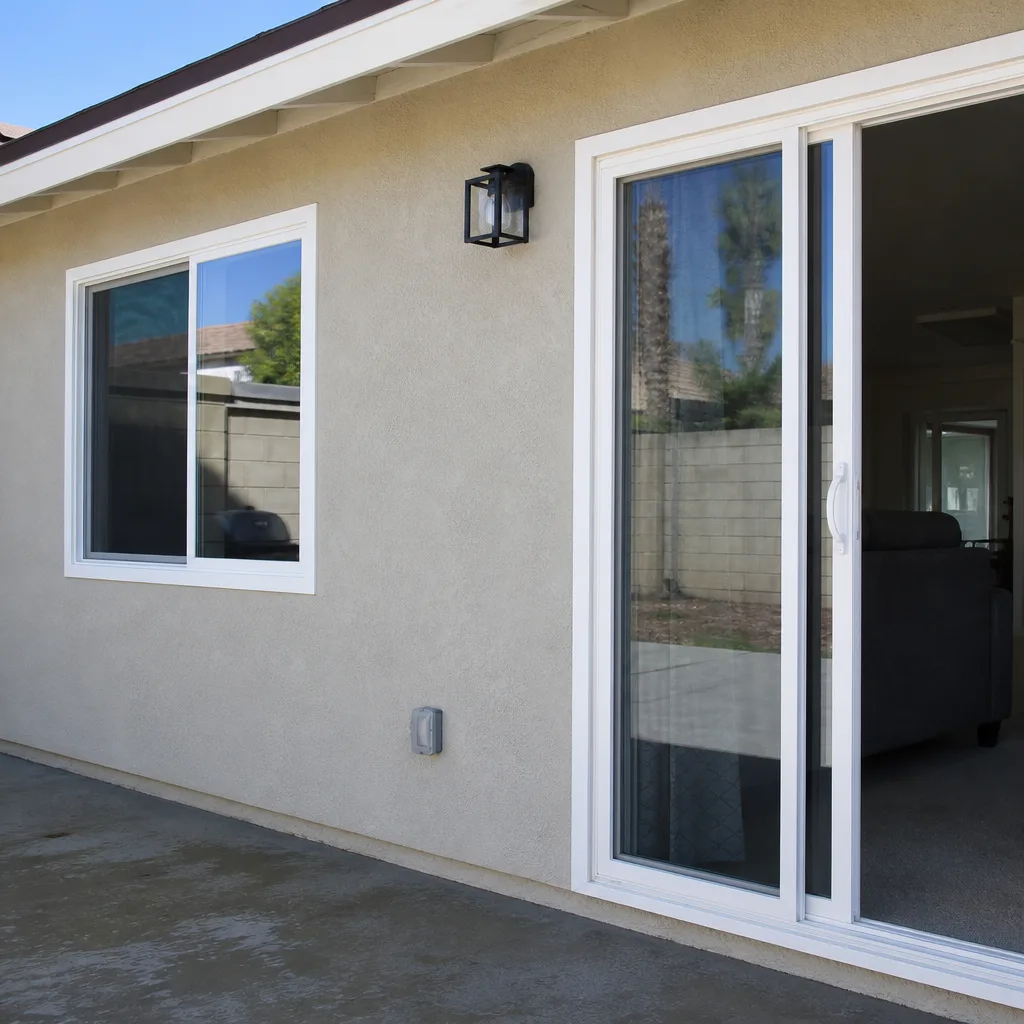 After
Common Mold Remediation Problems We See in Corona Homes
- Surface treatment instead of source removal. Homeowners in the 92879 core wipe bleach on a bathroom wall while the pier-and-beam subfloor and galvanized drains underneath stay wet. The mold comes back because the moisture source was never addressed.
- No containment in foothill homes. Houses off Foothill Parkway with attic spaces already loaded from Santa Ana wind events get mold work done without negative air. Spores spread through the HVAC before the remediation crew has finished demolition.
- Feel-based drying decisions. Corona’s 100°F-plus dry spells make the surface read bone dry while framing behind stucco is still saturated. Without moisture readings and a drying log, the rebuild happens over a wet cavity.
- Repeated attic wash and paint jobs. The citrus-era bungalows along Grand Boulevard and the older 6th Street tracts have aged roof penetrations that drip into attic insulation. Companies wipe the ceiling stain and repaint. Six months later the mold is back because the roof flashing was never touched.
Pricing for Mold Remediation in Corona, CA
Mold remediation in Corona, CA runs from about $1,800 for a small contained bathroom job to $6,500 or more for multi-room structural drying with subfloor and joist treatment. Bathroom mold removal lands between $1,800 and $3,500 when the damage is contained. A full-service Mold Remediation in Corona scope with containment, HEPA equipment, structural drying, and rebuild-ready clearance typically sits in the $3,000 to $6,500 range depending on whether the address is a pier-and-beam core home or a slab-on-grade foothill tract. We give you a written scope of work before any demolition, and we’ll tell you which number fits your address when you call (877) 358-7678. Estimates are free.
We Also Serve Cities Near Corona
Our service area stretches through Home Gardens just across the city line, El Cerrito Corona on the eastern edge, Eastvale to the north, and Norco to the northwest. If your property sits in one of those communities, you’re still getting the same IICRC-certified protocol and professional equipment, dispatched from the same team that works Corona every day.
Serving Corona, CA — Our Local Coverage Area
We’re based in the Corona area and know this community well. Use the map below to see our service coverage — if you’re nearby, we can almost certainly help.
FAQs About Mold Remediation in Corona
The short answer is galvanized plumbing and pier-and-beam subfloors. Those homes were built with supply lines that corrode from the inside out, and when they fail, they fail slow. Water seeps into joist bays and wall cavities, feeds mold growth, and never shows up as a puddle on the floor. By the time you see the bathroom wall staining, the moisture source has usually been active for months or years. Call (877) 358-7678 and we’ll find it with moisture mapping, not guesswork.
Both, and they feed each other. Wind-driven ember and smoke residue settle into inland-facing attic vents and eaves, loading those spaces with organic material. When the same wind event is followed by rain, the combination creates exactly the hot, dirty, damp microclimate mold needs in the attic. We see attic mold in foothill homes that have never had a roof leak, because the moisture came from condensation plus wind-driven residue. A full scope means cleaning the attic, treating the surfaces, and checking the ventilation path that let residue in.
Look at the exhaust fan first and the ceiling plane around it second. Those tract homes have tight envelopes and bathrooms that rarely meet current CFM ventilation standards. Shower humidity saturates ceiling drywall, condenses inside the cavity, and mold grows from the top down. We treat the cavity, replace the affected ceiling section, and spec a ventilation upgrade so the job holds.
You get a written scope before demolition starts. It lists containment setup, air scrubber hours, the specific materials being removed and why, antimicrobial treatment areas, drying equipment placement, and the target moisture readings for rebuild clearance. Nothing comes out of your house unless it’s on that scope and we’ve walked you through why it’s on there. That’s the difference between restoration and surface cleanup.
Mold remediation itself is typically not a permit-triggering activity in Corona, but the rebuild portion can be, especially if structural framing or subfloor sheathing is being replaced. Water heater strapping, electrical work, and certain ventilation changes may also require permits. We identify what needs permit review in the scope, and we coordinate with the City of Corona building department when the job crosses that line. Call (877) 358-7678 and we’ll tell you what applies to your address.
Written by Noel Armenta, Owner at San Bernardino Restoration Co, serving Corona since day one.